
The Masters Review guest editor Kate Blakinger’s debut book, How to Court Disaster—winner of the Iowa Short Story Award—comes out on November 3rd from The Iowa Press. Check out this essay about her publishing journey and then go order her book!
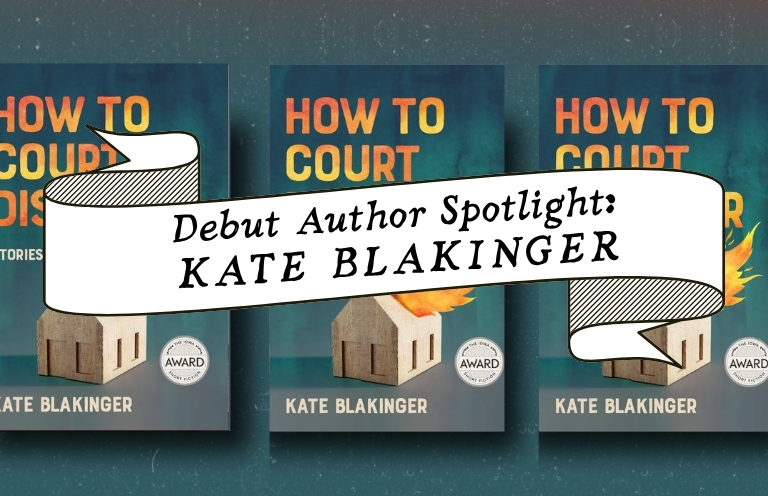
If we start the clock with the earliest drafts of the oldest stories, my story collection How to Court Disaster was written over nearly twenty years. Some part of me doesn’t want to admit that it took so long! A lot happened in my life during this time, and I wrote many other things besides this book—other stories, essays, a novel I’ve abandoned, a better novel I continue to work on—but still, two decades. When other writers confess that their books took a long time, sheepishly admitting to four years, or five years, I can only laugh.
“Beast” is the earliest of the stories. My writing process usually involves a series of detours, missteps, and drastic rewrites, but this particular story I wrote in four days. I was in grad school and writing in response to an assignment, so I had limitations to work within and a looming deadline, and “Beast” is a retelling of a fairy tale. The original tale gave me something to work with and against. Also helpful: the enviable freedom I had as a student to spend those four days living in my pajamas and thinking about the story nonstop, giving myself over to the creative process in a way my current life doesn’t allow. Still, this story just seems to have fairy tale magic woven through the sentences. “Beast” never needed more than minor edits.
“The Hothouse Lounge” I drafted slowly in my usual fashion: getting stuck, briefly despairing, getting unstuck, cutting parts, adding other parts, moving the pieces around. I had a full draft when I found out I was pregnant, at which point it felt as if all my creative energies redirected themselves, attending to the even more mysterious work of making a new human. After my son was born, I had trouble writing anything new, but I returned to “The Hothouse Lounge,” wedging revisions into whatever little crevices of time I found. It was sometimes difficult to begin. I was more tired than I’d ever been, and my time was not really my own. The moments in which I might work on the story were also the moments I had available to accomplish everything else that fell outside the purview of my small child’s needs. I’d have to choose: Eat or shower? Emails or dishes? Sleep or write? That I would be interrupted, most likely at the very point at which I’d begun to make something resembling progress, was a given, but I began, and began again, and in this manner, I made slow, fitful headway. By the time my son was nearly two, I had a version that felt complete and I began to submit it to literary magazines.
I was working part time, fitting in a day job on weekends when my husband was home and during afternoons when my parents were free to babysit. My schedule felt chaotic and I was perpetually tired. We decided to sign our son up for daycare in hopes that I’d have some longer stretches of time for writing. I’d increase my day job hours, too, to help pay for the care, which was expensive. These decisions were fraught. It felt reckless to pay so much in order to work on a manuscript I was struggling to finish, which might not ever come to anything. I had a number of stories in progress at this point, and they all still needed a lot of revision. Paying for time to write and revise stories when I could be earning money to support the tiny, vital human who needed food, diapers, and sneakers right away, and would in the future require college tuition, seemed irresponsible, even indulgent.
The first month in particular was going to strain our budget. I’d increase my day job hours once I had the childcare to do so, but we had to pay a deposit upfront, before I got my first bigger paycheck. We planned to muddle through, curtailing our spending. Then, with serendipitous timing, “The Hothouse Lounge” won the Marguerite McGlinn Prize. The award was a generous $2,000 and a celebratory dinner and reading that made me feel more like a writer than I had in months. The prize money arrived just in time to cover that deposit.
With my son in day care, and later school, I began a novel, but I continued to work on stories whenever I stalled out on the novel draft, which was often. The novel shapeshifted, spurning my attempts to impose structure upon its wild sprawl. “Trick of the Dark,” the final story I added to my collection, began its life as a chapter in this novel. It’s easy to see now that writing this particular chapter was a sign the novel was falling apart. I’d swerved off course to follow a minor character, though her misadventures in a cave in Italy had little to do with the novel’s main events. I couldn’t find a way forward with the primary narrative arc, but I was forging on, persistently accumulating more words, and the growing word count felt enough like progress that, for a time, I was able to fool myself.
When I gathered together the stories of How to Court Disaster and submitted the manuscript to a contest, it felt momentous. I was so happy to have finally finished a collection I felt was worthy of consideration. I fully expected the submission process to be a long, effortful slog, but no matter what happened, I could bask in the private joy of completion. I’d struggled to reach that milestone. As a writer, you really have to stare down your own failure day after day, inching your work closer to what you would like it to be. The gap between the vision in your mind and the work you create will always exist, and all you can do is continue to push against the limits of your abilities.
I often write on my back patio, in the shade of the fig tree that stands in my neighbor’s yard, a tree I feel great affection for, though my neighbor isn’t fond of it. Each spring, it grows branches with ease, as if it were simply raising many arms into the sky. Later, ripe figs fall and smear their seedy jam on our patios, and this mess, and the way it draws birds and animals, is what my neighbor can’t abide. Once, she called her grandson, who came armed with a saw. Pruning is not the word for what he did. All he left behind was an ugly stump. I grieved, sure the tree would never recover. But spring came, and the tree hurtled new branches up toward the sun, leafing out in days.
Writing is sometimes like this for me. What seems dead on the page may be dormant, waiting for me to encounter it again in a different season. Time is my most useful tool, letting me see stories anew. It makes sense that How to Court Disaster took years to write.
The great surprise was how quickly the collection found a home. I’d only submitted to a handful of contests when Jess Walter chose it as the winner of the Iowa Short Fiction Award. It’s difficult to convey how much this news floored me, and how lifechanging it still feels. As I write this, How to Court Disaster has a gorgeous cover, an ISBN, blurbs. I’ve held a copy in my hands. Even so, being on the cusp of launching this book feels a little like a rare and lovely daydream I’m having.
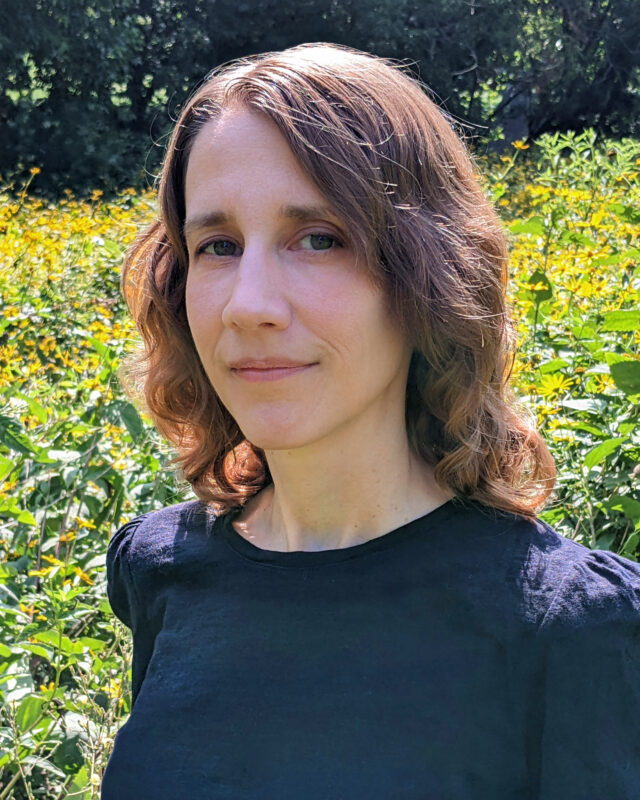 Kate Blakinger is the author of the story collection How to Court Disaster, which won the Iowa Short Fiction Award and is forthcoming in November 2026 from the University of Iowa Press. Her stories have appeared in Alaska Quarterly Review, Catamaran, Epiphany, The Gettysburg Review, The Iowa Review, and other publications. Kate lives in Philadelphia, where she works as a freelance developmental editor. She’s also a guest editor for The Masters Review and CRAFT. Find her online at kateblakinger.com.