
The protagonist of “Bad Habit” is a good guy with a gambling problem. Through an increasingly strange set of circumstances, he befriends fellow gambler Sister Catherine Anne O’Hara and discovers how complicated people can be. This story is so rich with voice and a sense of place, you’ll almost be able to feel the flap of the cards between your fingers when you read it.
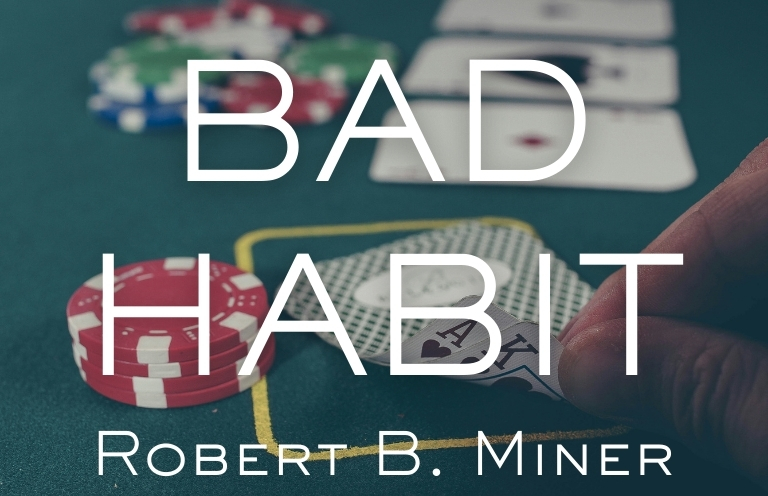
Sister Catherine Anne O’Hara had been bullying me and the other seven scumbags at the table for hours. She’d gotten the big stack early, baited some Murray Hill wannabe to go all-in while she was holding rockets, and never looked back. Her stack grew while the rest of us drained the bottles of mid-range booze in the corner of the room and ground our heels into the worn gray carpet. Now the pre-flop action was to her, and the sense around the table, from the sidelong glances and snarls, was that we were in for it. None of it seemed very Christian, but what did I know—I’d left all that behind a long time ago.
She raised, doubling my big blind. She always moved her chips like they were breakable, sliding them across the felt, never splashing the pot. When her bet was at the center of the table, she sat straight up and interlocked her fingers. She waited in her wool sweater, under the white permed hair, her expression open and still as a picture. Maybe you could call it a smile, at least in the eyes. I always wondered how she never sweated, surrounded as she was by angry men and cigar smoke in these tight Manhattan apartments. It seemed impossible—she was in her sixties and a little overweight. My lower back was almost always soaked.
Nuke called, but I had the sense he wasn’t holding anything. He’d been on tilt for a while, and the pattern of every move he’d made added up to him wanting to beat the nun, not win the game. The only reason his emotions hadn’t run him off the table was a big hand where he sucked out on the river against the one guy who’d managed, until that moment, to keep most of his money in front of him by playing an ultra-conservative style. Nuke lowered his sunglasses to the tip of his nose and glared at Sister Catherine.
“Not what you wanted to see, was it, Sister?”
As far as I could tell, she hadn’t given an indication either way.
“Why don’t you let the rest of us bet before you start up with the crosstalk,” I said, giving a look to the floorman. I’d seen Nuke at a lot of games over the years, and I’d come to hate him, with his sunglasses and thin lips. He thought he was a much better player than he actually was. And the way he lost—angry, like he never imagined having to be without his cash—I figured he came from money.
“Do something then,” he said.
But it wasn’t my turn, so I had to wait while the next two guys folded. I peeked at my cards again and called Sister Catherine’s raise. It wasn’t an entire bluff—pocket 10s were the strongest hole cards I’d had all night, but I didn’t have much faith in them. Anyway, how do you measure faith against a nun?
The dealer tapped the table and spread three cards for the flop. Two Kings and a Jack.
A less experienced player might have let the disappointment into his expression—a clench of the jaw, a swallow, a slow blink. I kept the skepticism out of my face, but inside it had solidified into a weight. At best I was holding low pair. If anyone bet, there was no way to justify staying in the hand.
My thigh began to itch, right under the vial of cocaine nestled in my pocket. Drugs were the one thing about which I was an optimist at the time, so I’ll say the vial was half-full. But it was about the worst time to pop off to the bathroom for a line—mid-hand, 5am—so I tapped the felt to signal a check and tried not to think about a brightening jolt of powder.
Sister Catherine checked as well. I almost couldn’t believe it—it was hard to remember a hand in the last two hours that she hadn’t moved the action with an aggressive raise. Nuke sneered.
“You know, Sister, I’ve wondered for a while—” He counted out a few chips and moved them forward. He added a few more, one by one, as he spoke. “How can you afford these buy-ins? You can’t be rolling in dough.”
“The Lord provides.”
“Come on now.” He leaned over the table. “Didn’t you take a vow of poverty or something?”
“I don’t think you understand the difference between monastic and secular nuns, Mr. Nuke.” She had a voice like an animated chipmunk on Valium. “I have a job.”
“Yeah? You a big time Wall Street trader?”
“No.”
“What then?”
“I’d just as soon keep my life outside this room exactly there. It’s not pertinent to the game.” There was something different in her demeanor. She’d gone from cool to icy. “Are you planning to raise or simply fiddle with your chips?”
I laughed through closed lips. Nuke’s glare shot to me, then back to Sister Catherine. He looked like he had something mean on his mind, but the floorman took a step forward, and I saw Nuke notice. He shoved his chips toward the pot. A few clattered to the far edge of the table and the dealer had to stand to sweep them back.
“Four hundred more.”
I looked at my 10s one more time. Man, did I want to call. Really, though, I wanted to jump across the table and choke Nuke to death with my bare hands. After a breath and a moment, the difference between the feelings settled in me. I folded.
Sister Catherine called. The dealer touched the table, then flipped the turn card. An Ace of hearts. The vial in my pocket shouted. I stood and stretched, twisted my trunk, trying to make my exit seem nonchalant. Sister Catherine checked again. I was about to let the floorman know about my trip to the bathroom, but Nuke wasted no time.
“All in.” He waved both hands over his stack like he was shooing it away.
Decorum said I should see the hand through. I sat, though now I let the agitation of withholding bounce my right knee under the table. Whatever. I had no cards to hide.
Smoke curled from the end of a few smoldering cigars on their last legs. It was the only motion in the room. The sound of car tires christening the early morning streets a dozen stories below bled through the old single-pane windows. Finally, Sister Catherine spoke.
“Alright. Call.”
Nuke flipped his cards immediately. King-10. At least my decision to fold had been validated. Sister Catherine touched her hair lightly with both hands, like she was making sure it was still in place. As if that perm was going anywhere.
“Read ‘em and weep,” said Nuke. He often talked like someone was feeding him lines from a bad movie. Unoriginal prick.
Sister Catherine’s expression didn’t change.
“‘Pride goes before destruction.’” She turned over her hole cards slowly to reveal one Ace. “‘A haughty spirit before the fall.’” Her second card was another Ace. “Proverbs 16:18.”
If I could have snorted Nuke’s expression off the top of a toilet tank instead of the blow, I would have. It was frozen in the most perfect contortion of defeat I’d ever seen, like all his confusion and anger and misogyny had been fighting their way to the surface only to get stuck shoulder to shoulder at a bottleneck below his skin. I only wished he’d take off his sunglasses so I could see his eyes.
The dealer flipped the river and set a seven on the felt and Nuke was done.
“Nice playing with you again, Mr. Nuke,” said Sister Catherine. And maybe I detected a little sarcasm. A little pleasure.
Nuke just sat there. Until he didn’t. He stood so violently that his chair went toppling over behind him. It was easy to forget how big he was while we were all hunched over the table, but he was broad and well-fed and had me by a few inches.
“Fuck you, Sister.” The rest of the players sucked our teeth in unison. He pointed at the dealer. “And fuck you, too. This is collusion. No way she’s holding pocket Aces twice in one night. What? No, don’t touch me. You feel bad for her or something? That why you’re sliding her hands?”
Sister Catherine was the picture of poise during the stress of a game, but now Nuke was threatening something else. I didn’t like seeing her scared. It was too easy to substitute my mom or Aunt Vee. All that was missing were the bruises. I stood.
“You’re gonna come after a nun? Really?”
Nuke shook the floorman’s hand off his shoulder.
“Maybe I’ll just drop a dime on this whole chickenshit operation. Fucks can’t run a fair game anyway.”
“Yeah? You’ll snitch?”
The stillness returned to the room. Nuke’s cheeks got red.
“Fuck you, Rick, you white knight sonofabitch. Sit there and judge me.” He looked like he had more to say. Instead, he stomped toward the apartment door. “Let me catch any of you on the street. I’ll get my fucking money.”
He slammed the door behind him.
The floorman leaned to whisper something to the dealer, then straightened and said, “We’re going to call it.”
No one protested.
Win or lose, this was always a tough moment for anyone with a semblance of a life, a few seconds that forced you to consider what you’d left behind for the previous few hours. It had been a long time since my inventory involved people I cared about. Now it was just work, and I’d decided it was good I didn’t have other distractions. How can you be a decent gambler when your head is crowded with emotional stuff?
I thought briefly about Monty. My foreman had already put up with more of my bullshit than any girlfriend, but I was smoked. Could I think of another excuse, so he’d let me skip out on the job site? Or had I lost so much I’d have to tough out a day of tinning on no sleep?
With bloodshot eyes and sluggish fingers, the other players counted chips. I didn’t count. I watched Sister Catherine. She seemed frozen in place, hadn’t even touched her stack to see just how much she’d taken down. I got the feeling she’d have sat there all night.
“Sister?” I took a chance, touched her lightly on the shoulder. The wool of her cardigan was rough. She looked up, eyes a little glassy. “You need a hand?”
“Oh.” She seemed just then to notice her chips. “I suppose I should…”
When it seemed clear she wasn’t going to finish her thought, I took the liberty of counting her chips. I waved the bankman over and asked him to cash her out. He handed over a little over four thousand in cash.
She couldn’t walk home alone. The city was stirring, but decent people would still be groggy. If Nuke was waiting, if he really had the balls to exact some misguided revenge against a nun, there was a good chance he’d get away with it. Not to mention the potential of some stick-up kid staking out the game. An old lady with four stacks bulging in a cheap purse was an easy target.
“You’d better let me walk with you.”
She seemed almost shell-shocked, but she took my arm when I offered it.
The game was on a quiet block, but the sounds of traffic and New York’s peculiar industry drifted from the avenues. The stars were just visible in the lightening sky. There was no sign of Nuke. The cold fall air seemed to give Sister Catherine back some of herself.
“This way,” she said, starting east. I jogged a couple of steps to catch up. When I was at her side again, she added, “You’re very kind to do this.”
“It’s nothing.”
It felt like the truth. An understatement, even. The need to keep my head on a swivel for her protection had me energized, and I much preferred that feeling to the shame and fatigue that usually dogged me after a game.
We came to a wrought iron fence and a building and a brass sign that read “Saint Michael’s Primary School.” She stopped and turned to face me.
“Off to the mines,” she said.
I smiled, nodded. “Yeah. School teacher?”
“Principal. In fact, I administrate almost every aspect of the school. But not for much longer. I’m retiring in the spring.”
“Congratulations.”
“I just don’t know about my replacements.” She looked over at the building. “I just don’t know. Apparently, it’s going to take three of them to do what I’ve done alone for the last twenty years. And nobody has the stomach for discipline anymore.”
I didn’t have a response to that, so I just made a noise like I agreed.
“Rick.” She said my name almost like a question. Despite having played a few times, we’d never really spoken. What could we have had in common?
“Yeah.”
She held out a hand. I took it.
“You’re a good man.”
I cleared my throat.
“Not so sure about that, Sister. But happy to help.”
She let go of my hand. She wagged a finger at my face.
“I can tell about these things.”
She lingered, which felt strange. The school, with its limestone exterior and Parisian embellishments, loomed like a chaperone. I rocked on my heels. A gust of wind sent the swings on the empty playground creaking on their chains.
“I should give you something for the trouble,” she said.
“No, please.”
“It’s only right.” She put a hand into her purse.
“I mean it,” I said, maybe a little too forcefully. I held up my hands. “It wouldn’t feel right.”
“Very well. No gifts.” She took her hand out of the bag. A light went on in one of the school’s first floor windows. She opened her mouth. Closed it. Opened it again. “Before you go, may I speak with you about something?”
What came next, I could never have guessed at. She asked if I had a car. I did. She said she had a proposition for me. That was exactly the word she used: proposition. I thought of a joke. I didn’t say the joke. When she laid out the arrangement, even though she talked like it was a big secret and maybe we’d be doing something wrong, I said, “Yes.” Fatigue, curiosity, the vig—they colluded against my better judgment.
* * *
We left on Saturday. Sister Catherine had me pick her up outside her apartment on the Upper East Side, not too far from the school. It was 7am, and I was on my second cup of bodega coffee. Like that was going to help.
Rollo had paid me a visit the night before. The motherfucker he brought with him barely fit through the door. Rollo said he didn’t have faith I was going to be able to get him the money I’d lost that month. He’d heard I missed some days at the duct repair job at the restaurant on Bowery. I couldn’t figure where he’d have found that out. People talk too much.
I told the big motherfucker not my hands—how was I going to get the money if I couldn’t work or play cards?—but he was either stupid or mean or both.
After they left, I did some blow, just to ease the pain of my broken index finger. One thing led to another.
So really it was Rollo’s fault (and the big motherfucker’s) that I hadn’t slept. Not to mention the makeshift splint on my index finger that caused me to spill my coffee and stain my shirt. That was also on them.
A garbage truck rumbled by, barely missing my side mirror. When I looked back at the building, Sister Catherine had appeared. She was carrying a duffel bag over one shoulder and helping a tiny old woman down the run of three stone steps to the sidewalk. Sister Catherine and the older woman were dressed alike—ankle length navy skirts, dark wool coats—down to the wooden crucifixes. The older woman was hunched, wrinkled as discarded aluminum foil, pushing ninety at least. She hadn’t been part of the proposition.
I got out of the car. It was a mild morning for November, but our breath still made clouds in the air. I gave my arm to the older woman—Sister Catherine introduced her as Sister Bea—and helped her into the backseat of the car. She was, at least, capable of pulling the seatbelt across her chest and buckling it.
Heading west out of the city was slow going, the start and stop violence of morning rush hour. It was exhausting to be so focused on not smashing into other cars. By the time we hit bumper to bumper traffic in the Lincoln Tunnel, I was too tired to pretend I didn’t need to know why Sister Bea was there. It’s not like the old woman seemed like a threat, but a gambler’s life is about tiny numbers, fractions of percentages that might give you the slightest edge over the house or another player.
“Hey, Sister,” I said. “Listen—”
“Can you believe Bea has never been to the beach?” She turned to look at the back seat. Sister Bea was snoring softly, chin resting on her chest. “Not once in 92 years.”
Apparently, Sister Catherine’s ability to read people wasn’t confined to a poker table.
“That’s something.”
“Yes. A true Manhattanite in that way. But still a shame. Fortunate that she was able to tag along, don’t you think?”
“Sure. Yeah.”
It occurred to me that I’d been thick to assume Sister Catherine and I had nothing in common. One day, you make a choice about how you’re going to live your life, and you have to leave the possibility of certain experiences behind. I’d missed things, same as Sister Bea had never visited the beach. So what if I didn’t make time to draw anymore? What good did it do to imagine the kids I’d never had?
Soon the mouth of the tunnel glowed ahead. Even the dim western light was too much. I put on a pair of sunglasses. We hit I-95 and headed south. The road opened up a bit, and I was able to cruise. I turned the radio to AM news, fearful of offending the nuns’ sensibilities. We listened to a story about a mudslide in Indonesia. A hundred casualties and counting, said the radio. I imagined a nun would have some interesting thoughts on natural disasters. God’s plan, and all that.
“How about some music?” Sister Catherine asked.
I switched to an oldies station. We listened to The Beatles, then Seger, then Def Leppard started in on “Pour Some Sugar on Me.” I blushed and kept my eyes on the road. Sister Catherine kept time by tapping her fingers lightly on her thighs.
A few miles after we’d gotten on the Turnpike, Sister Catherine asked, “How are you on gas?”
“Fine. Filled up yesterday.”
“Well, so did I, and I’m afraid I need a bathroom.”
“Oh. Right. Sure.”
I pulled off at the next exit and into a Shell station. I took a parking spot away from the entrance to the convenience store. I kept the car running.
“Need anything?” she asked. “More coffee, maybe?”
I shook my head. She nodded. Cold air flooded the cab when she opened the door. It dissipated just as quickly once she shut it. Then it was just the heater and the thrum of the engine. My eyelids started to get heavy. Another ninety minutes in the car. I wasn’t going to make it. And I’d really be sealing my fate if I crashed carrying two women religious.
There was no one around the car. Sister Bea snored gently. I went into my pocket and pulled out the vial and unscrewed the cap. I dumped out a little pile of coke on the center console. No time to cut it into a nice line. I dipped my head down and snorted. Then came the beautiful burn. I threw my head back.
Sister Bea and I locked eyes in the rearview mirror. For a second, I thought I was going to shit my pants. I swallowed, and the drip numbed my throat. I tried to smile, but my whole face came out crooked. Her face, so unlike ones I was used to looking at, was impossible to read. What a poker player she’d have made.
Sister Catherine knocked on the passenger side window. She was holding a cup in each hand. I leaned across the car and opened her door. When I sat back straight, Sister Bea was snoozing again.
Sister Catherine sat and handed me one of the cups. There’s no smell quite like Turnpike gas station coffee. Only slightly less caustic than the gasoline moving through the pumps nearby.
“You need a pick-me-up,” she said, “whether or not you choose to admit it.”
“Thanks.”
I reversed out of the parking spot and took us out of the lot. Before too long, we were on our way again. I sipped the coffee. Sister Catherine watched me as she sipped her tea.
“Would you like me to ask about your finger?”
“This? There’s nothing much to tell.”
She let me lie, and I was grateful.
* * *
I’ve never liked the lobby of the Borgata. The walls are made of tan marble, and two glass Chihuly sculptures erupt like red and yellow flames on either side of the entrance to the casino floor. Another of the artist’s bulbous monstrosities hangs from the ceiling. At the wrong time of day, it can feel like walking into the gates of Hell.
10am, late fall? It was the wrong time of day.
With Sister Catherine to my left and Sister Bea on my right arm, I think I looked like the world’s worst pimp. I might have been embarrassed, except nobody gave us more than a quick glance. Everyone gambling before noon is wrapped up in their own mess. We left Sister Bea sitting with a plastic cup full of quarters at the end of a bank of slot machines. I followed Sister Catherine to the chip cages. She changed three grand in chips.
I thought about Nuke’s rudeness at the game the other night. Scummy to be sure, but really—where was she getting this money? She was the principal of a grade school, and I was pretty sure she didn’t get paid a full layman’s wage. Between the piddling salary, tithing, and living in New York, I didn’t have an imagination wild enough to figure out where the money was coming from. She was a good player, but how much could she have stockpiled?
Per our agreement, Sister Catherine slid me three hundred.
“See you at the poker tables?” I asked.
“It’s Blackjack for me today.”
I’d have never taken her as one for table games. Blackjack was the best of them—42.22% for the player to win, 49.1% for the house—but the odds were still shit. If I knew that, I had to believe she knew that. Besides, from what I’d seen, her best asset as a gambler was the ability to read people, not crunch numbers.
“Blackjack?”
She looked down at the tray of chips in her hands. She laughed like she’d thought of something funny.
“Did you know that the priest in charge of my parish loves to box? Just last week he broke a rabbi’s nose at the New York Athletic Club. Another I know collects expensive bottles of wine. The rectory is practically overflowing, though he works hard to drink them as fast as he can acquire them.” She took two more chips off the end of one stack and handed them to me. “We all have our peccadilloes.”
A payment not to press her on it? I took the extra hundred bucks without a word.
I proceeded to have one of those days. My hole cards stunk, and when I did manage to put together a decent pair, another player inevitably took the advantage as the hand progressed. I bluffed in my spots, bet smart otherwise, but I couldn’t overcome the cards. I limped along for six hours and a hundred of my own dollars on top of Sister Catherine’s chips before I called it.
On the way back from the poker room I counted twelve strollers in the haze of cigarette smoke and flashing lights. Counting strollers was my favorite way to remember things could always be worse, that I could always be worse.
It took a while to find Sister Catherine—there were lots of other silver perms on the casino floor. I stood behind her without making myself known and watched her bet for a while. She played Blackjack differently than she played poker. At a Hold ‘Em table she was all restraint. Her aggression was stoic and tactical. Now I’d have called her enthusiastic. Maybe even reckless. She bet against the odds, hitting when she should have stayed, doubling down seemingly at random. Clapping, tittering, wiggling in her chair.
The wildest part was that she was winning.
The guy next to her ran dry and got up from the table. I took his seat. I told myself I was just going to keep her company. No playing. Didn’t have the money anyway. Just needed to rest my legs.
“Hey, Sister.”
“Rick!”
What a strange smile she had. Every part of her face expanded—mouth, cheeks, eyes.
“You’re having a day.”
“And you?” She moved $100 to the circle.
“Not so much.”
“Then play with us.” She swept an arm to indicate the rest of the players. Their expressions, to a man, told me they didn’t share her sense of community. “Your luck is bound to turn.”
I patted the pockets of my jeans.
“I’m tapped. And then some.”
“Well, I want the company. And Rhonda isn’t just going to let you just take up a chair like a lump.”
The dealer had a bad red dye job and a missing canine. She shrugged from behind the chip rack.
Sister Catherine slid a short stack of green chips my way. I shuffled them bottom to top with one hand. A tension in my gut relaxed, one I hadn’t even realized was there. There are few better sounds than the rhythmic clicking of ceramic. Another $300. The gratitude I knew I should have expressed got stuck in my chest. Suddenly I didn’t like the way the rest of the table was looking at me.
“Twenty-five dollar minimum,” said Rhonda the dealer. So, I bet.
And then an uncommon thing happened. I went on a run. A run for all-time, in fact. Or maybe Sister Catherine’s run continued, and I rode the wave with her, because she kept stacking chips too. I even let her push me on bets. “No,” she’d say, “do fifty,” instead of the twenty-five I’d laid down. Or “Come on, Rick. You always hit on a soft sixteen.” She wound up being mostly right, and twenty minutes later we were hugging and pounding the table and getting warnings from the pit boss.
One by one, the other players abandoned their seats. We were using up all the good juju. Soon it was just us and Rhonda, and it wasn’t long before a feeling of bloated fatigue, like fullness after Thanksgiving dinner, took me.
I’d turned $300 into $5,200 and never mind the $400 from before. It was enough to keep Rollo off my back, to cover rent, to cover my next buy-in. Maybe I could even get a real doctor to look at my finger. I leaned back, stretched my jaw, spread my chest and popped that sticky bone in my clavicle.
“What do you say, Sister?”
Her gaze flitted my way, then back to the dealer. Her lip curled in a snarl.
“A few more hands.”
The fun was gone from her voice. She stared at the cards in the chute like a lioness. And I got it, finally, that she was a kindred spirit. It was a hollow realization. It even made me a little sad. You never expect to see an addict that looks like her.
“I think maybe I’ll take a rest in the car then. Having trouble keeping my eyes open.”
She looked at me. Her expression was a gut punch. Like when I told my mom I’d broken it off with Marnie, the one girl she’d ever liked, when really it was Marnie who broke it off with me because who in their right mind would stick around for all this? She was a good Catholic girl, like Mom had been. That had given Mom hope. It seemed like all I could do was anger and disappoint the women in my life.
“Didn’t I say I wanted the company?”
What did I owe besides the $700 she’d given me? Could I simply pay her back, or did her vig take the form of an expectation of loyalty? What was Sister Catherine Anne O’Hara’s version of breaking fingers?
She said, “You can rest in the suite when we’re finished.”
Before I could respond, a bony, blue-veined hand fluttered into the space between us and settled on Sister Catherine’s shoulder.
“We’re losing the light,” said Sister Bea. Her voice didn’t waver like I’d expected it would. It belonged to someone younger. Stronger. It did the trick. I had the sense of being saved.
Before long, we three were standing in rocky sand. The sea was gray but for the shallow white peaks in the distance and the foamy edge where it lapped at the shore. Cold wind. Stray dogs. It would have been bitter scenery except for the peace in Sister Bea’s swaying body.
And then there was Sister Catherine, my lucky charm—it was hard to think of her otherwise while the cash fattened my pocket. Away from the casino, that little bit of sharpness I’d spied was gone. She watched her friend moving gently in the maritime breeze with her hands behind her back.
Sister Bea took a few shaky steps toward the ocean. I worried she’d fall and started forward to help her, but Sister Catherine put a hand on my arm. She wore a different smile than before. This one was tranquil and a little bit sad. She never took her eyes off Sister Bea.
Mom had taught me to swim at Jones Beach on Long Island. Anytime she mentioned it, people looked like her like she was crazy—what better way to kill a kid? They quit talking shit in ninth grade, though, when I won the 100-meter free at the Empire State Games.
I smiled. People should experience the beach, for all its good and bad. I told myself I’d make a point to be back soon. Sister Bea struggled over the wet sand, and I watched the water splash on her chunky black shoes.
* * *
For a few days, life was good. Rollo didn’t come around, so I bet a four-team NHL parlay with money I’d set aside to pay him back. Risky? Yeah. But I guess the cash still had some of Sister Catherine’s good fortune attached to it because the first three games came in. I ordered Indian delivery and posted up in front of the TV to watch the Rangers take on the Red Wings for the final leg.
When the Rangers scored their second goal of the first period, an abscess of relief burst in my heart so suddenly that tears welled in my eyes. All the pent up, rotten shit I’d kept hidden from myself—you never realize the shapes life has twisted you into until you catch a break.
I melted into the beaten down leather of the couch and, for the first time in as long as I could remember, thanked God for whatever he’d worked to put Sister Catherine in my life. The truth about looking at the whole of a gambler’s life—whether or not we can admit it before it’s too late—is that the trajectory only ever has a downward slope. Those little spikes of good along the line? Illusions, too small to do anything but sink us deeper.
But Sister Catherine felt like something different. A course correction. She understood the life, and she was a nun, for Christ’s sake. I had to keep her close.
I should call her, I thought. Maybe she’s planning another trip to AC. Maybe I could convince her to take one.
The doorbell rang before I could pick up my phone. My nerves swelled then dissipated. It was probably my lamb vindaloo, but if it was Rollo, even better. He could watch with me while the Rangers secured his money and then some. He’d see that I was free of his quicksand, and he’d wonder how, and I’d leave him in the dark.
That thought was the reason I answered the door with a smile on my face. The smile stuck there even after the confusion set in.
I didn’t know the people on the other side of the front door, but they were familiar. I’d seen their types in movies and TV. A man and a woman. Dark suits over dark comfortable shoes. Hair tight to their skulls.
“Richard Raskin?” asked the woman. She had a lisp, and it thickened the “s.”
“Yeah.”
She brandished a badge, but I already knew. FBI.
“Agent Stahl. This is Agent Cho. We’d like to talk to you about Catherine Anne O’Hara.”
Behind me, the goal buzzer sounded, and cheers erupted through the TV. I glanced back. 3-0 Rangers. My insides turned to knots.
* * *
The chairs were half-empty as the game started. The building’s radiator system was cranked too high for the outside temperature, and most of us in the apartment seemed like we were sleepwalking. I should have been focused on the other players, but all I could do was build an image of Sister Catherine in one of the empty seats. A few weeks ago, I’d have been excited to sit at the table and find her missing—her absence gave me better odds. Now it felt strange. When I changed my money with the bankman, I’d swore I could smell her wooly, floral scent on the bills.
I’d done a lot of wandering when the news stories started to come out—a nun who stole from kids. Money that should have gone to new books, higher teacher salaries. Hardly the modern-day Robin Hood some part of me wanted her to be. No wonder she’d been such a shark on the felt. I’d walked past her apartment, past her school, past anywhere else that came to mind, hoping maybe I’d see someone or something that would make sense of things. Of course, it all made sense. I just didn’t like the sense it made.
The action of the first hand came to me, and I tried to put her out of my thoughts. I limped in with a Jack-10 of spades. The flop paired my Jack and gave me an open-ended straight draw. I bet small, hoping to seem weak and lure someone in. Everyone folded. I tossed my cards toward the dealer, disgusted.
It went that way for a while. My cards came, but no one would play. Never has a heater been so wasted on a player, I’m sure of it. I stole off to the bathroom a bunch and poured bump after bump on the soft flesh between my index finger and thumb, breathing in the odor of potpourri and bleach along with the blow. An hour in and my stomach was hard and round, and I couldn’t feel my face.
At a little past midnight, the apartment door flew open. I almost choked on my heart expecting to see the FBI again, this time waving their guns and claiming they were, in fact, after me.
It was only Nuke, though, waving a newspaper.
“When you’re right, you’re right.” He took off his jacket and tossed it over the back of the blue sofa in the anteroom. I’d never seen him more pleased with himself. “And God be damned if I wasn’t right.”
He came around the table and tapped me on the shoulder with the folded newspaper.
“Our girl is famous. See? I knew she had to be skimming that money from somewhere.”
I didn’t look up. “We’re in the middle of a hand.”
Nuke shoved the paper in my face. I glimpsed Sister Catherine’s picture in black and white.
“She was a crook!”
I pushed the paper away. Nuke ignored me and launched into a summary of Catherine’s crimes, but I already knew the details: $1.2 million in stolen funds from Saint Michael’s Primary School over the last ten years. She was being charged with wire fraud and money laundering. From the sound of it, she was toast.
That had been the worst part about sitting with those agents—I hadn’t understood why they needed me. It had felt cruel, like the information I traded so they’d look the other way about the money I won with those ill-gotten gains was just a cherry on top of their case. They knew she’d taken the money. Even the Daily News had written about the falsified budgets and hidden bank accounts the school found during her retirement audit.
But Agents Stahl and Cho had a story to tell for the jury. Gambled money was almost impossible to trace. Unless you caught someone in the act.
Enough time had passed when they arrested her that I didn’t feel like a snitch. Do enough coke and you can put plenty of distance between your conscience and any single moment. But Nuke’s entrance brought those feelings up again.
Everyone was talking about it now, even the dealer and the floorman. The game had stalled out altogether. I felt my luck—Catherine’s luck—evaporating, and I couldn’t lie to myself anymore.
Because the actual worst part—more than the snitching, more than feeling used, more than her stealing from kids—was that she’d lost $1.2 million dollars. I just happened to catch her on a heater. The winning was an illusion, a little spike on a line with a downward slope. Her luck would turn—had turned—just like everyone else’s.
I banged a fist on the table. Chips rattled. Heads turned my way.
“Are we going to play poker or what? Jesus, the first night in six months I’m catching cards and we’re going to turn this into a sewing circle?”
The other players gave each other looks, and I knew I’d fucked up. The fastest way to ensure you got no action was to let people know you were getting lucky.
One young guy I didn’t know well snorted and muttered, “Guess rent’s due.”
“It’s just a little gossip,” said Lefty Keller. He ran a hand over the thinning black hair he wore swept across his skull. “Just a little fun.”
If I hadn’t been high, I might have managed not to blame them.
“Fun!” I laughed. “Fuck this. Cash me out.”
My fingers felt thick counting chips. My steps were stiff and jerky. I managed to collect my money and my coat and headed toward the door. Nuke put himself in the way.
“Hey, now.”
“Come on, man.” I wanted to be able to move him with a threat, but I couldn’t muster the right words. “Just—please.”
He crossed his arms and stared down at me. His mouth relaxed, and he scratched his temple where his hair had begun to go gray.
“Do you want to go get some pancakes?”
“I’m fucking snow-blind right now.” Why I told him that, I wasn’t sure. I wiped the back of my hand across my nose and sniffled. “I’m not hungry.”
“Yeah, but you might want some pancakes, right? You could pour the syrup. Spread some butter. It’s a nice little ritual, isn’t it? There’s a place nearby.” He took his own coat off the sofa and opened the door. “I’m buying.”
Outside, the city seemed strangely alive until I realized it wasn’t yet one o’clock. It was so easy for a mind to get trapped in those apartments, to forget that people did anything else with their nights. A huddle of guys sat bundled on a stoop a few doors down, smoking weed. People laughed over music at a bar around the corner. Nuke didn’t say anything, just yanked his head in the direction of the avenue. I hoofed it until I caught up, and we walked side by side, past a flock of pigeons pecking at an island of fried rice spilling from a discarded Styrofoam container, past the weed smokers, past a wall of black trash bags piled up for collection day. We walked until my breaths came easier. By the time we reached a big stone church with a red door the stiffness in my jaw had even loosened a little. I hadn’t had pancakes in forever. It would be nice to taste maple syrup again. How had he known? Maybe he had some talent for cards after all.
I made a sign of the cross as we walked by the church. Nuke laughed, and then I laughed, because when a joke is really true and the timing is good and you’ve got the right audience, it doesn’t need a punchline.
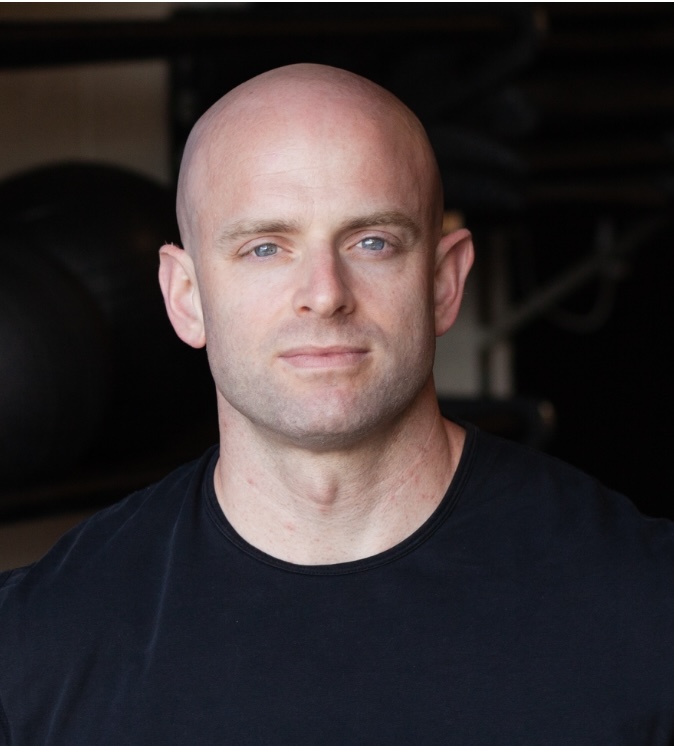 Robert B. Miner is an Army veteran, West Point graduate, and New York City native. His writing has been published widely, and his debut novel is forthcoming from Simon Six, an imprint of Simon & Schuster, in 2027. He lives in Kansas City with his wife and children.