In “Dick Butkus, You’re Killing Me” by Tom Sokolowski, a chance encounter at a funeral with David, recently home from military deployment, leads the narrator to grapple with his sexuality, his obligation to his ex-pro-football-player father, and what it might mean to really be there for someone suffering from PTSD. When the narrator and David take advantage of the isolation of COVID to break into an abandoned skating rink, their casual relationship becomes something much more profound.
I drove my father in his Ford Explorer to the Deltona cemetery and parked near my mother’s and brother’s graves. My father slipped a zebra-striped car cane (easy to find if dropped) in the door latch and worked his legs out the door. His little island of a crew-cut vestige had gone cotton-candy stringy during lockdown and was slicked back into a thin comb-over. He was shaved clean for the first time in months. I handed him his walking cane and braced his back near his armpit, pushing as he leaned. Under his black jacket, his fat arms were tender and nowhere the size they’d been when I was a kid. In fact, most of my father’s football weight had trickled to his gut, which was big and round in his prime, but it was tough back then. In the cemetery, as he teetered between headstones, his stomach sagged.
The family graves were scaled with leaves. My father’s spot was reserved to the right of my mother’s. Dead mums jammed two black granite vases. Each headstone had an oval ceramic tile with their picture. My father, leaning on his cane, said he didn’t like how the pictures looked. I licked my thumb and scrubbed the gunk coating my brother’s tiny cheek, ridging up the dirt to reveal the faded coloring of his face. We stood in silence. Eventually, my father said, “Okay.”
Back in the Explorer, we looped around to the other side of the cemetery where folding chairs lined under a canopy printed with Baldorf Family in a font so fancy you’d think they did weddings. The mask-clad gravediggers in Baldorf Funeral Home polos horseshoed around the pit doing their best to keep their slouching respectful. We shuffled over. My father pulled out the last chair in the back and sat with his cane across his lap. We put on our masks.
The hearse rolled in followed by the procession. Mr. Esposito and his family found seats. And there was Mrs. Andrews and Principal Wagner, Dr. Kovacs, and Elena Cavalcante from the front office. With COVID restrictions, Mrs. Esposito’s service at St. Ann’s had been family-only, but here the burial was public. This was June 2020, the week I moved back home after the vet I worked for shed half her staff. I was freshly twenty-one, just learning that it’s hard to know what’s good for others and impossible to know what’s good for yourself.
Halfway through the priest giving his spiel, a beat-up yellow Ford Ranger parked behind the Explorer. David Greene, who would lead me to my first significant lesson in avoidable loss, crept down the row of headstones until he was in the shade of the canopy, behind me. I’d last seen him at graduation. A black Orlando Magic ballcap (the basketball logo distractingly blue and starry) rode above David’s flesh-colored hearing aid. He wore a black button-up with rolled sleeves revealing, on his lean left forearm, a scratchy colorless tattoo of the Battlefield Cross with a flag-draped background. He wasn’t a bad-looking guy, like a Gregory Peck with eyes slightly too far apart. He saw me and I faced forward.
Sad amens followed the final prayer. The casket lowered. People (far more concerned with infection than sympathy) formed big circles, and I helped my father up.
“Rick,” Mr. Esposito said, coming over. “How about those Bucs?”
“Interesting stuff, Paul,” my father said. Then, “My heart’s just broken about Angela. Just broken.”
Mr. Esposito wiped his nose with the back of his hand. “I say they’ve got a real shot, Rick.”
“Tampa?”
“They got their hands on Gronk,” Mr. Esposito said. “Only question is, will Brady’s arm last. What d’ya think?”
“He’s got a season in him,” my father said hesitantly.
I gave Mr. Esposito my condolences. He was my height but about twice as wide. His neck and shoulders were a mound, his sleeves fit tight, and his stomach was large but obviously stiff. He was older than my father by a decade and a much better coach. Leaning on the balls of his feet, Mr. Esposito asked my father a question about Ndamukong Suh and sacks.
David was standing alone, maskless, staring off at some indeterminate point in the canopy. He had the complexion of a wilted white tulip, even paler than my father. “Terrible about Mrs. Esposito,” I said to him.
David nodded slowly as if nodding was needed to recognize me. “Crazy world.” He emphasized each word like he was navigating a computerized telephone operator. He had on jeans and scuffed converse. I had loafers a size too big. “How’s the music career?” he asked.
“I just tinkered in high school.” His eyes were behind me—on his truck? Or a woman, maybe, though I didn’t think so. “I was working at a vet in Sanford,” I said. “I’m out of work like everyone else. Still can’t get the fucking unemployment site to work.”
“Shame about Mrs. Esposito,” David said, as if remembering where we were. “Beautiful day, though. Suitable to honor her.” He was still nodding. “Wouldn’t mind being buried on a day like this.”
“I’ll be back home a while.” I ran my hands through my hair. “You still live around Highbanks?”
“I do.” He stopped nodding. “A drink would be nice if anything was open—”
“Butkus,” my father yelped, tottering backward. His cane arced through the air. A clutched folding chair collapsed backward with him. Mr. Esposito’s eyes were huge. David moved to catch my father, but my father hit the ground shoulder first and remained on his side, groaning. David crouched. Mr. Esposito picked up the folding chair. My father rolled to his back.
“Stay put,” David said.
“My knee.”
David swept his hands from my father’s ankle to his lower thigh. “Nothing feels broken. A chair,” he said over his shoulder to no one in particular.
Mr. Esposito triangled the fallen chair, my father laid for a while until confirming he was fine, then Mr. Esposito and David, each bracing an arm, lifted my father on the count of three. I retrieved the Explorer, taking it up on the grass as close as possible.
* * *
In the car on the way home my father said, “The fuck was that guy talking about football for?”
I shrugged.
“Yacking in my ear about the whole starting lineup.” My father looked out the window. “Football. Christ. His wife just died.” He felt his knee with both hands. “They’re not even playing.”
At home, with his cane on the left and me on the right, my father got into the house and collapsed into his recliner. He kicked off his pants and wiggled into gym shorts. “The military guy. He was helpful.”
“David.” I said, fixing a bag of ice. “He lives close by. Gave me a couple rides home from Deltona High back in the day.”
“Maybe you should check into the Army,” my father said, pressing the ice to his knee. “They need people to work with animals.”
I handed him the remotes and he powered the TV. CNN buzzed on—Wolf Blitzer talking excitedly about the recent uptick of deaths. Soon my father was snoring, oscillating between the world’s most unsettling wheeze and a sound like Bigfoot choking to death. I went to my old bedroom in the back of the house where the curtains stayed permanently deployed, stripped my jacket, and lay in bed with a copy of Anna Karenina on my chest. On the floor was a bin of clothes (lots of vet-tech scrubs) that I hadn’t yet put in the closet. Nerf guns, which my brother had loved, perched on a wire closet shelf hangered with some too-big suits, uncomfortable sweaters, and a few old dress shirts, a black one I’d worn to my mother’s wake. New on my desk was a box of fishing reels that Warren Sapp gifted my father, a box of jerseys, a few footballs, and a helmet signed by Derrick Brooks. The stuff was maybe worth something since my father played right before they won the Super Bowl. I opened Anna Karenina to my bookmark and began reading.
My father shouted, “Where are you?”
I went to the kitchen.
“Help me up,” he said. Still on the recliner, with his cane in his left hand, he stuck out his right, which looked like a glove filled with water. He’d long outgrown the wedding band that he’d continued to wear for about half a decade after my mother’s death.
“Let me see that knee,” I said.
He hiked up his gym shorts.
I couldn’t make out how severe the swelling was. “Let me see the other.”
“Just because you’ve wiped a dog’s asshole doesn’t mean you know Butkus about this.”
I pulled up the other leg of his shorts. The left knee seemed considerably smaller. “You should get an x-ray.”
“Go to a hospital with all this going on?” He gestured to the TV, the COVID-19 tracker graphic showing forty-five thousand new daily cases, the most so far. “For a sore knee? Help me up.”
I grabbed his forearm and heaved until he was on his feet. He stepped into a clog slipper. “I’m getting food.”
That meant Steak ’n Shake, maybe McDonald’s. Regardless, two sandwiches plus fries and a shake. “How about I cook? I’ll roast brussels sprouts,” I said. “You like brussels sprouts.”
“I’ll be farting all night.” He waddled to the kitchen and surveyed the counters.
“Your keys are by the laundry room,” I said. Then, “You’re killing yourself.”
“Dick Butkus.” Spit flung across the tile. “You’re killing me.”
“That doesn’t make a poop squirt of sense.” I followed my father to the laundry room “Why do you think you fell?”
“Paul was breathing into my mouth,” he said, opening the garage door.
“Get something small,” I said. “I’m cooking tonight. I’ll invite David. It’d be nice to have company.”
My father paused with the door open. “Military guy? Why invite him over?”
“It’s the human thing to do.”
“There’s a pandemic.”
“He’s been sitting in his house just like us.”
* * *
My father left. I dialed David. He agreed to stop by after I practically begged. I went to Walmart, returned, and countered an orange, green bell peppers, poblanos, tomatillos, onions, a jalapeno, fresh garlic, cilantro, rice, cumin, and a couple cans of great northern beans. My father was in his recliner, sipping a Steak ’n Shake shake (chocolate from the look of the straw). I marinated a pork butt, dehusked the tomatillos, and rubbed them free of sap under the kitchen sink. I was good at cooking chilis and soups, nontechnical things that, as long as you added the correct amount of salt, would turn out okay because the ingredients did all the work.
Around seven, David knocked. I let him in. He held a twelve pack of Jai Alai under his arm like a piglet and was wearing the Orlando Magic hat. I led him through the house.
“How you feeling?” David asked my father.
“Been through a lot more.”
“Doozy of a fall.” David set the beer on the kitchen island. He tore the cardboard handle and extracted a can. “Beer?”
“Not good with my medication.”
David looked at me.
“Sure,” I said.
David got one for himself. I stashed the rest in the fridge and turned on the stove.
My father stood on his own. “So you tutored for Angela’s class?”
David nodded.
My father limped into the kitchen, took a seat at the head of the table. “How was this one?” He pointed at me. “Give you as much shit as he gives me?”
“Not at all.” David laughed while I seared the pork in the big pot. “The point of the class was for everyone to help each other. Sometimes Will taught more than me.”
I sizzled diced cilantro and garlic in the pork fat while David continued about how I’d always explained stoichiometry better than him. I tossed in the tomatillos and the spices, deseeded and chopped the broiled peppers, and fetched David another beer. He took a seat at the table, near my father.
“Haven’t watched much football the last few years,” David said. “I was a big fan of Tampa, back in the day.”
“You a fan of Warren Sapp?” my father asked.
“I was.”
“Got a signed jersey of his. William, you know where to find that?”
“I’ll take a look after we eat.” I ladled the chili into bowls of rice and brought them to the table.
“So you served?” my father asked David. “The country.”
David took a big bite of chili and chewed thoroughly. “I did.”
My father eyed a spoonful of chili before shoveling it into his mouth. “I would’ve liked to have served myself. I was lucky enough to make it to the pros, but I regret not serving.” He blew on a second spoonful. “Guys like Pat Tillman. Tough son of a bitch. Real heroes. Men you model yourself after.”
“Tillman got killed,” I said.
“Sacrificed himself,” my father said, “saving the lives of his men.”
“Fratricide, actually.” David crunched his second beer can.
“I’ll get you another.”
“What’s the difference?” my father said. “Tillman’s a hero. My point is there’s a whole slew of guys who did it. Ted Williams.” My father napkinned his nose. “David Robinson.” He coughed. “Wish I could’ve joined them.”
“Think your family would’ve seen it the same way?” David said.
“Watch what you say about my family.”
“He’s right,” I said, opening the fridge.
“What do you know?” my father said.
“I’m nearly an orphan.” I handed David a third beer.
“Dick Butkus,” my father said, looking like he wanted to chuck his bowl at the wall.
I finished my beer.
“Everything I did was for the family. You know why I wasn’t great?” my father asked. “Because I didn’t have talent.”
I’d heard this before.
His eyes went wide. “But that didn’t stop me from being somewhere near the top. You’ve got talent.” My father pointed at me with his thumb and pointer sandwiched, sort of like he was directing an orchestra. “Fuck knows what for. You haven’t put a shred of work in to find out.”
I scraped the sides of my bowl. David was guzzling his beer. We ate quietly for a while until my father said, “Go find that jersey, will you.”
I sinked the three bowls, got two fresh beers for David and me, and went into my bedroom. David followed. There were a dozen jersey’s from a bunch of guys nobody would remember in a box on the desk. I would’ve preferred to light the stuff on fire. David took off his hat and fit on the Derrick-Brooks-signed helmet.
“Careful with that,” I said.
He got into a football stance, crouching a bit and raising his shoulders, and pretended to surge forward. I stiff armed him, smiled, and found the Sapp jersey. David took off the helmet and set it on the desk. I held the jersey against his torso. “Little big,” I said.
“Could use it as a blanket.” He waved dismissively. “I don’t need it.”
I folded the jersey and pushed it into his chest. “Save me the trouble.”
Later, the kitchen trash heaped with Jai Alai cans. David said, fast and slurry, that he should go and for my father to stay off that knee. I told David I’d drive him home in his truck. He argued, but I insisted.
He handed me his keys and we strolled down the driveway. Out of the neighborhood and two rights and a left and we were pulling up his driveway. He grabbed my wrist. “Appreciate what you’ve got.”
* * *
The next morning, I found David’s Magic hat on the desk with the football memorabilia. I stayed in my room throughout the day, only leaving to fetch a bowl of leftovers. Around five, I put down Anna Karenina, got dressed, and grabbed the hat.
My father was wobbling, like the world’s biggest penguin, out of the bathroom. “Where you going?”
“Out of your hair. You need anything?” I asked. “Food?”
“The fuck you care?”
I left and found David’s yellow Ranger where I’d parked it, on a cracked ribbon driveway that cut through a weed-choked lawn. The doorbell didn’t work. I knocked. The welcome mat was moldy with no text, just a bunch of faded out-of-season pumpkins. I kept knocking.
The door cracked just enough for David’s face. He leaned on the jamb like he was part of it. A bandage wrapped his left hand.
“Forgot your hat,” I said, holding it up.
“Thought I was being raided. Come in.”
He disappeared, leaving the door open. It was a tight house. Off the entryway, a galley kitchen with nothing out of place. In the living area, David slumped on a wrinkled leather couch missing a middle cushion. A coffee table with fancy Victorian legs was shiny from fresh Pledge, and vacuum treads striped the orange rug beneath. The Sapp jersey lay crumpled near a bookshelf with only a stack of DVDs on the top shelf.
“Don’t worry,” David said. “It’s not Corona.” He looked like he’d lost a gallon of blood. His hair was wet and his hearing aid looked like it could be pushed in another quarter inch. “Get me water.” He lifted his right arm like gravity had been turned way up and pointed. “Cups. Fridge.”
I set his hat on the counter, filled two glasses, and sat beside him. He sipped meagerly and rested the back of his head on the couch.
“You kept celebrating?”
“That’s exactly it,” he said. “I got too lit.”
I finished my water. “I can’t live at my father’s.”
“What’s the problem?”
I bit my lip and shook my head.
David smiled then looked to be doing long division in his head. “Stay here for the night. There’s a spare bedroom. You’ll have to dig yourself out sheets and pillows and shit.”
“Thank you.” Then, “Can I use your bathroom?”
By the kitchen table, a glass table cover leaned against the wall below a cuckoo clock. In a narrow hallway, the carpet was a wet sponge. “I think you have a leak,” I called. I pressed the toe of my sneaker into the carpet. Water bubbled up. To my right was the first door, an office with a desktop computer on an L-shaped IKEA desk. The carpet swampened. I tried a second door. Bingo. The bath rug was soaked. Water pooled under the cabinet and around the bowl. Shreds of duct tape stuck along the tub and up the shower wall. Tile between the faucet switch and the head was all shattered so that a shower handle (secured to unscathed tile at the top) dangled. There was a hole in place of a soap dish. I peed and hurried out.
David was on the couch with his eyes closed. His shirt neckline stretched to his collarbone. The small scars that freckled his chin and neck checkered all the way to his chest.
“Bathroom’s a horror show,” I said.
“Thank you.” He cracked an eyelid.
“What happened?”
“Plumbing issue. All good now.”
I left it at that.
“Say, you know anything about tiling?” he asked.
“Not really.”
“Fuck it,” he said. “Go ahead and bring your shit in or whatever. Don’t mind me. You can use the bedroom with the desk. There’s a futon. Just move things around. Floor, wherever you like.” He drank more water then got up fast and ran to the bathroom. With the door left open, I heard him puke, flush, and brush. “Much better,” he said, walking to his kitchen table. He gestured to the glass cover leaning against the wall under the cuckoo clock. “Help me with this.”
We lifted the glass onto the table, sliding the pane back and forth by centimeters before centering it right. We sat.
“You own this place?” I asked.
“I rent from my dad,” he said. “He won’t sell it to me, but he’ll complain I’m his little leech.”
“What about your mom?”
“The only thing my dad ever did right was keep my mother under control.”
“That’s a terrible thing to say,” I said. “You have anything else to drink?”
“Booze?” he asked. “Not anymore.”
I pointed at the battlefield cross on his forearm, above his bandaged hand. “That tattoo is for dead guys, right?”
“That’s the idea.” Then, “You must know a lot about football.”
“Not anymore. I always preferred a book.”
“Snob huh?”
“Just not a philistine.”
He squinted. “You never played?”
“Too small,” I said. “Plus my father’s an asshole. Who wants to be like an asshole?” I rubbed my jaw. “I’ll teach you to read. Start you with Woolf.”
“You can’t blame your dad completely,” he said. “All those hits to the head can’t be any good.” He ran the tips of his fingers across his cheek to his hearing aid, as if checking it was still there. “What’s all the butt kiss stuff about?”
“Butkus. Dick Butkus. He was a player. Keeps my dad from dropping F-bombs,” I said. “Listen. I could use a beer. You mind if I come back?”
“I’ll go with,” he said. “Let’s look at the town. Fuck it.”
In my car, David, with his unbandaged hand, auto sought every station twice before scouring the frequencies manually. He buttoned off the radio. By then, we were at Walgreens. “Leave it running,” he said, rubbing his temples.
Inside the liquor store, Jim Beam was on sale on entryway shelves beside a clearance section where a bottle of Backstage Southern Peach Mint Whiskey had a $6.25 sticker. I picked up the mint whiskey. Thirty percent ABV. Fine. I fetched a six pack of Coors tallboys from the fridge and hit the counter.
Back in the car, David looked asleep. I snuck the whiskey under the seat and set the beer between us under the radio. “You grew up here?”
David cracked his eyes and looked down, like his feet had the answer. “I did.”
“How old are you?”
“Twenty-eight come August,” he said. “Too far a gap for us to know any of the same people.”
“I don’t know anyone these days.”
He laughed. “You don’t know the half of it.”
“I think I do,” I said.
“No need to make it a competition.”
I freed a beer from the plastic ring, popped and pried off the tab, hooked the tab to my pointer, and flicked it at David.
“Come on,” he said with his hands up.
“You went to Enterprise Elementary?”
David nodded. Outside, a hunchbacked old lady got out of her car with a face shield on. She slipped on sandwich gloves to handle a shopping cart. “You remember the end-of-year fairs they had?” he asked.
“Oh yeah. Bounce houses. Sack races. Bean bag tosses.”
“What about the skating rink?”
“I went,” I said. “Sometimes. Before my brother got sick.” The old lady was rubbing hand sanitizer from her purse on the cart handle. “Why don’t we see the rink?”
David said it wouldn’t be open, and pulling out of the Walgreens lot, I said, “Who cares?”
We passed the Enterprise Museum, some hundred-year-old building that used to be a hotel and was now dedicated to teaching kids about early twentieth century steamboats chugging down the St. Johns. Then Main Street became Lakeshore Drive, giving a view of Lake Monroe framed in scraggly scrub-palm-packed woods (when I was tiny, that lake, from uphill, looked like the ocean or the end of the world), and in two miles we were in the rink’s empty weeded parking lot. The building had all the charm of an airplane hangar. I stuffed the empty Coors can under the seat and said I had to pee.
Sneaking the mint whiskey with me, I got out of the car and stepped through a raised concrete bed with a hydra of a crepe myrtle toward the building, The front double doors were locked.
David unrolled the window and shouted something like no shit. I held up a finger saying, one second, went around back to the loading area, unzipped with the whiskey in hand, and, while peeing on a chain link fence ten feet from a dumpster, bit the plastic from the bottle cap. I gulped before shaking clean. The back doors, where they would’ve dollied cases of frozen hotdogs and French fries, were locked. Sipping, I strolled along a row of windows to a drooping AC window unit. Stuffing the gap between the unit and the window frame was an inch-thick wood board wrapped in foam. The unit was certainly installed by some clueless manager. I set the whiskey down, forced the window up an inch, dislodging the unit, cradled the AC to the ground, sloshing compressor water on my jeans, muttered Dick Butkus myself, and climbed through with the whiskey.
Cardboard boxes of plastic cup lids were wedged in a corner beside the window. On a desk, a coagulated Starbucks latte sat next to a dusty keyboard. A calendar was frozen in March. There was no office chair. I unlocked the door to the pitch-black rink and was met with the smell of stale fryer oil. I set the bottle on the desk and found the switch. The office lights (power, miraculous) turned on and I found a circuit-breaker-like-panel of switches. I flipped the first. The rink lights strobed dramatically.
Claw games and arcade machines lined a wall. Purple-ringed planets, yellow comets, and stars patterned the carpet. Past the concession counter and the Birthday Party Zone, I propped open the front door and waved at David. “No alarm,” I called. “Bring the beers.”
Inside, I set the beers on the cashier counter and hopped over into the library of skates full of frayed laces, torn eyelets, and scuffed wheels.
“Place hasn’t changed in fifteen years,” David said, looking at the disco ball above the hardwood rink.
“What size?”
“Eleven.”
I found two inlines, an eleven and a twelve for me, WD-40’d the wheels, and slid them across the counter.
David grabbed the skates and sat on a bench. I popped a Coors, went to the office control panel, and fiddled with more switches. The lights dimmed, lasers lasered, and the disco ball shot diamonds, all the while the creepy clown-chuckle of “Wipe Out” was followed by those drums. David was lacing his skates, doing a little surf’s-up shimmy. His bandage only covered the knuckles of his left, and he was articulating his fingers just fine. I grabbed my skates from the counter, sat beside him, and finished my beer. Then, following David with my hand on his back, I stomped to the rink.
David made himself small and slid onto the floor. I kept my right hand on the wall as my knees spread dangerously far until I spun one-eighty and hugged the ledge like I was dangling from a building. The “Wipe Out” drum solo was going again, somehow. David did a lap and curved to a stop a yard from me.
“Like a professional,” I said. I let go of the wall. “Pardon me. I was a fat kid.”
“You look good now.” David rolled beside me. “Relax,” he said. “Slack your knees.” He slapped my thigh.
I made myself into an airplane and got low.
“Point your toes out.”
I did but also paddled my arms with flappy hands until, near collapse, I clawed David’s shirt and spun in toward him. He supported me under the armpits like I was a tossed infant (he some hero firefighter). My other hand—which had, inadvertently, landed on his hip—I slid to his crotch and gave the tiniest test of a grope. He didn’t blacken either of my eyes. Instead, his facial muscles flexed not unhappily in recognition of the moment. I swept my hand lower, from crotch to upper thigh to outer thigh to hip again. His hands, which had long done their part steadying me, stayed clamped slightly too hard under my armpits like he was going to lift me in a sort of ice-skating flourish. He let go (his bandaged hand the first to depart) and skated to the other end of the rink fast.
I made a wall lap. I was the grown man with bumpers at the bowling alley. David kept circling. Then, to the melody of The Weeknd, I made a lap in which I only touched the wall two or three times before exiting the rink. “Bathroom,” I said over my shoulder. David looked to be enjoying himself just fine.
In the office, I drank a few ounces of the mint whiskey before sitting to get off my skates.
“You’ve got a problem with that,” David said, leaning over the rink wall when I exited the restroom. “Not drinking so much. Hiding it. That’s not so good.” The purple light intensified the bags under his eyes.
“You still look hungover yourself,” I said, pinching my skates by the heels like the scruffs of two kittens.
“Get on the floor.”
We went around again, this time with me a yard from the wall the whole way. I kicked and, for a moment, felt the wind in my ears. Then my feet were too far apart and I overcorrected. I teetered backward and cracked my head.
David unlaced my skates, helped me up, and shouldered me to the bench. “I thought you’d be good at this,” he said. “Son of a pro football player.”
I ran my hand through my hair, expecting blood. It was dry. “You like football players. I saw how you’d eye those letterman-jacketed boys.”
“Barely pubescent teenagers? No thanks. Now your dad on the other hand. Big strong man.” David got close. “Fully grown papa.”
“Stop,” I said, needing to spit. I sat up.
“I’ll find ice.” David went to the concession kitchen. “No ice,” he called. “But there’s food in the freezer.”
I stayed on the bench feeling ready to vomit, positive it wasn’t from the drinking. David clinked around in the kitchen.
“Fryers are a no go,” he said, coming out. “But there’s the oven. Super Pretzels.”
“Whatever, man.” Something else poppy and upbeat was playing. Dua Lipa. Selena Gomez. Maybe that time it was The Weeknd. I flipped off the switches in the office and found David in the kitchen.
“So, you want to be a vet?” he asked, looking in the oven.
“Who knows.” I set the three remaining beers on a stainless-steel counter. “Want to know something morbid? Two dogs died at the office during teeth cleaning. Two within four months.” This was true.
“Flossed them to death?”
“Too old for sedation. Thirteen-year-old Labrador, fourteen-year-old beagle. The vet made a whole policy after.”
“When’d you figure out they were dead?”
“When they wouldn’t wake up.” I freed a beer and hopped on the counter.
“Were they dead when you were brushing?”
I shrugged. “Beer?”
“Hear of water?” He looked through a cart with boxes of ketchup packets until retrieving a stack of paper trays. He extracted a pan from the oven, hot-potatoed mozzarella sticks and pretzels into trays, and handed me one. I bit into a mozzarella stick. It wasn’t crispy, but it was hot and I gagged on stringy cheese. I was drunk, which meant I was at risk of getting sentimental and talking about my family. Instead, since I was drunk, I plopped down the baked fried food, grabbed David around his waist, and knelt.
“You’re drunk,” he said.
My hands trickled along his beltline, met at and unclasped his buckle. He didn’t move. I unbuttoned, unzipped, pulled down his boxers, vined my hand under his shirt. Above the imprint of his waistband, skirting to his upper ribs, his skin was rough and raised. There were smooth burn-scar patches beside his belly button. I had the sense not to look. I started blowing him and he was a Macy’s Day Parade float about to lift off, all the rope holders in position and braced. Then, right when I was really getting into it, he deflated. He stopped me, embarrassed.
* * *
My arm around his shoulders, David helped me up his driveway. The carpet was starting to smell moldy. He got me to the bathroom then the futon. Then I woke to the sound of a vacuum that might as well have been a jet engine. It was close to noon. My phone was dead. David was running a Rug Doctor through the hallway, his hand freshly bandaged. I expected him to tell me to hit the road, but he said, “Have a muffin.”
On the table was a big bowl filled with Otis Spunkmeyer muffins. I grabbed a Banana nut. David handed me a plate.
“My father’s going to be wondering where I am,” I said, sitting.
“I thought you ran away.”
I popped my muffin bag. “I’ll help you clean a bit.”
I brushed my teeth and washed my face then bucketed Rug-Doctor tankfuls through the laundry room into the lawn. I took over the machine for a few go overs. After about a thousand passes, the rug seemed okay. Then we stared at the shower. David said he’d have to figure out how to fix the broken tile. I told him it didn’t seem too bad, chisel away the cracked parts, get some grout, lay fresh—the biggest issue might be finding matching tile, but at least it’d give him something to do while the world was ending. We duct taped black garbage bags around the shower bar and the soap dish chasm, and I said, “Seriously. What exactly happened?”
“Little fit of rage,” he said, fidgeting with his hearing aid.
“Sure. I’ve got to get home.”
David licked his lips, his eyes on the toilet. “Let’s talk.”
Here I felt coming the closeted speech. He’s not into men. Had tried once, but it wasn’t for him. Honestly. Yadda yadda yadda.
“I tried to kill myself,” he said. “That glass table cover. I set it on the ledge of the bathtub here, to make a sort of wall. I tried to drown myself.”
“Jesus. Why?”
His nose was running and he was minutely shaking his head. Then he finally explained: he had a bottle of brandy, a couch cushion, a bottle of Benadryl, duct tape, and zip ties. “I taped the glass and zip-tied my wrist to the handle.”
“What type of brandy?”
“Something from Christmas a hundred years ago.” He clamped his jaw, looking like he was trying to bite through his own teeth. He wiped his eyes. “I took a handful of Benadryl and turned on the shower. It was so cold.” He chuckled like a lunatic. “I didn’t think to heat up the water.”
I leaned with my elbow on the towel rack. I was too hung over. “What were you thinking?”
“I didn’t want to die,” he said. “But dying is all I could think about. I’d been thinking about it a long time and the courage struck. No final straw, just a let’s-get-this-fucking-over-with. It was like turning in an exam you didn’t study for. Got the Scantron all bubbled in with your guesses, and it’s no good to turn in the test, but what else are you going to do? Just crumple it up and walk out? That wouldn’t make sense. You’ve got to turn in the test even though it’s not going to end well because there’s no other option.” He sniffled hard. “You’ve probably heard this before, about people jumping from burning buildings. I can’t say anything any better.”
“I haven’t heard any of this,” I lied.
His jaw was quivering. He shut the toilet and sat on the lid. “I didn’t plan to hold my breath. I don’t think I did anything right.”
“Will to live, man.”
At this point, David rested his chin on his fist and made a little sputtering laugh. His eyes were owl-eyes, and I couldn’t tell if he was about to hug his knees and cry or roll around the floor cackling.
“Should you be in therapy or a hospital or something?” I asked.
“I don’t know.”
I rubbed his back. “Listen, I’ve got to get home. My father, he needs me.” Then I told David I’d be around. I’d help him get the bathroom fixed up. What was I supposed to do?
* * *
Back home, my father sat at the wicker table on the patio. The wind dizzied the tall backyard palms. I opened the sliding glass door with Anna Karenina in hand. Two red-feather-faced sandhill cranes were needling a weedy part of the yard a few feet from a rusty firepit.
“Look who it is,” my father said, his leg stretched out with his knee taped. “Where you been?”
“David’s.”
“Doing what?”
“I don’t know,” I said, taking a seat. I really didn’t have an answer. “He forgot his hat.” I opened the book but couldn’t focus. “You ever know someone who took their own life?”
“Not really,” my father said. “But that CTE crap has the whole league by its balls.” He wiggled, sitting slightly more upright. “Why?”
“Nothing. Just this book.” I patted the cover.
“You can talk to me.”
“Sure,” I said, certain I wouldn’t. I needed to know how to talk to David. My father would have no clue about that.
A crane stepped up on the pavers by the firepit, stayed one-legged (the other formed a V), and beaked the tattered black plastic firepit cover. There were two possibilities, I decided. Inviting David to dinner had saved him. Or, inviting David to dinner, handing him that occasion to drink excessively without an ounce of self-reflection, had been his last straw. I wondered what my obligation was in repairing David’s life. What was my obligation to my father, to anyone? Quite a bit. People aren’t meant to be left alone. I know that now.
The crane extracted a fat, squirmy-legged roach from somewhere within the firepit and turned, keeping the bug pinched with the tip of its beak as if to deliver to a baby. My father, grinning, said, “Look at these Butkuses.”
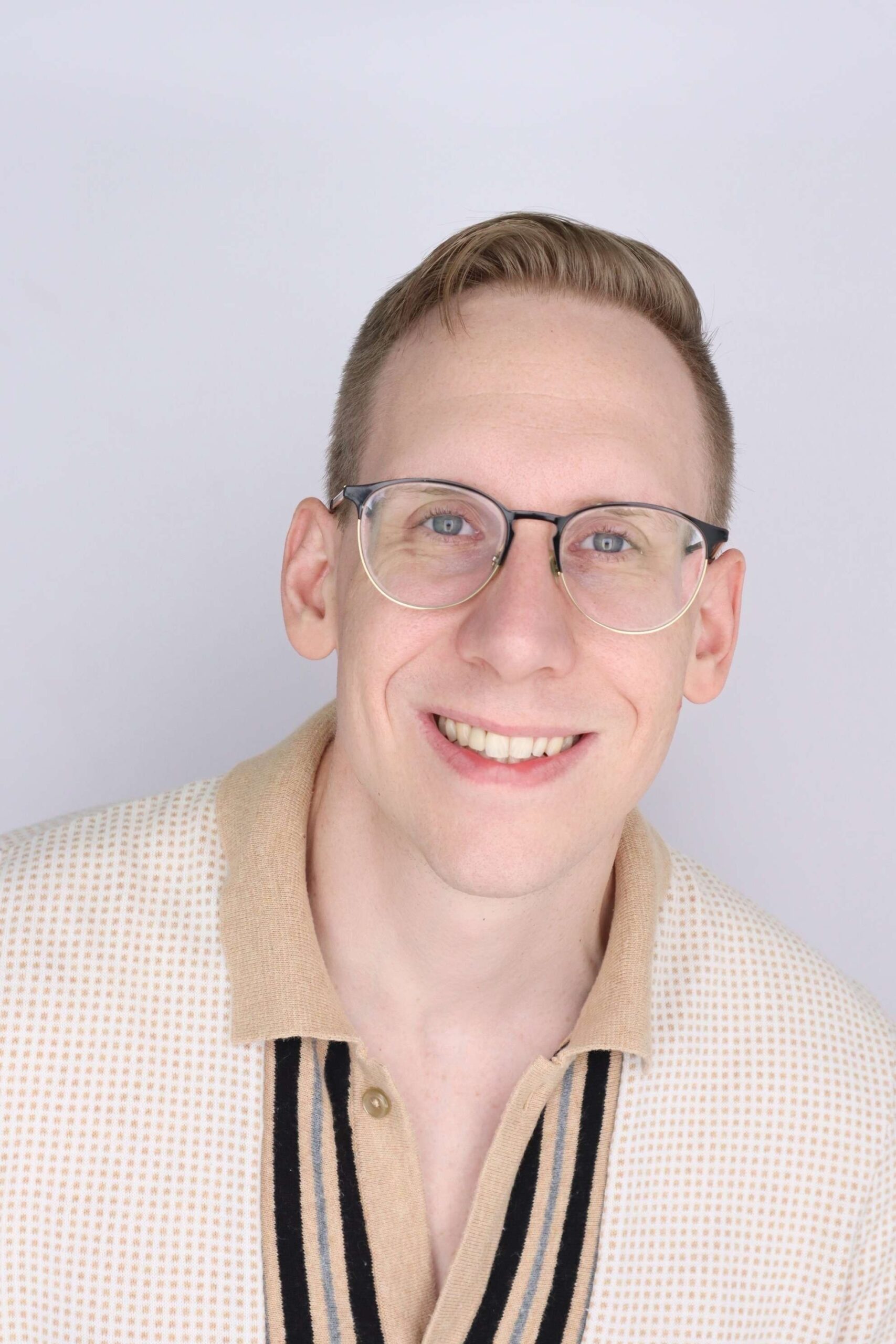 Tom Sokolowski holds an MFA from the University of Central Florida, where he was awarded a Provost’s Fellowship, and a PhD from Florida State University. His fiction has appeared or is forthcoming in Southern Indiana Review, The Barcelona Review, Shenandoah, and elsewhere. A veteran of the Florida Army National Guard, Tom lives in Fort Smith, Arkansas where he is an assistant professor of creative writing at UAFS. Find him online at tomsokowriter.com.