Pauline Holdsworth’s “Watch Her Go” is an unusual and beautiful coming-of-age story. As the protagonist and her teacher develop a troubling romantic relationship, her Illusions—allegorical, metaphorical representations of the things she thought she understood—fall away, leaving her vulnerable and unprotected.

When my alarm went off on the last Tuesday of eleventh grade, my two remaining Illusions were sitting on the edge of my bed, braiding each others’ hair. They were blurry, the way all Illusions are, protected from the world’s sharp edges by a buffer of fog. They were so familiar, these hazy guardians that had followed me all my life. I smiled, whispering that I was happy to see them, that I’d never let them go. But my heart was growing armor. It was a scarab beetle, iridescent and indestructible.
When I got up, my Illusions trailed behind me, peaceful as lambs. “You know I’ll always love you, right?” I said. I tried not to let them see my teeth, how sharp and strong they were growing.
* * *
I lost my first Illusion when I was nine. My friend Jacqueline begged me for help with a presentation on the Oregon Trail, so I walked her through mine. The next day, she delivered my presentation, word for word. When it was my turn, the words were mushy and unfamiliar in my mouth. It was my first failed assignment, my first lost friend. After school, I burrowed into my pillow. One of my Illusions stroked my back.
I turned to face her. Her features had sharpened. She had uneven teeth and a button nose. Her eyes were violet. You couldn’t see an Illusion’s exact features until they came to the end of their lives. Until then they were blurry. They were mute until their final moment; locked vaults until you stubbed your toe on the belief they carried and realized it was a fantasy. Only then could they speak their names out loud.
“Helping other people is always a good idea,” she said. She stroked my cheek, then she was gone.
* * *
The last Tuesday of eleventh grade, I got to school late, my stomach hollow, and sleep-walked through English, chemistry, social studies. At lunch, we raced through our sandwiches so we could race outside. The future was so close we could smell it: burnt sugar and coffee, leather car seats, slick college brochures. We played ultimate frisbee and our Illusions gathered on the sidelines. Between us, we still had enough to make a proper swarm, as vast as the ones we were born with. Lately I’d been trying to tally all the Illusions I’d been born with, but as a kid it never occurred to me to count them as they swam in and out of each other. It was only later, when I hit puberty and my swarm started thinning, that I began to see them as individual and finite.
The swarm at the edge of the field pulsed and flickered, emitting a faint hum. Sometimes I wondered if our Illusions could speak to each other in their own language, if they compared notes, if they ever tried to come up with ways to save themselves. But when we got close all they did was beam at us, in loose, hazy, finger-painted smiles.
* * *
I used to love to draw. I even used to think I had some kind of gift. But last year I brought home a self-portrait where my ears were out of balance, but I thought I’d managed to make my eyes come alive. My mother was buried in taxes, her door shut. Momentarily deflated, I retreated to my room and propped up the drawing. My Illusions gathered around, cooing, a ready audience.
One of them stepped forward to put her hand on my shoulder. I flinched.
Her hair was a writhing mass of colors: aquamarine, vermillion, goldenrod. “You can be a famous artist,” she told me. When she disappeared, a bitter taste flooded my mouth, and I shoved the self-portrait under my bed. I haven’t picked up a paintbrush since.
After lunch, I had calculus. During class, our Illusions flattened themselves against the back wall. They didn’t like being in class. Studying is like kryptonite to them, our ninth grade English teacher Mr. Kenney had told us. They wither away in the face of knowledge. He was the one who assigned us Sartre and Camus and insisted that growing up was a form of emancipation. Picture yourselves as hot air balloons, he said. Our Illusions were sandbags, keeping us tied to earth. Call them Delusions. That’s a better name.
Still, he had a couple of his own Illusions: wispy second-generation Illusions, the kind you gathered like burrs after you lost all your originals. I wondered what fictions he still cherished, even as he urged us to dismantle our own.
He was everyone’s favorite teacher, and we were a willing army. That year, over Christmas break, my neighbor Matt caught one of his Illusions with a rope and dragged it towards him. It tried to squirm away from his touch, but he held it down until it blurted out its secrets. Eleanor shoved hers down a well. Hana claimed she set one on fire.
That was the beginning of the deliberate cullings. In elementary school, we’d avoided the kids with the fewest Illusions, the kids who came to school without lunch money and got caught with cigarettes in their bags. But now the tables were turning. People walked into school one day Illusionless, a new piercing in their nose, a new jacket, a new swagger in their step. I’d started to feel ashamed of my Illusions, like they were sparkly pink barrettes.
Still, I let them sleep at the bottom of my bed. Just out of my reach, where they would be safe. They made a strange whistling sound when they slept, like tiny wind chimes. Each time I woke, their off-kilter music lulled me back to sleep.
* * *
When you lost an Illusion, you weren’t supposed to tell your friends what you’d learned. But we still swapped our discoveries at sleepovers, in basements that smelled of hair spray and stale rainwater. Good things happen to good people, we whispered, holding flashlights under our chins. Everything happens for a reason. Our parents wanted to have us. Every once in a while, there was a tiny pop in the corner, when someone’s Illusion broke before its time. The person left behind would look bereft for a second, and then they would take scoot further into the circle. They were one of us now.
* * *
Mr. Kenney caught up to me when I was leaving calculus. “You don’t write. You don’t call.” He was wearing his movie-star smile, and I loosened. “C’mon,” he whispered, and we slipped into his classroom. For the first time in a long time, he didn’t turn on the lights.
My Illusions drew closer. A force field. Another skin. Mr. Kenney slid his hand between them. My breath stopped. To touch another person’s Illusion was the most intimate thing you could do. Even my mom steered clear. He touched the back of my hand, then withdrew.
“Forgive me,” he said.
“For what?”
“For everything.” I heard all the words jostling inside everything. I knew him well enough he didn’t have to lay them out in a neat little row. I’d started to get to know him—the real him, the Simon hidden inside the Mr. Kenney, the person who loved Camus as much as I did and believed I would someday fulfill my fifth-grade dream of becoming an astronaut—at the end of ninth grade, when my dad moved out and my grades in history started slipping. He invited me to spend lunch periods in his classroom when my friends started avoiding me, like standing too close to me would mean their dads would cheat on their moms too. Mr. Kenney was there for the period when so many of my Illusions burst. He sat beside me in the dark and listened to them pop. He’d let me cry, then he’d turn towards me in the darkened classroom. We sat in the corner furthest from the door, safe from sight. “You can tell me,” he said, and I’d name what I’d lost: Your parents will never abandon you, no matter what happens between them. Your friends will stay with you through thick and thin. You can count on the people who say they love you. When an Illusion spoke, you were the only person who could hear it. Telling him what they’d said felt precious, almost holy. It was proof I could be seen completely by another person. He’d let me sniffle, then he’d offer me a better story. “It’s hard, growing up, but it’s also good. It means you’re closer to becoming yourself.” That was what made him my favorite teacher: his ability to take the world and tip it, to show you up was actually down. Now I was starting to see the true world, the adult world, and I was better for it. “You’re doing it the hard way. Like ripping off a Band-Aid. It’ll be over before you know it.”
I tried to kiss him at the end of tenth grade. The summer was looming before me, a summer I’d have to spend with my traitorous father and his new girlfriend, a summer unmoored from the daily conversations that had carried me through another school year. He stepped back. “We can’t,” he said gently. Not while I still had all my original Illusions. He wanted to support me in growing up, but he couldn’t rush me along. Still, he promised we could always talk. Six times that summer I snuck into my father’s basement and called Simon late at night. His voice was loose and warm at the end of the line. He told me things he’d never mention at school: the story of his first kiss. The time he got an erection as a kid and thought his whole body was transmogrifying. When he laughed his voice sounded almost as young as mine.
And then I came back, and eleventh grade started, and I started to get more breathless when I saw him in the hall. I had five Illusions left, then four, then three, then two. I wanted to be ready to have none. But lately I’d been slipping out of my classes fast, spending more time in the bathroom in between bells, bolting home after school. I’d become slippery.
“You’ve been avoiding me.” He put up a hand when I rushed to reassure him. “No. It’s okay. I want you to know you never have to talk to me, okay?” I nodded, face burning. He wasn’t a chore. He wasn’t a monster. He was my friend. “I want you to talk to me because you want to. And if you don’t, I’ll be sad, but I’ll be proud of you too. All I’ve ever wanted is to encourage your own autonomy.” I nodded again. My breathing was a little easier now. It was hard to tell what strangled it: what to call shyness, what to call nerves, what to call fear. Fear of the future. Fear I wouldn’t know what to do. His face softened, and his voice dropped to a whisper. “Besides. I like it best when you come to me.”
I slipped out of his classroom feeling bolder. I spent my last two periods dodging volleyballs and copying formulas, daydreaming about who I was about to be.
* * *
Katie was the first girl in our year to lose all her Illusions. She showed up on the first day of ninth grade alone, defiant, her nails painted black. We parted around her like the Red Sea and traded rumors like baseball cards. I heard she gave every boy on the soccer team a blowjob. I heard her dad’s in jail now. I heard they lost the house. She glared us all down, a terror, a wonder. Next was Matt, who’d been the first to kill an Illusion and later knocked out the rest in a vindictive fury. Noor, whose uncle was shot at the convenience store. June, whose older sister died of an overdose. Others whose names I’d never learned. They kept to themselves, a tight knot outside the gym doors. Their ranks were starting to swell.
* * *
By the time the last bell rang, I was restless, dreamy, swaddled in a vision of dancing in a silk dress. When I looked down, I was surprised to see myself clad in a fuzzy blue sweater instead. I had my dress for junior prom already picked out, a slinky black dress that left my shoulders and arms completely bare. That’s a dress to rob a bank in, Simon told me when I texted him a photo of myself in my bedroom mirror. He sent another text half an hour later. I’m sorry. I shouldn’t say things like that. He was so careful. The giddy, queasy tension in my body eased. I wasn’t stupid. I knew what other people might think he meant. But we weren’t characters in that story. We were dreaming up our own. We’re not like that, Simon sometimes said suddenly, as if arguing with someone offstage.
Still. I wanted to rob a bank. I wanted to be the woman in that dress. I wanted to rip the veil that blocked me from adulthood. It could be years before I lost my last two Illusions. By then I could be living somewhere far away from him.
I burst into his darkened classroom, my grand-finale speech blooming on my lips. I wanted to try. I wanted to see. Instead I saw Simon pushing Katie against the wall where we always sat, his hand up her shirt.
Katie’s eyes were vacant, ghostly. Her makeup was smudged. I turned and started to run.
I ran faster than I had in years, faster than I had when I tried out for the track team and missed the cutoff by three seconds. For a moment I felt limitless. The air in front of me was a glittering staircase. I could run all the way to the moon.
My Illusion caught up to me anyway. She was wearing my fuzzy blue sweater. Maybe she’d picked it up when I tore it off, a block from school. Maybe it had always belonged to her. She wasn’t as extravagant as some of the others, as unbelievable. Her hair was the same color as mine. “This isn’t like that,” she said. “What the two of you are doing is different.”
* * *
The moment an Illusion broke was impossible to miss, but the moment a new one was born was more elusive. Mom said they started as a flicker in the corner of your eye, and then one day you were just used to seeing them there. Most people started picking up new Illusions in their early twenties, after they’d lost their originals, though a handful of people were never entirely Illusionless. They started picking up new ones before they lost all their originals, or they clung tight to those they were born with and sequestered themselves from new experiences.
A second-generation Illusion was easy to spot. They were translucent and flimsy, because they didn’t arrive pre-made. They faded and pulsed with the effort it took to keep them alive. Many of our teachers and parents’ Illusions were too weak to stand up on their own. They slumped in the corner or hung around their owners’ shoulders like scarves.
Mom was Illusionless for the second time in her life right after the divorce. “It’s horrible,” she told me once, a rare moment of bitterness. “Being defenseless again.”
But in the last year she’d started sleeping better, smiling a little more. Sometimes I heard her laughing on the phone after she thought I’d gone to bed, giggling with someone new. It seemed to fortify her. She had a couple of new Illusions now.
Maybe a nicer daughter would have been relieved to see her breathing easier. Instead, I pitied her. I feared becoming her. What kind of person would want to retreat back into childhood after they’d gained the whole teeming world?
* * *
Mom was humming when I got home, stirring a pot on the stove. I waited to see her flinch when she saw I was missing an Illusion, but she didn’t. When I was a kid and lost my first Illusion, she tucked a dollar bill under my pillow that night. When I started losing them in droves, she hovered closer, peppered me with questions I batted away. I never wanted to tell her the secrets they’d divulged. It already felt embarrassing to admit how many flimsy things I’d believed.
Today the questions didn’t come. I trailed after her as she chopped basil, boiled water for pasta. She smiled to herself as she chopped. “Mom?” I said finally.
She turned, frowning, and took in my tear-streaked face. “Did something happen?”
“I saw Simon kissing Katie.” I tried to make it sound like it was just the witnessing that had pierced me, but I was sniffling again.
“Simon?”
“You know. Mr. Kenney.”
She gave me a long, searching look, one that rifled back through the years, picked up all the clues I’d been hiding and the ones I’d left in plain sight. When I was in ninth grade, I came home from school and told her Mr. Kenney said sometimes divorces were a catalyst for transformation. Sometimes they were the best thing that ever happened to you. He should know. “Don’t tell our secrets to strangers,” she snapped. Then there had been the phone calls she’d intercepted. “I told her I was Simon, from your history class,” he told me later, winking. “And I needed to copy your notes.” I grinned back.
“I told you not to talk to him,” she said finally. “Oh, sweetie. What were you thinking?”
My final Illusion was tall, ancient, with skin like the bark of an oak tree. She was waiting for me when I got back to my room. “Your mother can protect you from anything,” she said. I squeezed my eyes shut so I didn’t have to watch her go.
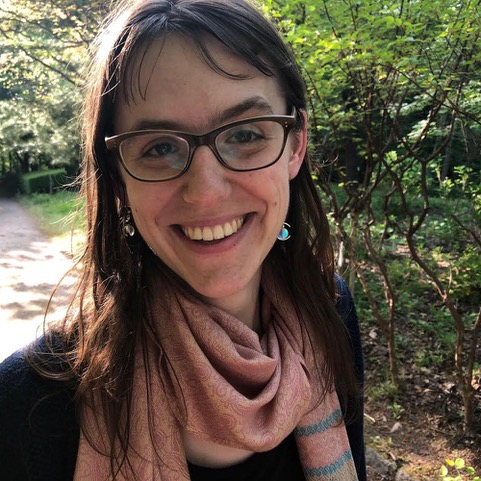 Pauline Holdsworth is a queer writer and public radio producer who grew up in central Pennsylvania and now lives in Toronto, Canada. Her fiction appears or is forthcoming in Black Warrior Review, Best Small Fictions 2024, The Malahat Review, Pithead Chapel and elsewhere.