
With his medical school on hold and his damaged and dying mother unable to help him, recovering drug addict Josiah has no choices left when he arrives at Broad Horizons Rehab. When four of the patients and one counselor set off on a wilderness excursion, Josiah’s nemesis, Rory, shows signs of withdrawal. Will anyone, including Rory himself, believe Josiah in time to save him?

Josiah had no need for a compass or a map—or a guide, for that matter—to tell him he was lost. And yet he found himself with all three, shivering on a half-frozen boat in a maze of tributaries at the ass end of the world. Not the ass end, exactly. Northern Alberta. That much he knew.
“Hey, Doc!” Counselor Mike barked from the stern. “Give me the skinny!”
“The what?”
“The way point, Doc.”
Josiah stared glumly at the map. It lay crumpled on his knees, sodden from the mist that seemed to blanket every inch of this place. He felt a mild sort of self-loathing; it pooled like bile in his throat. Nearly twenty-five years old, a washed-out medical student, and he couldn’t parse anything from the chart’s intricate web of waterways. All that topography packed too tightly together, each skeletal peninsula running roughshod over the next. He stared until his eyes banged around his head.
“I’m not sure,” he said.
“We’re counting on our navigator.” Counselor Mike glanced back at him, his paunch pulling threateningly at his shirt. He smacked a mosquito on his neck. “Remember the credo, bud. That weak part of you, telling you no? Saying you can’t? That’s your disease right there. Tell that part to ‘F’ off.”
Taking his turn as navigator, Josiah had managed to turn a two-hour fording trip—a sprint, CM had called it—into an all-day affair. CM was big on individual accountability and consequences, cause and effect, and so, despite knowing the landscape like the back of my ass, he’d allowed Josiah to misdirect them through a series of wrong turns and misidentified landmarks, bobbing them from one blind-ending alcove to another. Add to this the unending rain which slashed at them day and night: under tarps, in the open, drowning out their recovery meetings until each of them was forced to bellow over the storm’s volume, their shameful pasts sent crackling through the branches.
Thankfully, Broad Horizons Rehab was a preeminent program. Top of the line. Which Josiah supposed was lucky given his general lack of options. “It’s either this or expulsion,” his dean told him, hairy fingers ticking each scenario off his fist. “Or, of course, some equivalent rehab of your choosing. But we’d have to clear it, first. And we for sure won’t pay for it.” Waypoint navigation was just one of the skills the brochure had promised. Among the others: how to properly thread a fishing lure; at which end of camp to dig a latrine. Josiah still didn’t understand how sparking flint or splitting birch would translate into sobriety back in Chicago, though there were of course many things about sober living he didn’t understand. If he had understood them—and he could almost feel his mother’s breath here—then he probably wouldn’t have had to come to Broad Horizons in the first place.
* * *
They’d already been at the program for three days. Which, for some of the more hardcore addicts, may have meant barely three days sober. Mood? Morale? All down.
“Hey, CM?” Rory croaked from the back. “Just take over, maybe? He’s getting us lost.”
Josiah flinched. Rory’d been a mountainous prick ever since they’d stepped off the shuttle, the four of them shivering together in the unseasonable cold and burdened under too much luggage.
That first night, in group, Rory mostly sat with his bony arms folded around his middle, his legs crossed, a sneakered foot that wouldn’t stop bouncing. His voice sagged with a phlegmy pitch and his teeth, though straight, were shot with gray at the root. Little facts eventually puttered forth: he’d grown up and still lived in D.C., had went to some Ivy League college he refused to name. Probably a diplomat’s son, Josiah imagined, given his tall bearing and the entitled little sneer he always wore.
Still, Josiah could not ascertain the heft and shape of what, exactly, was up Rory’s ass, or why he’d begun to laugh whenever CM called him Doc—“Don’t you have to, like, graduate to be called that?” He’d even snickered when Josiah, in group, had brought up his dying mother.
“Is that really what we’re going to do here?” Rory had said. “Cry about our fucking parents?”
Josiah’s face had bloomed red. Rory just snaked deeper into his seat. His foot stopped bouncing and his lips curled upward at the edges. Josiah gripped the arm of the chair, and for a moment he indulged in the fantasy of smashing it in Rory’s face. He wished he were the type of person to do it.
That was day one. By now, the still and humid air and the foliage-induced itching had leached away at all of them. Over the past few hours, Rory had taken on the look of a flu victim, leaning his whole body over the gunwale, a flush creeping up his pewter-white neck. Josiah suspected he was withdrawing.
“What’s it gonna be, Doc?” CM asked.
Josiah put his face to his lap and fidgeted with all the gizmos for a few minutes longer, until eventually he got tired of pretending to know what a protractor did.
“There,” he said, raising a haphazard finger into the rain.
CM followed his gaze, and through the mist there appeared a small outcropping of forest. Little tree-pocked hills bumped up against one another in the middling distance ahead. For a moment, the world emptied of extraneous sounds; nothing except the motor’s choking sputter, the slippery suck of waves against metal. Their boat slipped onwards, generating little furrows in the water as they drifted further into the mist, flanked by scraggly looking pines and, creeping out into the water, a black and mud-drenched beach front.
CM turned his beat-red neck. He was somehow burned even in the gray.
“You mean west?” CM said. More groans from the back.
“Yes,” Josiah agreed. “West.” There was something in the meaty intensity of CM’s pose—boot resting on the stern like a portly Captain Morgan—that resembled an overfed Doberman, or a middle school gym teacher. Josiah had to assume CM was staring straight at him, now, though it was hard to tell through the aviators.
“You sure about that, bud?” Now everybody, including Rory, remained silent. There was a maxim Josiah had learned during his truncated tenure in medical school. When asked a question on rounds, and you’re in the dark entirely, just say anything, and say it confidently.
People could respect the attempt, even if you were just confidently wrong.
“Absolutely.”
More silence until, at last, CM spoke. “Very good, Doc. Very good.”
“Thanks.”
“Thanks? None needed, pal. Now. Who was it found our waypoint?”
Josiah looked back at the others, searching their blank, shivering faces.
“I’m sorry?”
CM shrugged. “Just asking a simple question, Doc. Who was it found our waypoint correctly?”
Somebody in the back, probably Rory, coughed out a laugh.
“That’s right,” CM said. “Feel that pride in your chest, son.”
Josiah sighed. “I found it, sir.”
“Damn right. Say it again. Who found it?”
“I did.”
CM patted his ample belly. “Hoo-rah, Doc. Hoo-friggin’-rah.”
* * *
By late afternoon they had slowed some. Rory continued to wither and groan. The skin along his hands was nearly translucent, the veins underneath bluish and corking.
CM had cut the motor twice. The first time he held them stalled out there for twenty long minutes, pointing out the variability and “miraculous” survivability of the local flora, the subtle difference in soil required by the Jack Pine as opposed to the Eastern White. The second stop came five minutes later, and this time CM raised his chin like a weathervane. He inhaled deeply.
“You know, boys, we are all God’s creatures, aren’t we? We all are capable of growth.” He paused here, giving each of them a weighty look. “But maybe, just maybe, some of us just didn’t get the right soil on the first go around.”
CM was an ex-junkie turned career NA speaker; he carried on him the sharp, tangy cologne of revival. Josiah didn’t know the man’s denomination but assumed Baptist, judging by the accent—somewhere south of Mason Dixie—and by his optimistic fervor.
During their first recovery meeting, CM had opened with a reading from the Big Book. Afterwards he leaned back, and, with great consternation, lowered his glasses. “Well, gentlemen,” he said. “Whether you’re here for the betterment of yourselves or by order of the court, please try to remember. Jesus spent forty days in the Wilderness. Alone. You only got to do thirty. And know this,” he said, flashing them his coffee-stained teeth, rubbing his heavily inked forearm, “Jesus was alone. But y’all have me.”
All good news, in theory. But Josiah had met CM’s Higher Power before. After his father left the family for a stewardess in Indiana, years before she got sick, Josiah’s mother used to tell him all the time: Only turn the other cheek if you’ve got a counterpunch loaded. Then came all those years sharing that nearly furniture-less apartment on Melrose. Each morning he’d walk himself to the bus stop, nearly half a mile. He’d fix his own bike when it broke down, fry himself eggs when they had them. Josiah didn’t raise himself, but he did the things his father may have done.
It was as if the divorce had split his mother’s body, and the parts of her remaining became untethered from the home. She had the laundromat; she had the church. Coming home at 3:00 AM, smelling of machine coolant and dyes, sleeping only a few hours before AM phone check-ins with the community church council. She led parish fund-raisers, harassed progressives on the school board when they started providing free condoms in sex-ed. All so she could hunker down in the estuary on Sundays—poor Father Jimenez trapped in the adjoined booth—and confess to a litany of fantastical plagues she wished the Lord would visit upon Josiah’s father because, after all, he’d earned it.
“Look, Josiah. People do bad things to other people. Horrific things. But God always evens the score. Remember that.” She was smoking again. The car smelled of damp leather, the cigarette burning between her twiggy fingers. “You’re smart, Josiah, but you’re also a man and have a man’s instincts. Hopefully God ignores that.”
Perhaps that’s why Josiah had studied like he did in high school, then in college. Furiously. Obsessively. Not going out, barely leaving his room. Why he’d spent so many birthdays alone. Maybe he felt that God was somewhere else, was out there with his mother, and had nothing but vengeance in His omega-sized heart.
In the back of the boat, Craig—recently recovered from alcohol-induced pancreatitis—looked like he couldn’t care less about where God’s creatures came from, so long as they were edible. But he also seemed shaky and hypothermic, the whole mass of him stuffed into a too-small floatie.
And then Rory began to retch, pouring a chunky breakfast straight into the water.
Browns. Greens. And there, among the gastric contents, little speckles of red.
He met Josiah’s gaze and spit.
* * *
When they finally arrived at the sandbar, CM said, “Smoke ‘em if you got ‘em,” so that’s what Rory and Craig set off to do, leaving Zander and Josiah to haul down most of the gear.
“Be back in a minute,” CM added before hiking up his cargos and wading into the silt. And then: “Hey, let me see that for a minute, son.” He snagged the map from Josiah, quietly tucked it into his pant leg, and splashed away. Josiah turned and watched Rory slumping after Craig, his legs dragging in the water.
Before CM could wander off, Josiah touched him on the shoulder.
“CM?” he said quietly. “I think Rory’s sick. I think he’s in withdrawal.”
CM raised his shades up onto the broad slope of his forehead and looked back at Rory.
“Looks sea-sick to me, Doc.”
“But we’re not at sea, sir.”
CM rubbed at his chin and squinted. He looked first at the water, then at the boat, then back at Josiah. “Looks fairly sea-adjacent to me, Doc.”
“But—”
“And wouldn’t you agree, Doc, that it wasn’t me who extended that pleasure cruise about five hours too long?”
“I guess.”
“Super! Could you chop us some wood, Doc?”
“Sure.”
He lowered his shades. “Perfecto.”
Josiah watched him lumber away, the map flapping in his back pocket. Then he hauled his duffel over the side and tripped his way up the shore.
Zander came splashing down after him.
“You think he’ll let us go for runs out here?” Zander asked, the twin cannons of his arms working against a duffel.
“What?”
“CM, I mean. You think he’ll let us, like, exercise?” Zander was the youngest: eighteen, broad-shouldered, lacrosse scholarship in jeopardy after driving home drunk from his cousin’s. He had the broad forehead and drooping, unconcerned eyes of a person who didn’t quite understand what was expected of him, or care.
At first Josiah was tempted to say something snide, something pithy. Maybe it was the thought of Rory putting him off. Or CM. Or the rain. Who, in this damp, bone-soaked place, would be thinking of a thing like exercise?
Zander did look like the target demographic, though. The brochure—handed to him, somewhat sheepishly, by the substance abuse counselor his school had assigned him—was how he’d been convinced to come to Broad Horizons in the first place. There was something soothing about the orderly font. Those sheen coated pages. And all those young men on the cover: shirts off, six packs glaring, their hiking boots dusted and caked in some sun-drenched canyon.
Everybody had looked so… capable.
If he couldn’t sort himself out here, then where?
“But you’re not a drug addict.” His mother’s face had seemed blotchy through the screen. Her chemo wasn’t going well, and her face looked blood-filled and purple against the kitchen wallpaper—which by this point was nicotine-yellow, and peeling, and possibly dying also.
“I don’t know. Dr. Bowman thinks so.”
“Who’s that?”
“The Dean.”
His mom adjusted her nasal cannula. “Well. They just put so much pressure on you. Everything’s so damn competitive, now. You can’t tell me there weren’t other students doing that stuff.”
“Maybe I should just drop out,” he said.
“No.”
“I’m serious. Before they expel me anyway.”
“No,” she said again, her face suddenly terse and her eyes far away. And then, almost as an afterthought, she shook her bandana-wrapped head, the golden cross swinging around her neck. “Just tell them what they want to hear. Do whatever you gotta do. Go to rehab.”
“I don’t know.”
“You messed up, Josiah. So what? People mess up all the time. Those arrogant pricks in their white coats. You think they don’t shoot the pooch sometimes? They do. The difference is they know how to bury things and move on. Why can’t you?”
Why couldn’t you? This is what Josiah would have said, if he were the type of person to say it.
“Think about somebody else for a change,” his mother went on. “You think I ever got a shot like this? To make something of myself?”
Josiah reached for a word, any word, but came up empty.
“Most of my life it’s just been take, take, take.” She paused here, fingers drifting towards her scalp, brushing at a phantom lock of hair. “Like I had more than just one, you know? Like I was flush with lives.” She was breathing heavy now. “And you want to know where it went, Josiah? Where my life went? It went to you. I gave it to you.”
“I’m sorry.”
“Don’t be. I’d do it again. But the least you could do is show a little backbone.” It hurt him, somehow, seeing his mother like this. All her hair gone, the skin of her underarms sagging like bedsheet on the line.
Studying for Step One was already a half-remembered fever dream: days and nights blending, transmuted one into the other. Adderall to stay awake, Xanax to curb the jitters. His usual pattern in college. The difference was that Step One required a full ten weeks of preparation, protected time off from class during which each student was left largely to their own devices, however nefarious those devices may be.
Josiah had always been a late-stage crammer. He was conditioned for the quick three-day bender, fueled by a strict regimen of uppers and downers. By week eight, however, the Xanax ran out. His sleep went with it. Then the stimulants were gone, too. By the end, with only three days left, he decided there simply weren’t enough hours in the day to warrant sleep at all, so he’d bought an eight-ball from a friend of a friend in the university’s MBA program. The plan had been to go full nuclear with his studying. To push himself past any possibility of failure.
Things disintegrated after that. His practice test scores hit an unexpected downslide. Reality fizzled at the edges from lack of sleep. Words blurred together and the hours became meaningless, the sun and moon collapsed down to undifferentiated orbs blushing against the window shades.
His mother called once—and only once—to tell him, in the throaty rasp the radiation had left her with, how much she loved him, how much she believed in him. “I don’t know what this test is, exactly,” she said. “Or why it’s so important. But I know you’ll do well by us. You always do.”
Through the receiver he heard her oxygen tank’s hiss. Her wet, hacky cough. And underneath all that noise, a silent but ever-present staccato, counting down her time: take, take, take.
* * *
What remained of the afternoon was spent setting up camp. They erected their own tents first, then the central canopy. Josiah could almost hear CM: “Gentlemen, our tabernacle!” A makeshift firepit of damp, sad-looking logs was set closer to the water. Josiah doubted they would ever light, though the rain had let up some, making the work of gathering and splitting wood somewhat less miserable.
CM was absent for most of the labor. Now that they knew the basics—how to place tarps down first, how to select high ground, to distinguish the driest birchwood for kindling—he’d probably figured now was as good a time as any for some of that “committed introspection” he was always on about. Josiah occasionally spotted him walking up and down the distant shoreline alone, face raised in the nascent sun, map held gently in front of him like an offering.
“He doesn’t look so good,” Craig said, picking through a tin of tuna.
“CM?”
Craig shook his head. “No. Him.”
Josiah swiveled his gaze and found Rory, already tucked away in his tent. The flap hung limply like the flag of some defeated enemy. Inside, he lay curled in a ball. At this point he was reduced to shivering ghost, and if it wasn’t for those tiny flagellations under his sleeping bag, Josiah would have mistaken him for a corpse.
“Yeah,” Josiah said. “He won’t last out here.” Something was finally pulling at Josiah from the chest up. His legs moved him to the tent.
“Rory. You okay?”
The head of the sleeping bag came down by an inch. Up close, he looked worse than before. His eyes were red, injected and roving. When they found Josiah, Rory groaned.
“Look,” Josiah said. “I don’t know what your deal is, but you need to tell somebody. You’re dehydrated. You’re withdrawing. Just admit it so CM can stop the bullshit and take us back.”
Rory’s eyes flittered closed. He shook his head. A slight, nearly imperceptible movement.
“I’m not.”
“You are.”
“I haven’t used in weeks.”
“You’re lying.” Josiah would have to be firm with him. It was the same with certain sick patients, the recalcitrant ones living in denial. And when the abused and the abuser were one in the same, the only real medicine was holding their face to a mirror.
“Look,” he said. “This is opioid withdrawal. I’ve seen it plenty. You’ll probably start shitting yourself tonight.” It was only then he noticed the small, slop-filled bucket by Rory’s head. “Looks like you already got a head start on the vomiting.”
“You don’t know shit.”
“I know more than you, Rory.”
Rory’s voice was tired and filled with hollow air. “Fuck. You.”
Josiah had never truly seen a person withdrawing before. He’d only read about it in textbooks; but in a case as obvious as Rory’s, that was good enough. And besides, Josiah was only too aware of how he himself had looked.
Josiah had never made it to his test. Once he’d started in on the coke, he couldn’t seem to stop. And when his mother called the police to do a well-person check, it took nearly an hour for Josiah to let them in. By then his body was raw and parched from lack of sleep. In his manic state he’d curled himself up in a ball, paranoid, flinching at shadows. Each knock of the door, each deep-throated command from the officers…every sound pounded at him, folding his chest into itself, a paranoid delusion manifesting in the flesh.
When that memory of himself flooded back—the cops finding him, bringing him not to jail but to the very emergency department where his clinical preceptor worked, half-naked and gowned—something softened. He paused. He imagined Rory’s thin, shaking body gowned.
“It’s all right,” he told Rory, softer now. “At least try drinking something. We’ll tell CM later. I’m sure he’ll take us back.” Josiah then tossed his own water bottle into the tent. Rory gave out a wet snort. Then he turned his back on both Josiah and the bottle. The sharp edges of his spine rose like fencing.
Now Josiah was the one glaring. He felt the bile in his throat again, and his quads were burning from squatting like a supplicant.
“Fine,” he said. “If you want to die out here, then die.”
* * *
By the time CM returned it was dark. The gray sky sunk to a cobalt opaqueness and Rory’s tent stayed shut.
The three of them fumbled in the shadows until Zander got the fire lit. Then Josiah heard crunching footfalls on the outskirts of camp, and then CM returned.
“Well, gentlemen,” he said, taking the empty seat around the fire. “We find ourselves in a bit of a quandary.” It was then that Josiah noticed the map still in CM’s hand, and how he held a radio in the other. His whole body was shadowed, his arms flickering in tongues of firelight.
Zander looked to CM, then to Josiah. “What’d he say?”
“I said we’re in a quandary.”
“What’s that?”
“It means we’re lost,” Josiah said.
“Well,” CM shrugged. “I wouldn’t go that far. Don’t mean to disparage our navigator here. We’re just not where we need to be. Anyway,” he turned, as if he’d misplaced their route behind his shoulder. “We may have to cut things short. Call an audible. Where’s Rory?”
They exchanged furtive glances. “He’s sick,” Craig said.
“He’s withdrawing,” Josiah corrected. He was surprised at the level tenor of his voice. As the firewood crackled and pulsed, Josiah took note of Rory’s tent. Nothing moved. The hoop of nylon flap lay zipped where he’d closed it. CM sighed, his thick eyebrows worming up and down his brow. He rubbed his forehead with a fat hand.
“You sure?”
“Yes.”
“He should have been cleared to come out here. You boys all emailed your physicians’ clearance, didn’t you? Negative urine drug?” He stood and went to Rory’s tent. The wall came down and CM’s head disappeared inside. A few muted words passed in the dark. When he lumbered back, he sat down slowly. “Yikes.”
Josiah almost grinned. How many times had he and his mother heard that same sentiment? From doctors. From nurses. From that first oncologist who’d looked at his mother’s lung scans, silently scrolling through thin cuts of metastatic tumor. He’d remained silent, of course, but Josiah could see the word etched into the old man’s furrowed forehead: Yikes.
“We should leave tonight,” he said.
“Like hell.” CM slapped a mosquito buzzing at his wrist. “Look out there. Too dark.”
“We should try.”
CM shook his head. “I’ll capsize it. Nope. Not safe.”
“First thing tomorrow, then?” Craig said.
“Sure,” CM said. “First light. Then we all rise like Lazarus.”
* * *
On their way to bed, Josiah was bristling. At what, or whom, he couldn’t have said.
“Shouldn’t we leave tonight? Or am I crazy?”
Zander, unrolling his sleep mat, shrugged his big shoulders in the dark. His headlamp tossed strobes with every bounce of his head.
“Who knows,” he said. “CM’s in charge. Seems like he’s got it under control.”
Josiah could not help but feel that no, maybe CM did not have this under control. What kind of guide gets lost three days out? And then just leaves a guy to withdraw, sweating, pouring shit out both ends, alone in the dirt? Why was everybody so okay with this?
“Rory’s not keeping anything down,” Josiah said. “He needs fluids.”
“Look man,” Zander said. “Just let it go. Rory’s a dick, anyway.” And then he clicked off his headlamp. Josiah wasn’t quick enough to respond, left blind as he was in the flashbulb imprint of Zander’s formidable skull.
CM and Craig had already gone to sleep, and Josiah was left alone. Their tents rose like little mounds out of the dirt. In the black they all seemed amorphous; a herd of dumb pack animals, fed and bedded. A few feet away, the remains of their fire sputtered and hissed and the smoke ascended lazily, carelessly, into the night.
* * *
Dreams came in quick, disorienting vignettes.
A sterile light glancing off linoleum.
His mother’s head curled over a toilet, hair displaced and ragged.
Under her moon-blue dress arose the sharp outlines of her ribs.
The angular curve of her hip.
* * *
Josiah awoke to the dense black of the tent and to the harsh, skittish sound of footsteps. At first, he mistook the noise for something else. The residue of his sleep, perhaps, or something else entirely, a half-real creature skirting around the edges of his awareness.
But no. There it was again. Something outside.
He gathered up the essentials: headlamp, pocketknife, socks. His jacket was already on.
When he emerged into the night, it was not the cold but the brightness that froze him.
The clouds had finally parted, and, for the first time since arriving, Josiah could see the sky. Infinite little specks of light blazed across the blackness, setting the blackness alight and giving texture to space. Everything was infinitely broad. Wide open. His neck craned upward, and the sky seemed to him now a living organism, the moon itself blinking and fully rendered, each crag and dimmed sea, its curvature sharpened and focused. And underneath this glowing covenant lay the otherwise black and still lake, every ripple rendered. From the water a steam rose steadily, as if the earth were awake now and taking its first long, shuddering breath.
Driving along old city streets, the quiet ones in the heart of their old neighborhood—his mother smoking happily at the wheel, Johnny Cash’s quaking baritone coming through their radio—Josiah would sometimes look up at the dim, muted night. And he was shocked, now, as he attempted to reconcile the sky of his childhood with this.
It was in this light that he first spotted Rory’s tent. It was open and the sleeping bag lay empty. Besides the tent, winding their way out of camp, he spotted a single set of footsteps.
Josiah turned to them. He followed as if he were still asleep, as if he must, his limbs pushing heavily against some great weight. His breath was frosting and thick upon his nose. Crickets scratched in the underbrush, a soft clicking in the tall weeds. And when he looked once again to the water, he finally saw him.
My God, he thought. Rory was standing alone, delirious at the water’s edge, somehow naked in the cold. The blue light fractured its beams against his back. He was swaying slightly. One hand was fanned out at his side and his limbs were so thin that he appeared to be made of nothing, even the bones melting away in the cold. And his foot, his right foot, was balanced on top of the freezing and lapping waves, trembling, as if he were on the verge of raising himself up, impossibly, onto the water’s sheer and gleaming surface.
Branches snapped to his left. “Goddamnit,” somebody hissed.
Suddenly mud was being kicked up in great globs over Josiah’s pants. Wind pulsed at his arm. Then CM and Craig were there, racing past Josiah. They fell upon Rory, the two men struggling awkwardly against his nakedness, Rory being pulled in too many directions, his testicles wagging between his legs. Still, Rory fought to maintain his foothold, the arch of that right foot straining and anchored in the shallows.
Josiah felt as if he were seeing all this from some monumental distance.
“Wake up!” CM said. And then he slapped Rory, whose whole body shuddered. His legs, thin and delicate, held him upright for just a moment longer before they folded.
Rory collapsed to the ground. He curled his head in his elbows and refused to move.
Craig had somehow found a blanket and threw it over him. Then CM bent down to lift Rory up.
It occurred to Josiah that he was the only one who hadn’t moved. The wind had gone still on Josiah’s arm and the leaves no longer stirred. Rory was being carried in CM’s arms like a child.
As the three of them passed Josiah, Craig bumped his shoulder, hard.
“Thanks for the help,” he sneered. Josiah turned to face him, but when he opened his mouth, only a thin trail of frost escaped. They stood there for a moment under the star-filled sky.
Nobody spoke.
“Did you see that?” Josiah finally asked.
“See what?”
Craig scratched his head and looked at him for a moment longer, but Josiah’s mouth closed. He shook his head. Together they heard the croak of bullfrogs among the trees. The damp smell of moss. And Josiah thought of his mother again, those car rides, her off-tune melody. He wished she was here now so he could tell her what he’d seen. That flicker of a moment, when Rory’s foot had touched the water, when it almost bore his weight.
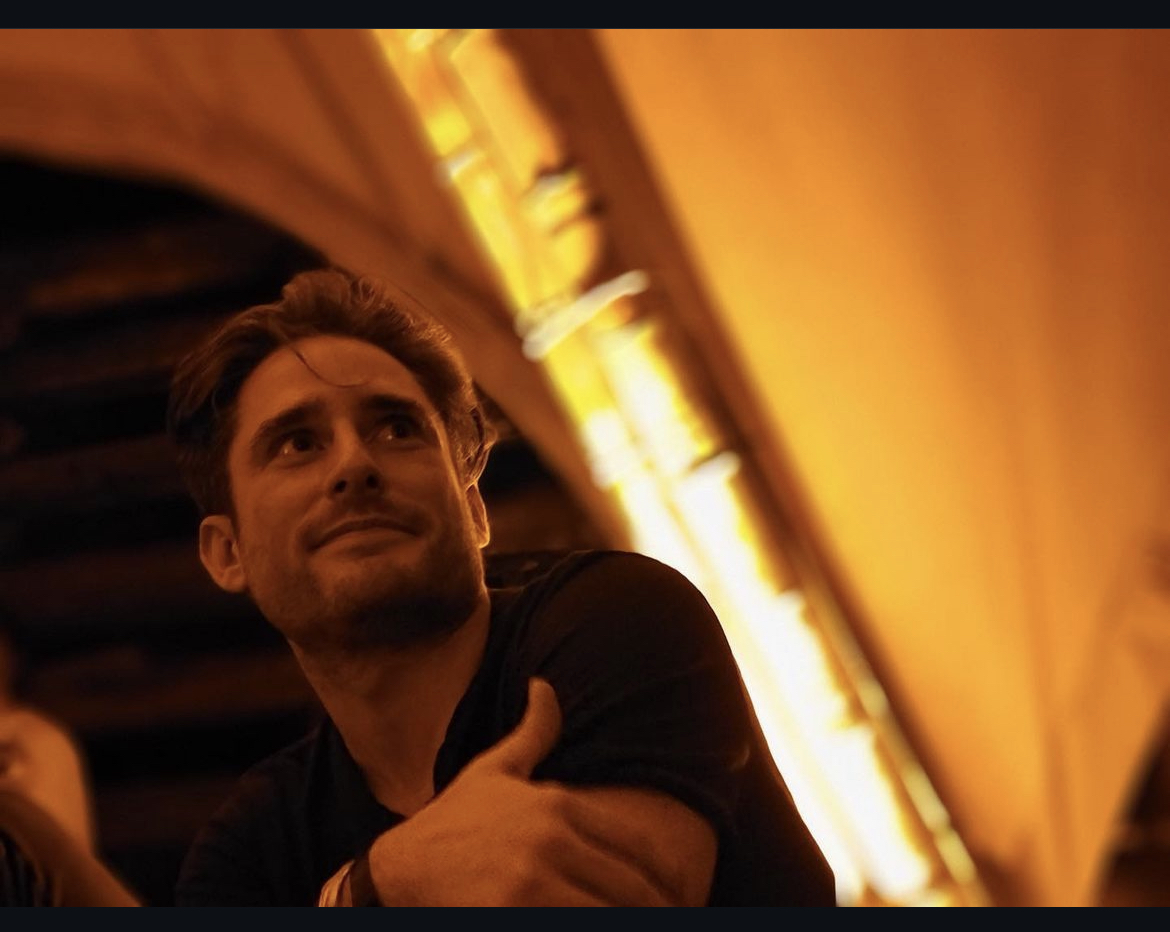 Brandon Ingalls is an Emergency Medicine Physician living and practicing in Chicago. He graduated from the University of Wisconsin in 2007 with his BA in Creative Writing. He loves stories that are sometimes funny, sometimes sad, and that ultimately make us feel more connected to one another.