
Part of the brilliance of this story is how deftly it maneuvers between the narrative threads in which it traffics: stories explicitly and implicitly told. It’s a hard thing to pull off—having a character recount an epic-feeling tale to another character—and here, it’s done beautifully, and more importantly, it feels completely believable and even necessary given the story’s premise. Much like our narrator here, I came to the end of this feeling like I’d been transported to another place, “like I was returning for the first time in years from a long journey.” There’s a patience to the pacing and the prose that mesmerized me. And I’m a sucker for any story that so powerfully uses setting and the natural world—especially something like the corpse flower—to elucidate the themes of longing, displacement, and loss. — Guest Judge Jennine Capó Crucet
I first met Adelia Khatib, a botanist and historian of flowers, on a sweltering day in the summer of 2017. She had been experiencing a prolonged spell of insomnia that had been triggered, she said, by the sudden blooming of corpse flowers in the Northeast. The outbreak originated in Connecticut in the spring, and by the time it had spread to Missouri a month later, she was sleeping only a couple of hours a night.
Over the phone, she asked if I could come to her office near Columbia. She was consumed by her work, making it difficult for her to travel downtown, and regardless, she hadn’t ventured south of Twenty-third Street since the disaster in 2001 and wasn’t, at seventy-eight, about to start now.
When I walked in, she was behind her desk fiddling with her hearing aid.
“Pardon me. Sorry, I need to have this contraption fine-tuned. You are?”
“Doctor Eliot. We have an appointment today.”
“Oh dear, yes. I almost forgot.”
“Nice to meet you, Professor Khatib.”
“Please, Doctor Eliot, call me Adelia.” I couldn’t place her accent.
I wiped the sweat from my forehead. It was at least eighty degrees in her office. Sun pouring through the skylight lit dust in the air.
She gestured to a fiberglass chair the color of a seashell.
Her desk was piled high with student papers. Some of them were yellowed with age and looked a decade old, if not older. On top of one pile was a blue rotary phone. The whole office was cluttered and stale from shelves upon shelves of old books.
As I sat across from her that afternoon, she kept shifting between the stacks on her desk like a bird searching for an unobstructed view of me and the door.
We made small talk for a few minutes, then she started telling me about the corpse flowers.
“Amorphophallus titanum, often translated as giant, misshapen penis. But properly speaking, it should be rendered not as misshapen but as ‘without form.’”
I nodded and wrote down the scientific name in my notebook. I could hear irritation in her voice from years of correcting the mistake.
Under normal conditions, the flower can take a decade to bloom as it stores up tens of thousands of kilowatts of sunlight in its corm. In the early years, the corm is approximately the size of a baby’s head, but eventually swells to a hundred pounds, sometimes double that in weight, until it is about to burst. When at long last the vegetal spike splits open the top, rising through a soft fontanelle-spot, it shoots upwards, unfurling its flower like a flag and releases into the air an overpowering odor of a dead body.
“Back in May,” Adelia said, “I bolted upright in bed, like I was shocked awake. I thought I heard a voice or something and I couldn’t go back to sleep. Then the next day, I read about the one in New Haven. It had opened up overnight. Then sixteen more in two weeks. No one in my field has seen anything like this.”
Their blooming cycles are maddeningly unpredictable, but with the outbreak, it appears they have coordinated their cycles somehow, like the phenomenon of menstrual synchrony. The flowers seemed to be whispering to one another from afar, through biomagnetism or a chemical contrail they released or another means that no one was able to decode. Adelia, I learned at that first meeting, was a staunch believer in plant cognition.
She leaned back in her chair, causing its rusted springs to creak. “The line between plants and animals is thinner than you think,” she said, and added, “Plants are quite intelligent and they have memories.”
“Memories?” The word hung in the air.
“Yes… how should I put it… They remember their surroundings and know when they change.”
She went on to say that the most peculiar quality of the corpse flower is not the aroma and illusion of decay, but the fact it heats up to a human-like temperature of ninety-eight degrees. Those who have touched it describe the warmth as similar to laying a hand upon the belly of a woman who is pregnant or has recently eaten a large meal.
I asked her how long she slept last night. She looked down, muttered something I couldn’t hear, and proceeded to absentmindedly rearrange papers on her desk.
“It is much too warm in here,” she said, grabbing a folder from the top of a pile and fanning herself. “I’m not used to having visitors and the extra body makes it hotter than a greenhouse.” Condensation misted the skylight. “The last time a student showed up in my office was three years ago. I wonder if it is because they don’t know I exist or if they are avoiding me.”
For the first time, I saw her eyes were bloodshot.
Over the last two years, I had been gathering stories about insomnia and working them into case files. My training and early practice had focused on childhood memory and trauma. But over time, I developed a side interest in sleep therapy and dream psychology that had cannibalized almost everything else in my professional life. My interest in the mysteries of sleep stemmed partly from my own prolonged insomnia. It turned out to help with my research since during a particularly difficult stretch of my life, I was unable to do much else than sit by the window, watch the Hudson flow by, and think until sunrise.
The evening after my first session with Adelia, I placed a fan in front of the air conditioner, poured a glass of white wine, and typed up my notes. When I finished, I microwaved some soup for dinner, checked my messages and saw that I had none. I googled “corpse flowers” and found a YouTube video about a blooming from a week ago in the Houston Botanic Garden. The camera panned to a line of two or three hundred people, then to several rows of them ringed around the plant like worshippers. The flower’s upright spadix, towering over a man in a cowboy hat next to it, must have been eight feet high. At its base was a ruffle of green leaves that had folded back to reveal a carnal red interior.
I closed the tab and looked at a webcam I had bookmarked. It was trained upon an Alaskan iceberg dubbed by a team of climate scientists as The Hemingway after the writer’s iceberg theory that the real meaning of a story was always submerged deep beneath the surface. I had been checking in obsessively all summer. I watched for a few minutes as the iceberg calved a huge shelf into the ocean, sending up a tsunami of ashy snow. It rippled outward like a collapsing tower.
The clock on the microwave read 10:30. I thought about taking an Ambien, but instead I decided to go for a walk along the High Line. Even at this hour, it was crowded with couples and families enjoying the cooler nighttime temperatures.
As I passed a patch of Mexican feather grass, I reached out to feel it whisk against my palm. I wanted the grass to know that I was there.
My wife and I always walked this path after dinner. Those memories felt sharp and sudden in my throat.
I returned to Adelia’s office a week later, squeezing back into the elevator that was so small it could hold only two passengers, or three, if they huddled under the hot incandescent light in the ceiling. The elevator had two rickety lattice doors facing each other and two rows of numbered buttons. One row was for the East side of the building, and the other was for the West. When I entered for the initial appointment, I didn’t know which button to push and as I hesitated, the elevator rose on its own. The whole setup confused me. I wasn’t sure where I was headed or if the ten-floor building really had twenty stories.
Adelia was straightening a shelf when my knock on the half-open door startled her.
“Oh! Pardon me. Come in, come in.” She stepped over a pile of books and sat at her desk, where she seemed most comfortable. “Please, take a seat.” She was wearing a batik blouse and a pair of glasses that kept sliding down her nose. It was even hotter than our first meeting.
“I’m parched. Would you like an iced green tea?”
“That would be great, thank you,” I said, glancing around to see if there was a mini fridge that I missed the first time.
I was taken aback when she ducked under her desk. I heard her shuffle some boxes around and plug her phone into the wall. She pulled a menu out of a drawer, listened for a dial tone, and called.
“How long?” she asked loudly. “Ten minutes, okay, 1008W, okay, thank you.”
She pinched her blouse and pulled it away from where it clung to her skin.
“This humidity. It gets so hot here on the top floor that the air conditioner can’t keep up.”
I took out my notebook and asked her how she was feeling.
“Tired, tired, tired. Ever since I was a little girl, I knew old people woke up early. They stretch out the hours as they are coming to an end. But I didn’t know that some of them never went to bed.” She chuckled softly.
Twenty minutes later a discombobulated delivery person from New Life Café showed up. He asked if he was in the right office, and then left heading in the wrong direction to the elevator.
As we drank our tea, she seemed to revive a little.
I wanted to probe the roots of her sleeplessness, so I asked her what her life was like growing up.
She played with her hearing aid, tilting her head this way and that as if trying to pick a distant radio channel. She smiled, interlaced her gnarled hands, and was silent for almost a minute.
“Well…”
Then she revealed that like the corpse flower, she was from Indonesia. Yet, she had few memories of the archipelago. At seven, she had been uprooted and flown to America to live with her aunt Nisrina on Staten Island. She had never returned. The flowers, I soon gleaned, were her connection to her homeland that, as the years passed, drifted further and further away from her.
Her aunt took the ferry every morning to work as a seamstress at a women’s dress factory in the city. When Adelia was ten or eleven, she went along with her in the summer. They didn’t have money for a babysitter and their neighbors would have little to do with them in those days.
As they crossed the Upper Bay, Adelia gazed through the salt spray. She tried to picture the Nipa palms and the sawmills and ramshackle villages along the banks that she had seen as a child from a riverboat in Borneo, but she was never able to clearly summon the images in her mind’s eye. She would climb down from the window and place her head in her aunt’s lap and sleep until the boat docked and they took the train to Thirty-fourth Street.
Her ancestors on her mother’s side were riverine people, who traded fruit and lumber up and down the Mahakam for generations.
“I like to think that even if the river is not in my memory, it is still in my blood,” she said with a sigh. “I know it’s a silly idea. But as a young girl, I found such peace when floating to Manhattan on summer mornings.”
She appeared hesitant to say much more about her early childhood, yet I ascertained her father, a cultured man fluent in English, Malay, and Indonesian, had risen to prominence as a mid-level Minister of Conservation. Her father and mother vanished when they were traveling north to Sarawak in the Malaysian part of the carved-up island of Borneo, over a thousand miles from where they lived in the southern section under Indonesian rule. There were rumors that vigilantes hired by an English logging company murdered them along the Rajang. The police found no trace of them, except for her mother’s crocodile handbag. They discovered it on an embankment near the hotel with a ticket stub inside matching their route.
She pushed up her glasses. “For safety reasons, I was always placed in the care of my maternal grandmother during my parents’ trips away on government business,” said Adelia. “When they didn’t return after three months, I was sent with a suitcase to New York.”
Much of what she knew about Borneo in the years after leaving the island with almost all her memories of it behind her was from reading books, and not from her aunt, who rarely spoke of it except when pressed. Nisrina believed it was bad luck to speak about the past, because it would almost certainly cause it to return and once it did, it would never leave. About such things it was better to be silent, she often said while she sewed.
Adelia retrieved a picture from the corner of her desk and handed it to me. It was her parents on their wedding day. They were standing under a pergola of flowers, her father in an embroidered jacket and her mother in a sarong and a siger crown.
“They look so beautiful and happy,” she said.
“How old are they here?” I asked.
“Twenty-seven and twenty-three,” she said. “I’ve studied this photo for years. It’s the only one I have of them. When I try to stare into their eyes, all I ever see are tiny halftone dots and the white roofs of Puri Temple in the distance.”
She dabbed her cheek and opened the lid of her empty cup, fished out an ice cube, and rubbed it across the back of her neck.
Adelia told me that since the corpse flower outbreak, she had been rereading Odoardo Beccari’s Wanderings in the Great Forests of Borneo while lying awake in bed for hours.
I wrote the name on my notepad.
The legendary Florentine botanist, she explained, is credited with discovering the corpse flower in the 1870s in Sumatra. The indigenous peoples, though, had been living amongst them for hundreds of years.
Beccari was, like Adelia, an orphan. His mother, Antonietta, from Chianti died shortly after he was born and his father, Giuseppe, from an ancient family in Romagna, died when the boy was six. For all intents and purposes, his professors raised him. Seeing the vast gifts of his intelligence, they took custody of the boy and cultivated his growing love of flowers. They even named one after him—the Tulipa beccariana.
Whether Beccari’s wanderlust can be explained by the death of his parents at a tender age, Adelia couldn’t say, but what she did know was that he became the greatest explorer of his era. These last few weeks, she found herself again studying Beccari’s excursions, tracing her finger along the river routes where her parents traveled for work and where they disappeared. She read about his long journeys deep into the island, how he would stop for days if an area was botanically interesting or abundant in unusual animals.
“He seemed, unlike so many people nowadays, unafraid of solitude and indeed took refuge in it,” she said. She swayed gently in her chair as she talked. Beccari would spend weeks in one place collecting leaves, lianas, flowers, and insects, sorting them, drying them, preserving them in alcohol.
“Even as a young and eager botanist—a budding botanist,” she said with a faint smile, “it wasn’t the scientific knowledge that interested me the most. It was the stories he recorded about people and life’s difficulties and joys among the flowers and animals of my Borneo.”
His precise renderings of the island were so evocative that hearing his words in her head was enough to usher in the illusion that she lived there again. More than anyone, he was the reason she had become a lifelong student of flowers.
I looked up through the skylight as a plane emerged from a cloud.
Adelia shared how villagers warned Beccari about a temple viper whose venom is so toxic that anyone bitten doesn’t have time to take off a jacket before falling dead. They told him tales of prehistorically large river pythons, some up to twenty-five feet long, including one which they captured and upon slicing open its swollen belly discovered a monkey still breathing inside. They believed that the tops of mountains, which filled them with sheer terror and awe, were the abode of the gods, and since they also believed it is a great blessing when a spirit appears in their dreams, they would summon their courage and climb to the mountaintops to contemplate the stars before falling asleep. They asked Beccari if in his land there were one or several moons, and if there was only one sun or many. It was with real sorrow that he told them that in Florence the sky was quite as far from the earth as in Borneo.
“You seem to have memorized the book,” I said.
“It’s almost as if I have,” her voice caught a little. “It’s really wonderful, wonderful. But there’s no denying the fact that sending knowledge of Borneo’s riches back to Europe ushered forth untold amounts of colonial pain.”
“And about the corpse flowers?” I asked.
She said, one day Beccari tracked the scent of death through a forest in Sumatra and when he pulled aside a thicket of vines, he discovered the Amorphophallus titanum in full bloom. She confessed that she liked to imagine that on his final voyage home, he stood on the bow, hugging the hulking flower to his chest the way a father refuses to let go of a sick child, the noxious odor eddying in the wind until he saw the coast of Italy.
She stopped and squinted at me as though trying to read my thoughts.
“You don’t say much, do you, Doctor?”
“Please, Michael is fine. No, not much, I suppose.” It was something my wife used to say to me.
“I wish more people were like that. People these days talk so much because they have nothing to say.” She paused, reflecting, “Well, as I was saying, for Beccari all of Borneo was new and wondrous.”
Beccari was still a young man when he arrived back in Florence, settling for good, eventually marrying a woman from a noble family who bore him four sons.
She removed her eyeglasses, breathed on the lenses, and wiped them on her sleeve.
He committed the next forty years to poring over the thousands of items he had amassed, making illustrations of the collection, measuring the specimens, describing in painstaking detail their shape and structure, and the exact place on earth from where he had gathered them.
“Forty years, imagine that.” She mouthed the words again.
“If you don’t mind me asking, how old are you?”
“Forty-two,” I said.
“Married? Children?”
“Neither,” I said. The word felt heavy. I forced a smile, shifting in my chair.
She thought this long second half of Beccari’s life was as much a period for the dutiful study of the flora and fauna of the Far East as it was a period dedicated to the study of his own self. He must have been like a memoirist who revisits the past by reopening long-forgotten boxes, undoing the silk ribbons, unpacking the contents, reacquainting oneself with a life that comes in an instant rushing back.
“He had a theory,” she said, “that every plant and animal—even an old, doddering woman like me—bears a physical imprint of the forces that shaped it, even if it’s an orphan alone in the world. I sometimes wonder if by examining my own ideas, feelings, attitudes, my own dreams, I might know my mother and father who shaped me as a little girl in the days I no longer remember and who are by and large mysteries, almost spirits. What if when the dead appear in our sleep, they are not fanciful projections, but visitors of the afterworld through a portal that opens in the mind at night—I would like to believe this,” she said. “It would be beautiful to believe this. Would they come to meet me if I ventured to the top of Mount Kinabalu to rest on my back like the Dayak people to be closer to the heavens? If I dreamed under the durian trees of Borneo or slept under the protective petals of a corpse flower would my mother’s face appear like an apparition watching over me, and would she caress my face and brush my hair and instruct me in the ways of life? I would like to believe this. You see, I have never had a family, have never been married, and no one has ever said, Adelia, you are just like your mother or just like your father, no one has ever said this to me and no one ever will.”
She took a deep breath and seemed lost. She shook her head, as if clearing her mind, and resumed.
“Today, the Beccari clan is wealthy and numerous, but the Khatibs that remain in Borneo are few and poor as mud, still trading scrap and vegetables along the river. And among the Khatibs in the New World, I am the only one left,” she said. “The only one. When I’m gone, the species Khatib americanus will be extinct. She couldn’t adapt to the climate, they’ll say.”
By this time, the room had dimmed. Adelia was no more than a silhouette behind her desk. Through the skylight, I could see the moon looking like the fossil of the sun.
“These days, Michael, I experience worsening pangs of homesickness. It is odd since I cannot rightly claim to know Borneo.” Her voice was low and damp. “As our pasts recede ever further back in time, it’s possible aspects of them reverberate into the future in the guise of dreams. That’s what Beccari believed. As I’ve grown old, I want to dream evermore about my childhood.”
We continued talking. I had lost track of time sitting there, and my head felt as if it had been emptied, as it almost never does, and my arms and legs, which feel heavier with age, were strangely light, nearly insubstantial, as though talking this way for so long had turned me into a ghost.
I thanked her and wished her some rest. “Should I turn on the light?” I asked as I left.
“I would prefer to keep it off for a while,” she said.
Before I stepped into the elevator, I walked down the hall past the offices of the other professors. They appeared to have departed weeks ago for the summer. It occurred to me that Adelia was the only one in the whole building. At the end of the hall was a window. The clouds formed a high, unbroken plane and the sky was dark and a glowing ribbon of golden light floated above the horizon.
I walked through Central Park on the way to my apartment. Mist arose from the leaves of grass, which had been on fire all day in the heat of a sun that felt like it expanded every year and would one day engulf us. I thought about Beccari’s effort to preserve the world we were destroying, and I recalled God’s promise not to flood the earth again and thought he, or she, or whatever God was, should do it anyway, how it would help cool everything down, then I remembered our Atlantean world was already sinking.
I exited the park at Columbus Circle, the whirlpool of traffic spinning around the statue of the explorer, Beccari’s compatriot, who was standing isolated seventy feet in the air on a thin pedestal as if upon the bow of a ship that had vanished beneath him. At the corner of Fifty-ninth Street, people in twos and threes were descending into the subway station, and I thought how at any given hour tens of thousands of people were underground, just below our feet, not only the dead but the living, who would almost magically emerge from an opening in the sidewalk in a vastly different part of the city.
I arrived home to find Con Edison trucks parked in front. The power was out in my building. In the lobby, the emergency lanterns by the baseboards had turned on, casting a dreamlike light over the floor. I checked my mailbox and saw it was empty. No one was in the courtyard. No one was in the hallways either or on the stairwell, and as I made my way up I first felt like I had somehow wandered into some parallel universe, then when I opened the door, I felt like I was returning for the first time in years from a long journey that was already slipping away from memory.
My living room was illuminated by moonlight. I found my way into my bedroom, feeling along the walls. The digital clock on the shelf was dark. I lifted the blinds and opened the window.
As I returned to the living room, I noticed it was oddly silent. I was horrified to see that the aquarium’s aerator had stopped when the power went out. The angelfish were going to die from lack of oxygen, if they hadn’t already died. I knelt close to the glass and in the murky light I saw them swimming in slow motion. They lethargically swished their tails, tilted a little on their sides in the water that must have felt heavy and lifeless. I scrambled to the kitchen and I retrieved a straw. I lifted off the lid of the aquarium, peering in like a god above a watery sky and thought let there be light, but there was no light. I leaned closer until the straw was submerged halfway and then I started blowing air into the tank as fast and as hard as I could until I felt lightheaded and wanted to stop. But as I thought about the night a year ago when I stood on the bank of the Hudson and contemplated ending my life, I decided to keep breathing through the straw. I kept breathing until I couldn’t breathe anymore. I lay back on the floor panting and exhausted.
I continued to see Adelia Khatib each week into late August and I continued to see other clients and work on my case files for a book I was writing on insomnia. Adelia, like many chronic sufferers, had a strong but selective eidetic memory. There were swaths of her life about which she remembered little. Yet she could describe books she read and paintings or photographs she saw in extraordinary detail. Language seemed to flow from a continuous river within her. Time and time again, our interviews would spill past the allotted hour and the two of us would lose a sense of our surroundings. Afterwards I would walk home and spend hours on my book. At my desk facing the river, I ate takeout or leftovers and wrote late into the night until I fell into a dreamless sleep. I drowned myself in my work because it’s what I knew how to do.
By the arrival of fall, the corpse flower outbreak—fifty-three in total—had burned itself out.
Maybe something had shifted rhizomatically in the world’s soil, Adelia said, and the sudden efflorescence of corpse flowers is a sign the planet is dying. Maybe they knew we weren’t listening to them, she added, or maybe they said what they had to say.
Adelia and I agreed that the week before the start of the new semester would be our last meeting. She hadn’t confirmed our appointment, which was odd for her, but since I had never seen her anywhere else, part of me assumed she was always there. I waited five minutes for the elevator. When it arrived, a man from a moving and storage company was inside propping up a stack of boxes that reached the ceiling. After he unloaded, I took the elevator to the tenth floor and saw Adelia’s door was wide open.
Her shelves were almost bare. In the corner, a trashcan overflowed with student papers. Another mover was taking down a schematic of a flower from the wall. He looked over his shoulder at me.
“Where’s Adelia?” I asked. “Professor Khatib… this is her office. Where is she?”
“That little lady? They said she passed five days ago.”
“What? Where?”
“Right in here apparently. All this is going to charity unless you want something. We’re locking up soon.”
I stood in the center of the room and looked around, then I moved over to Adelia’s desk and steadied myself against it. I could feel my heartbeat and I was sweating a lot from the sun that was beaming through the skylight. The heat, the dust, the sudden, sharp shock of her absence—it all hit me.
I sat down in her chair. The desk was cleared off, except for a couple of pieces of scrap paper and her copy of Beccari’s Wanderings. The book was open to a photograph of a young Dayak woman, jet black hair and clear eyes. Fourteen or fifteen and wearing pendant earrings and a dozen beaded necklaces. She was likely the last face Adelia had seen.
With Beccari’s book in my lap, I sat on a bench by the Boathouse in Central Park and watched the fanlike leaves of a ginkgo tree flutter in the breeze. I replayed the last conversation I had with Adelia.
“The Borneo of your dreams, which these corpse flowers have reawakened, may not be a place you can return to. It may no longer exist.”
“Maybe it never did. But that doesn’t make it any less real,” she said.
“That’s true, too. Adelia, I find the worlds we imagine with words have a greater pull on us than the worlds we know and can touch with our fingers. They are beyond our reach, and so we can’t help but talk about them, either to ourselves, or with others, because we can’t know them in another way. Talking is a kind of construction—we say, let there be light and voilà there is light in our minds. Though words are not as sturdy as bricks or wood or Beccari’s bamboo huts, they have the virtue of being more adaptable, revisable, shareable.”
“By talking this way, we make our place in this world,” she said. “Like the two of us.” She looked down at her desk and then into my eyes. “Like the two of us. Not long ago, we were strangers to each other.”
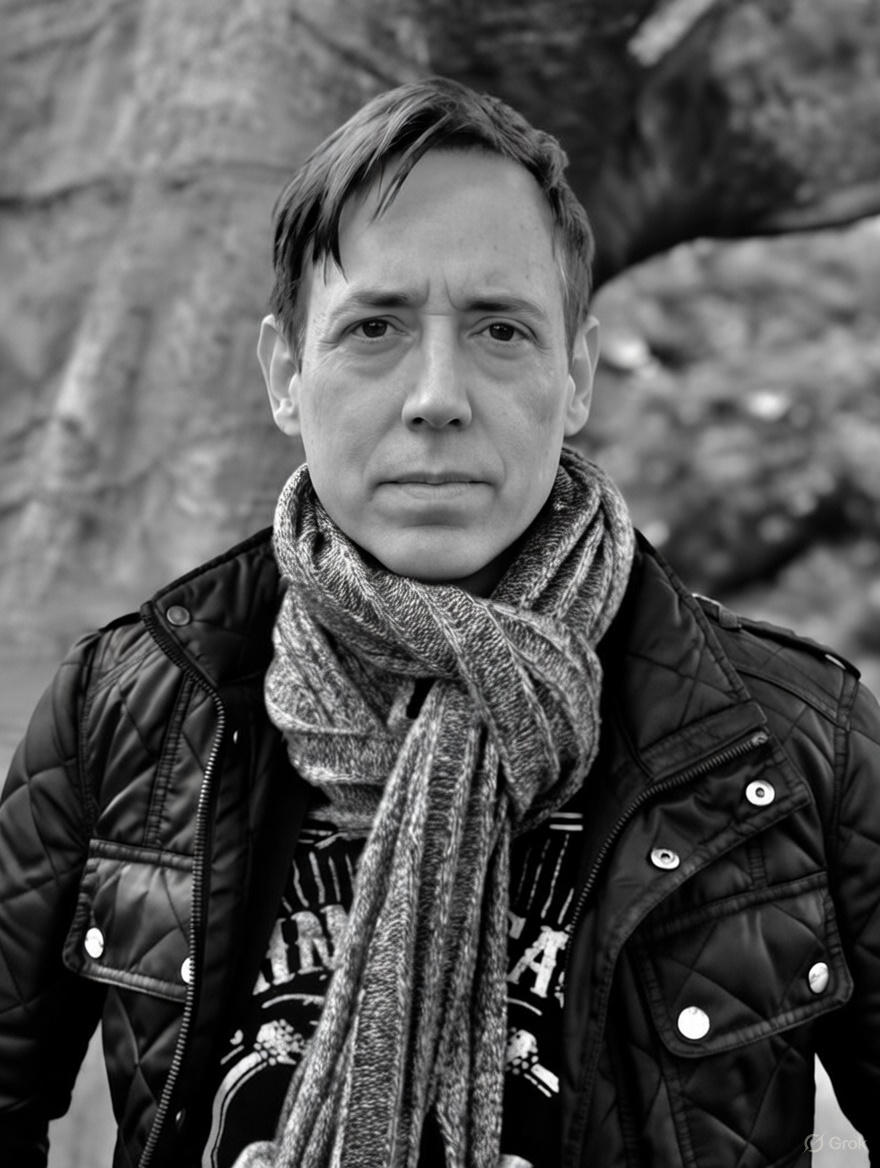 Thomas Heise is the author of four books, including Moth (Sarabande, 2013) and Horror Vacui: Poems (Sarabande, 2006). His writing has appeared or is forthcoming in American Poetry Review, Ploughshares, Bennington Review, The Missouri Review, Santa Monica Review, Hobart, The Brooklyn Rail, Chicago Review, Wigleaf, and elsewhere. He has been a writer-in-residence at MacDowell, the Virginia Center for the Creative Arts, and Millay Arts, a visiting scholar at the American Academy in Rome, and the Robert Frost Fellow at the Bread Loaf Writers’ Conference. An Associate Professor of English at Pennsylvania State University (Abington), he lives in New York City.