
When I was in graduate school, I remember one of my professors, Frank Conroy, saying to a classroom of students that he could tell a piece of fiction was good when he could sense a soul on the other side of the words. Frank dispensed little pieces of writerly wisdom often, but this statement had a profound impact on me at the time, in part because it explained to me in a very simple but clear way why it was I loved certain short stories and certain short story writers. It wasn’t about style or subject matter or even plot. It was about a very intimate connection that I was having with the characters on the other side of the story’s words. It was that simple. It was about connecting with another soul. When I didn’t feel that connection—perhaps the story was more interested in being stylistically slick or clever—I’d find myself putting the story down and moving on to something else. But when I did feel it, that story would become like a house that I wanted to live inside, that I wanted to read over and over again in hopes of rediscovering the feeling it gave me the first time I read it.
Choosing the pieces from this exceptional shortlist has proved to be so much more difficult than I’d imagined, in part because all thirty of the stories and essays on the shortlist fit Frank’s criteria for a good piece of writing in one way or another, and with each one of them I could see a strong case being made for that story or essay’s inclusion. In the end, though, the pieces that I ended up choosing were the pieces that grabbed ahold of me from the first sentence and didn’t let go, that continued to linger in my mind days and weeks later, that continued to haunt me.
Among this eclectic group of stories and essays I can now see certain recurring themes: romantic and familial relationships, issues of identity, the navigation of complex power dynamics, coping with physical illness and the ways our bodies fail us, trauma in its many forms, physical and metaphorical displacement, and so on. These stories are also bonded by the clarity and elegance of these writers’ sentences, by their vivid and immersive descriptions of place, by their psychological and emotional depth, and, of course, in many cases, by their humor and wit. As challenging as some of the subject matter in these pieces is, these stories and essays are also filled with light: with humor and hope, with kindness and forgiveness.
Interestingly, one of the most prominent themes I noticed among these pieces was a focus on the uncertainty of the future, something that struck me as intriguing given the uncertainty that so many people in our country are feeling right now about our own collective future. Of course, maybe that feeling of uncertainty is something that’s simply baked into the DNA of the short story and personal essay forms. Or perhaps uncertainty is something I’m simply drawn to myself as a reader. Maybe the prominence of uncertainty in these pieces says more about me than it does about the pieces I chose or the writers who submitted them.
I’m not sure that I have the answer to these questions, but what I do know for certain is that after reading the thirty short stories and essays on the contest’s shortlist I can tell that the futures of the American short story and essay are very bright. And in the face of whatever uncertainty people might be feeling in their lives right now, the art being made during this time is very affirming, affirming if for no other reason than the fact that it is so very good. And the stories and essays in these pages are all incredibly good. Every one of them will delight you, surprise you, and will remind you, most of all, of what all good literature does: that there are other souls out there in the world just like you, struggling with adversities and doing their best, that none of us here is truly alone.
Andrew Porter, Guest Judge
Click here to continue to Best Emerging Writers 2025.
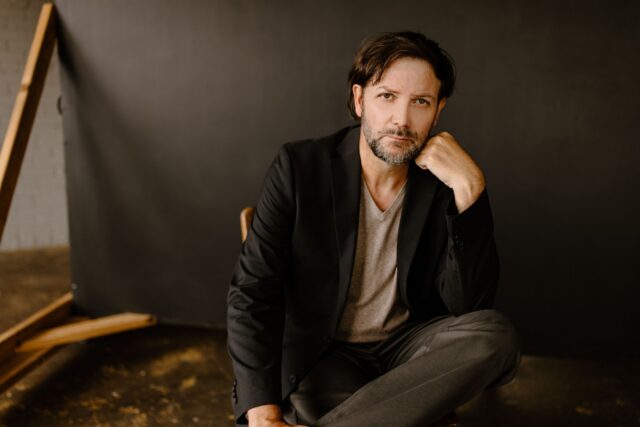
Andrew Porter is the author of the story collections The Disappeared (Knopf) and The Theory of Light and Matter (Vintage) and the novels In Between Days(Knopf) and The Imagined Life (Knopf). A graduate of the Iowa Writers’ Workshop, he has received a Pushcart Prize, a James Michener/Copernicus Fellowship, and the Flannery O’Connor Award for Short Fiction. His work has appeared in One Story, Ploughshares, American Short Fiction, Best American Short Stories, and on Public Radio’s Selected Shorts. Currently, he teaches fiction writing and directs the creative writing program at Trinity University in San Antonio, Texas.