With unflinching honesty, Ioana Barbulescu explores the ramifications of a medical system that doesn’t believe in women’s pain. “Cut Off” is at once clinical and personal, infuriating and heartbreaking. What parts of ourselves do we lose when no one believes we’re sick? What might it take to be whole again?
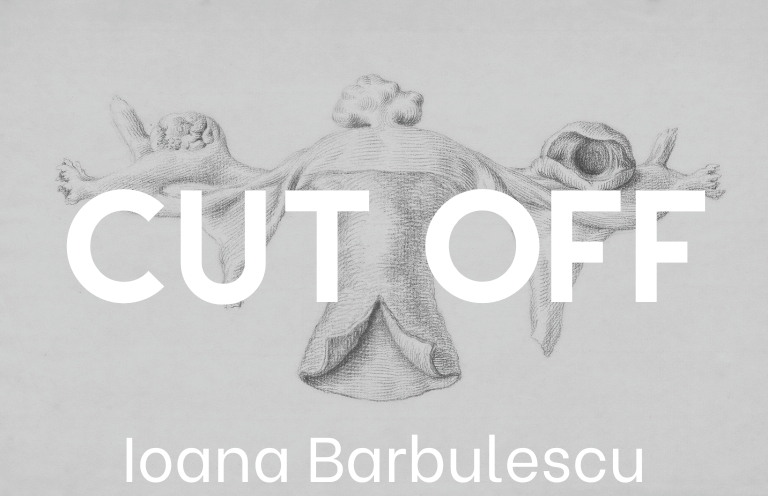
Medical history: Polycystic Ovary Syndrome (PCOS), anemia, abnormal uterine bleeding, HPV 18, 59 (cleared)
“When’s the last time you checked your blood?” is my mom’s favorite welcome home question. She sends me to private labs with lists of tests she conjures on the spot. My mom is not a doctor, but she raised two children. Once, she simply copied the list off my grandma’s latest prescription. That’s how I got my cardiovascular endurance tested at age twenty.
My heart was fine.
An ex-boyfriend of mine joked that it’s tacky to wait to be back home to get your medical checkups done. He was born abroad to a family of diplomats. We don’t speak anymore.
It was the last summer of college. I was back home preparing my move from France to Russia, a year abroad in my already foreign education. “You should get a pap smear, just in case.” I was starting to figure out that my mom was offsetting her own anxieties onto me. When we were little, she used to take my sister and me to church, make us confess before the major holidays. When we asked why she didn’t partake, she’d simply answer “I wasn’t brought up like this.”
The doctor was abrasive, whatever she inserted in me steel cold. I was already in Moscow when I got the results. Two strains of HPV detected. The internet told me they were the bad kind.
I was a teen when Romania got the HPV vaccine. The school sent us home with a slip for our parents to sign. My mom called our pediatrician, who advised against it.
The vaccine was too new, there was no way of knowing its side effects. I was too young to grasp the ramifications of this. The vaccine ended up being repelled from schools the following year, millions of doses sent to waste.
I emailed the abrasive doctor, who asked me to make an appointment and stop emailing her. I went in for a colposcopy at the American Hospital in Moscow, the only place I could find where I wouldn’t need to speak Russian. The doctor said I was way too young to worry. She then slid a camera through me to check my cervix, and I could tell she worried. An open wound was on its festering way to cervical cancer. There was nothing to do but wait for it to turn into actual cancer, that we would deal with as it happened, or wait for the infection to disappear, which would most likely happen, as I was so very young.
My mom dealt with her guilt by sending over mushroom supplements to boost my immunity. I was to follow up on my cervix situation every three months. Every three months, nothing changed. I learned to shut off the pain that reverberated through me during sex. I bled every time my boyfriend pulled out. There was nothing to do but take it.
It was years and several doctors before I was told I should consider the vaccine. It was meant for prepubescent girls, and I was twenty-six, but it couldn’t hurt. In Romania, I could technically buy it off the market, though the market was scarce. My mom went through her acquaintances until she found someone with a son who worked at a pharmacy. He kept the stock off the shelf until I got there. I paid seven-hundred dollars for the three doses. I made a salary in Belgium by then, which helped.
I didn’t cry when I found out my infection had cleared. By then I had no way of knowing who won. The vaccine, no longer dating men, telling my first girlfriend I hated penetration until she stopped asking, my mom’s magic mushrooms or the candles she lit at church every Sunday. There was also the money she gave the priest to bless my name and cure me of all ailments, also every Sunday, something I was sent to do as a child whenever she didn’t feel like going herself.
I decided to prescribe myself a longer break between appointments now that I was clean. A year turned into two and the line with avoidance got increasingly blurred. I saw a general practitioner once and told her I hadn’t seen a gynecologist in a long time. I also told her I thought I needed to be medicated for my depression. She said I was too young to be doing checkups so often, and that I should exercise and make sure I sat in natural light. My mom was unhappy. “You should always play up your pain to the doctors if you want to be taken seriously.”
Family history: Mother – alive, no known problems; Father – alive, no known problems
I never knew how much pain was too much. I was eleven when I first got my period. My mom reassured me that this was the most pain I’ll ever be in. Except perhaps, and there she took a deep breath, for giving birth. I couldn’t imagine I would survive giving birth. I felt as though my ovaries caught fire and got a beating at the same time, and there was no way of knowing when it would be over. I bled through my pants and mattresses and the couches at my friends’ houses. I remember quite vividly washing my winter coat with freezing water in the bathroom of a dorm I was staying at for a swim meet. My teammates were icing me out. I had gotten us disqualified by not exiting the pool in time during a relay. We would have been national champions. I was too embarrassed to get out of the pool and bleed down my legs, rain crimson stains on the wet tiles along the way.
I started fainting when going to the bathroom in the middle of the night. My mom asked that I give her a call from my room whenever I needed to pee. She would come and walk me over. No more solo period night walks. My dad seemed to choose the bumpiest roads when driving me back from practice on period days. I lay down in the back seat, silently shedding my uterus, barely alive. I must have looked like a sad sack of potatoes.
When we got home, my mom would take one look at me and scold him, then wrap me in an untreated sheep wool blanket that itched but felt like the inside of an oven. I would try to fall asleep. I have never been as suicidal as during those hours before more pills kick in, when I watch myself wither away from above my body, wishing it wasn’t as costly to live inside it.
At whatever age we started talking about having kids, I got into the habit of saying I would have triplets. It was just something to say. I always felt compelled to make my answers to common prompts outlandish. I can only trace it back to an interview my mom set up for me with a local newspaper. I was six and she was convinced I was unnaturally gifted. I was asked what God looked like, to me. I described him as a sort of Santa in the sky. I don’t know why I did that, and I don’t know why it stuck on my brain. I could tell that my mom was displeased. The interview never got to print. I can only imagine they found me uninspired and mediocre. I find almost everyone uninspired and mediocre. I wonder if my mom ever forgave me for the times I was just a normal kid.
At twenty-nine, I found myself back home again, preparing another departure. I was starting a new life in New York, about to enter a marriage whose contours I struggled to discern, the love overexposed under the harsh lights of years of administrative X-rays, uneasy against my suspicions that heteronormativity would fail to protect me, in the end. I kept waking up from nightmares where I had cheated, the guilt commanding that I stay.
My mom kept reminding me I looked unhappy and to get my medical checkups in order before leaving. My dad told me he hoped life wouldn’t work out for me out there, and that I’d return and live close by instead. I kept telling myself they didn’t want me to be gay.
Which is part of the truth, which helps write a compelling story.
Chief complaint: uterus 18-week size with 6cm anterior IM fibroid, 7cm posterior IM fibroid, 3cm left fundal SS fibroid (total of three fibroids)
The ultrasound technician couldn’t find my ovaries. She swirled the plastic dildo inside me every which way, to no avail. She couldn’t see anything because of the massive fibroids that had taken over my uterus. How could I not know about them? Had I not been in pain? Had I not bled? I needed surgery as soon as possible. “It’s not like you can afford to wait, at your age.” There were three of them, stretching my uterus out to the size of an eighteen-week pregnancy.
I channeled all of my depression into this one issue I had suddenly been made aware of. My mom also didn’t take it well. Fibroids are genetic, and suddenly it made sense why she tried to conceive for years each time. We called my grandma who remembered being told she had a hostile uterus. “Did you think we got ultrasounds back in the day?” my mom asked. “I only had one when I got pregnant with you. They told us you were a boy. Made your dad very happy until you showed up.”
My mom was back on the phone with everyone she knew. She found out her boss had lived with a nine centimeter fibroid for years and was firmly against surgery. I went to see her doctor, a man who practiced out of a freezing apartment where his own aging mother worked as a receptionist. I was advised to bring cash. The waiting room was a remodeled kitchen. His office was a bedroom with yellow walls and poor lighting. He smelled his fingers after being inside me. To this day I can’t get myself to research whether that’s common practice. He gave me a referral for a different ultrasound technician, wanted to see me again before being able to tell me anything conclusive. I cried all the way to the subway stop.
My mom then found me a surgeon on TV. He so happened to be on the morning news, talking about his breakthrough fibroid removals. Women with fibroids triple my size, who had carried and delivered babies after surgery. I added him to my contacts as “Dr. Fibroid.” I paid a lot of money to skip the line and see him the next day. He owned the only DaVinci robot in the country. It would assist with the removal, so I won’t need my belly opened up fully. It would cost me five-thousand dollars. He didn’t perform the procedure in the public hospital. He prescribed me pills that would put my body in menopause until I made my decision, to prevent the fibroids from growing. He commented on my intelligence and said he would like me to meet his son. Told me his son was odd, buried in books all day. Thought I could understand him. I found myself telling him I was a lesbian.
My sister had a friend whose ex-boyfriend’s dad ran the gynecology section at one of the public hospitals. My mom pieced this together and got me an appointment. He got one of his students to do the ultrasound. She couldn’t see anything, and he kept asking her to find solutions. I felt raw, just lying there, taking the pain. He eventually took the wand off her hand and went in himself. He told me it didn’t really matter anyway, that I had countless fibroids, some microscopic, and he would just chop off whatever was visible when he cut me open. That they would grow back. I asked what I could do to prevent that. He said nothing. I had too much estrogen, it pumped them with power. I didn’t tell him I was gay. I told him I was getting married. The hospital was undergoing renovation. We had to wait, maybe a month.
I lived increasingly at the bottom of my sorrow. I didn’t feel ready to do anything. I didn’t trust any of these doctors. I didn’t trust myself. I would wait. I would first get married.
Initial assessment: Patient is married. Female partner.
It suited my arrival to New York that I was in constant pain and bleeding. I didn’t have to explain my lack of excitement, my moods, my midnight panics, my crying after sex.
My lack of energy made sense per my iron levels. I don’t remember most of the lead-up to the wedding. I couldn’t say whether I wore a tampon the day of, whether I had to change or how often. I remember us both feeling relief when it was done. Sharing the tiredness we felt, explaining why we no longer had sex at all.
My mom loved the wedding. She framed pictures of her, myself, and my sister on the walls at home. You would think we attended a ball or some sort of function. My sister ran a half-marathon in Miami the next day. My mom flew out with her, posted on Facebook about the run. She fixed my erasure, I imagine emboldened by my sister, by posting one of the wedding pictures on Facebook too, with a caption on motherhood. I wondered if the five hundred people who liked the picture thought we were in a play.
My dad didn’t show.
Initial assessment: Patient wants kids in the near future.
There was nothing to do in the aftermath of the wedding but be married. I found it unbearable. My body shape increasingly became a permanent fixture on the couch in our marital home. I hated her friends, I hated her colleagues, I hated everything she wanted to do. I wished I could exit my body and slap myself out of it, just be happy instead. My seemingly impossible access to gratitude bothered us both.
I needed there to be a next thing. We went in for a fertility consult so I could plan my surgery around it. My wife started the session saying we weren’t really planning for the near future, and I wanted to scream. I needed it all to happen already, to have happened, I needed to be on the other side with a child to raise, with a higher purpose to reward my five years in a relationship that wrapped around me like tentacles, choking me into submission. I wasn’t ready to face the reality of the tentacles having been air, having been my own hands. A nurse took our blood for genetic testing. I almost fainted. She told me I would need to build some strength, that this was a routine procedure that I would come in for every week once we started trying. I had never felt weaker.
The pain never stopped. It rang loud against the hollows of my skull, until it became background noise. My periods lasted for weeks at a time. I changed tampons every half hour, and, even so, I slept on towels to avoid changing the sheets every day. The fibroids pressed against my bladder, so I woke up several times during the night to pee. The iron tablets made me nauseous, so I stopped taking them. I was tired and wet and swollen. I wanted to go back home, though everyone seemed to think that’s where I was.
My new doctor ordered an MRI, and the bill came for two-thousand dollars. We had already paid thousands for genetic testing. My wife’s list of reasons why I was the one who had to move continents included the great health insurance her company provided. I doubt there had been more substance to this claim than her ancestral ability to pay her way through it. When the bills came, she was anxious. She got on the phone to do damage control on something I had likely done wrong in the process. The realization she did not have a grasp on the system I had moved into for her came like lightning. That she was not thrilled to spend money on me, I had already understood. I retreated further into myself.
When I told my mom I was thinking about getting a divorce, she asked why I had gotten married in the first place. I didn’t know what to do with that. She wanted to fly me home and force me into surgery, then nurse me back to health. I wondered if she thought once my belly was open, the doctor would be able to cut off not only the fibroids, but also other rotten parts of me.
She once paused a movie we were watching to ask me what I thought she did wrong, for me to turn gay. I was too stunned to speak, too bewildered to even throw a tantrum. I stuffed my mouth with greasy popcorn and pressed play. I came out to my dad in response to him saying something sinister about the gays. He was watching the news. I told him I, too, was one. We never spoke about it again. My mom said I wasn’t very clear. After missing my wedding, he called me on my birthday to complain about his back.
I looked for family in my ex-wife, perhaps too eagerly. She fostered that thirst and turned it codependent. After we broke up, I asked her if she honestly thought we were good for each other. She said we were great, and I just couldn’t see it. Our friends gave speeches at the wedding talking about what they saw. They had never seen two people work more at something. This was, I gathered, a good thing.
My parents spoke of single women, otherwise accomplished, with pity. I learned to look at available people with suspicion. Why hadn’t they been chosen by anyone before me? I do not remember ever being single. Ironically, since stepping into queerness I had to make peace with being perceived as such by many, back home.
My mom once asked why I kept choosing partners that needed so much care. I didn’t tell her it was all she ever taught me; a self-sacrificial sort of care that made people stay. I don’t know if my parents ever loved each other, but they could never leave, as hard as they both tried, the relationship they’d built. This was, I gathered, a good thing.
I found that the more you age, the less it’s acceptable to dream beyond the bare minimum. I felt greedy talking to people about my relationship problems. Everyone was going through it, everyone fought, everyone hated their partners, everyone fell out of love after a couple of years and true romanticism lied in persevering through it. “My husband has never made me cum,” a friend said to me. “At least the rare times you have sex, it’s good.”
Updated assessment: Patient is sexually active. Female partner(s).
My ex-wife cut me off health insurance. Months later, she texted me an eleven-dollar bill for some residual blood tests back at the fertility clinic. She said she’d cover it, as she had promised to take care of me.
I fell in love long before the grief was over, and it rebirthed me. “Do you have anything to reproach yourself?” my mom asked when the financial noose threatened to break my bones further. I could think of endless things to take blame for, but falling in love never made the list.
It was as if my uterus froze for a while, the survival taking over my entire body. The pain lifted and I experienced relief and unaltered joy for the first time in years. My mom kept calling expecting to find me a shell of myself, and by the end of our chat was forced to admit, somewhat baffled, that I looked good. The fog was lifting. I turned thirty.
Indications: REDACTED is a 30-year-old female who is having surgery for uterine fibroids.
The more I settled into my new life, the more physical pain my body remembered I could take. When my doctor asked what made me finally decide on the surgery, I told her I was ready to rid my body of the past. She thought I was joking. She asked me when my last period had been, and I couldn’t remember a day in the past months I hadn’t bled. It didn’t stop me from having sex anymore. “You’re in the honeymoon phase,” people would caution, “of course it’s going great. There’s no real commitment.”
I flew to Europe to spend the summer with my girlfriend. I scheduled surgery for the fall. My mom started sending me articles that seemed to question the materiality of my eighteen-weeks-wide belly.
Generational beliefs about a woman’s worth can lodge in uterine energy as unresolved soul contracts. Mother-daughter conflicts and old family messages about care and self-respect often imprint the root chakra, then ripple up into the sacral region where fibroids develop.
Though I knew fibroids were more prevalent in Black women, a quantifiable weathering of the body stemming from generations of racism, the knowledge in my mom’s algorithm seemed to sprout exclusively from white Janes and Jims from Texas.
There may be an underlying fear of the opposite sex that impacts your desire to be in a relationship, and threatens your power and independence. The biological clock ticking away in the background nudges you to create a family. Yet your experience of family structures and dynamics were devoid of joy and hostile, making it difficult to conceive.
I stopped opening the links my mom sent. For the first time in my life, I considered whether I wanted children at all, breaking the one certainty that had held my womanhood together. My doctor suggested the purpose of surgery could be to better my quality of life, not to line up a pregnancy as soon as the fibroids were out, and my uterus was healed. This realization felt entirely self-indulgent. Along the way, I must have gathered that was a bad thing.
I swam and ate and lay in the sun for three debaucherous months. I imagined people gossiping about the frivolousness with which I continued living, as if I wasn’t getting divorced, as if my money wasn’t running out, as if my entire life had not been blown to pieces.
All I felt were pieces of myself coming back together. My new medical insurance cleared the surgery. It was going to cost much less than it would have my ex-wife. That felt both right and wrong.
My mom sent me back to New York with a suitcase full of beetroot juice I never drank and jars of magic pills I never touched. On my high pre-op iron levels, she commented “See? They work.” On the eve of the surgery, she sent me the contact of a doctor whom she heard could shrink the fibroids instead of removing them. It occurred to me I could stop storing her anxieties in the depths of my stomach.
My girlfriend took me in for surgery. She snapped pictures of me in the hospital gown, with my patient bracelet, mid-conversation with the anesthesiologist, and live texted them to my mom. I felt calmer than I expected. I was ready.
I had no dreams. The last thing I remember is being strapped to a bed and having something pushed down my vein that I could immediately taste in the back of my throat. “Let’s get this party started,” a perky nurse said. The last thing I remember is actually her texting on the side of my passed-out body, left thumb tapping against the screen as her right hand fiddled with the tubes that connected back to me.
Procedure details:
Consent was obtained for the planned procedure. The patient was taken to the REDACTEDREDACTEDREDACTED REDACTEDREDACTEDREDACTED REDACTEDREDACTED REDACTEDREDACTEDREDACTEDREDACTEDREDACTED A sponge stick was placed in the vagina.
Attention was turned to the abdomen. REDACTEDREDACTEDREDACTED REDACTEDREDACTEDREDACTED REDACTEDREDACTEDREDACTED REDACTED Entry site intact without evidence of trauma. REDACTED REDACTEDREDACTEDREDACTED REDACTED REDACTEDREDACTED REDACTEDREDACTED REDACTEDREDACTED REDACTEDREDACTEDREDACTED REDACTEDREDACTEDREDACTED At this time, the DaVinci XI robot was docked.
REDACTEDREDACTEDREDACTED REDACTEDREDACTED REDACTEDREDACTED REDACTEDREDACTED REDACTEDREDACTED REDACTED expose the fibroid. The fibroid was grasped with a tenaculum and shelled out using a combination of blunt dissection. REDACTED The fibroid was removed. Attention was then turned to the posterior intramural 7cm fibroid REDACTEDREDACTED REDACTEDREDACTEDREDACTEDREDACTED REDACTEDREDACTEDREDACTED REDACTEDREDACTEDREDACTED REDACTEDREDACTEDREDACTED REDACTEDREDACTEDREDACTEDREDACTED REDACTEDREDACTEDREDACTED REDACTED A similar procedure was performed for a left fundal 3cm subserosal fibroid. The incision was closed REDACTED in one layer. The patient awoke from anesthesia without complication and was taken to the recovery room in stable condition.
Patient will need C-section in an event of pregnancy.
I woke up really needing to pee. The nurses explained that my bladder had been emptied in the surgery room. I convinced them I knew what my body felt like, so they forced what felt like a bowl under my ass. I fell asleep on the bowl, proud to have stood up for myself. I didn’t pee.
Complications: None. Patient tolerated procedure well.
My girlfriend brought me flowers and sushi and stole some hospital apple juice I kept craving before taking me home. I heard her chat with my mom about the absurdity of going home the same day as I came in and out of sleep in the back of a cab. Crawling my way to the elevator on all fours, I felt invincible.
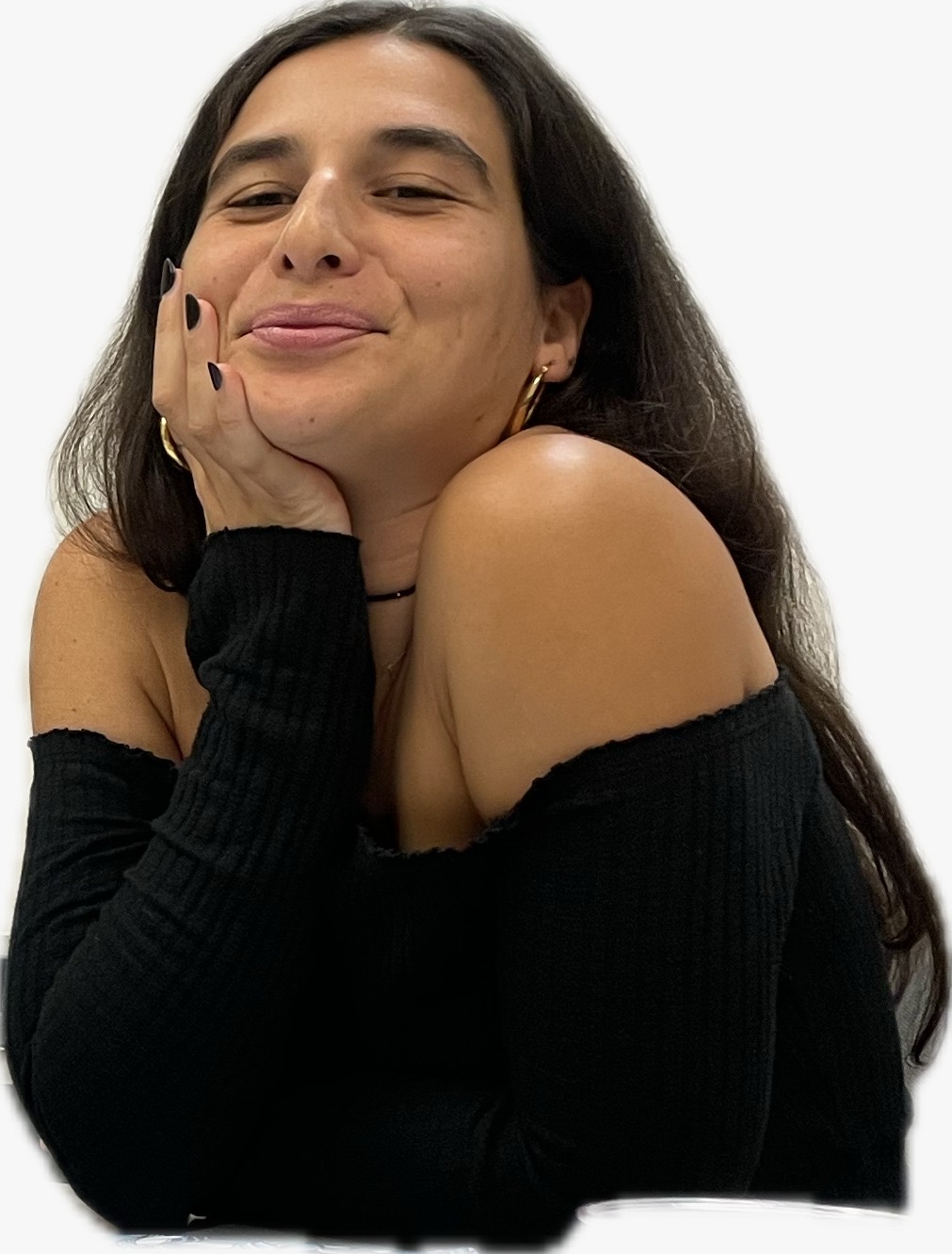 Ioana is an Eastern European lesbian writer, on a mission to reclaim autofiction for personal and collective liberation. She is a graduate of Columbia University’s MFA in fiction, as well as two summer sessions at Iowa Writers’ Workshop. Her writing has appeared or is forthcoming in tongue.etc, The Gotham Guillotine, Blood+Honey, and The Bullpen. She is also the author of a children’s collection in her native Romanian.