A scar seared the nape of your neck in welts of buttermilk and apricot. Baby lightning. Pie crust. I gasped how that must have hurt; You’re so brave, and like, so pretty. The praises were met with wide-eyed horror, and you didn’t speak to me for months.
We were classmates in second grade, again at fourth. By then, you were less of a riddle. Jamie L. Peony was simply the girl who was sick all the time. Your name made waves in local news with family portraits sunny and airbrushed. Two siblings flanked you in the frame, a brother and a sister who were sickly but thankfully not on her level.
“Are you talking about Jamie?”
Two faces swerved as one. Those days, my parents were glued to the love seat, heads abutted like flowers drinking in the sun. Common subjects of discussion: the internet, that isolated freckle on Mom’s eyelid, and Dad’s chronic but improving conditions.
“No,” Mom lied.
“Don’t eavesdrop. It’s very rude,” Dad admonished.
I personally thought adults should mind mouths around open ears, that my parents were being unfair. But Dad steamed squishy songpyeons, and Mom swum laps with me at the neighborhood pool, so forgiveness came easy. Like my Grandma Arabella—or MaBella—once said, moss to a rock.
* * *
At the same time, I had to dig deep to forgive Mom for calling your mother stunning. When hyperboles leapt from my mouth like I’m dying of hunger or My head will explode from decimals, Mom called me out. “That counts as a lie, and God knows it.” But then she’d say, “You look stunning in that dress, Barb.” She didn’t, and God knows it.
Mrs. Barbara Peony (née Paden), your mother, liked to wreath herself in floral dresses, with a cinch clip to rival a championship belt. Your house reeked of Aqua Net, of heart-shaped potpourri in carmine red and bubblegum pink. In this Hallmark Valentine scene, she sat like a buttercream cake, smiling her juicy smiles at you—just you.
“I’m kind of scared of your mom,” I once confessed.
Do you recall the summer before fourth? The pool offered cherry popsicles. We were barely acquainted, but you turned to me with clear eyes, stained lips. Oaks that bordered the gazebo threw a glossy sheen over our bodies, speckling light on skin as a cicada fell from their porous canopy—just the husk.
“Don’t say that.”
“Sorry for being rude,” I added. “Dad says I can be very rude.”
* * *
Some nights, Mom sighed, “That poor girl,” and I immediately knew.
“Is she okay?”
“She’s very sick.”
“Like how much? More than Uncle Thomas?” Because he was arguably the sickest person I knew. Uncle Thomas took a handful of pills every morning, and then again throughout the day. He joked that others walked dogs but he walked his oxygen tank, Gertie G the Third, honk if you know my bird.
“Your uncle is not named Thomas.”
“He looks like Thomas the Tank Engine.”
She lowered her book. “You can’t measure sickness like that.”
Afterwards, Mom would pretend to read. But her mind was occupied with poor, dear Jamie, the way moms cried for every sick child in the world.
Let’s be frank. Nothing about you screamed poor. Dear maybe, since Make-A-Wish had your wish made true. Your family went on sponsored trips, scoring Disney parades and official merch at Universal. At playdates, you recounted wonders like the sensational taste of the Unbirthday Cake from Alice in Wonderland—which wasn’t like how you’d imagined, nothing “un” about it. Must be the lack of wishes, I’d nod sagely before returning to ribosome, chloroplast, and cytoplasm.
By then, we were fourth graders. Assigned seating had worked its magic, and we were inseparable. But our friendship was carefully monitored, for this ship had caveats. Playdates were held at the Peony residence since most houses didn’t have the accommodations necessary to cater to a fragility of Jamie’s caliber. You and I learned to tune out when, for the sixth time that month, your mother outlined the heart-stopping tale of how her baby braved a Chiari decompression surgery, and so soon after her heart palpitation scare! My baby reassured me, groggy as she was from all that medication. What do you make of that, Hannah? She wouldn’t set down the cupcakes until I wowed.
To us, school was the land of the free. We exchanged outrageous illustrations of teachers and opined on the recent craze over butterfly clips—cute, but tacky. We marched to classes hand in hand and concocted games of our own.
“Fact or fiction? Butterfly clips are cute if used responsibly.”
“Fact, but define responsibly.”
Fact or Fiction was one we played often. The rules were simple. One person pitched a scenario that straddled the line between fact and fiction while the other assessed its verisimilitude. But unlike the school-mandated version, our game had naught to do with getting facts in order. The experience of watching The X-Files felt very real but not the memories of a potential thermonuclear war nor the latent epidemic of prescription opioids. What was fact to us may have been fiction to others. A distinct line bisected insiders and outsiders, for the crux of the game lay in truth mongering, in embracing the other’s reality as a certain kind of truth.
“Fact or fiction? I’m such a retard for reading during break.”
“Fiction. Nina says that because she can’t read.”
“True.”
“Fact or fiction? My doctor says I’m due for another checkup.”
“Fiction. Doesn’t sound like your doctor.”
When classmates made fun of my eyes, you affirmed their cruelty. When you deemed your mother a monster, I validated your horror. We never gave our demons, however small, the benefit of the doubt because this ship sailed free—in tandem. And how we relished the open sea. Cue the bathroom on the second floor of the library. Away from Mrs. Peony’s beady blue watch, we smiled before the looking glass, cheeks puffing like cupcakes rising in the oven. In our hands, my entire stash of chocolates, wafers, and toffee galore.
Before sampling the peanut butter cups, I remembered to ask, “Aren’t you allergic to nuts?” Because someone like Aimee J. might die ingesting anything nuts.
“I’m not sure.”
“How can you be not sure? Maybe we shouldn’t.”
At this, you slipped the whole disk into your mouth tongue-first, never removing your eyes from mine. Fiction.
* * *
There and then, my understanding of the universe expanded. It now included the concept of X, far before the curriculum touched algebra. You, my independent variable.
That year, MaBella mailed cash and a giant box of Hawaiian macadamia chocolates for my birthday. The weeks leading up, you and I had made up for lost time with maple nuts and peanut brittle, pecan tarts oozing dark treacle. Anything in the cupboard really, until Mom started regulating my sugar intake.
I meant to take the whole box, but Mom stomped her foot down.
“Just, two.”
“I’m going to share!”
Dad slipped an extra into my hands before fixing the TV channel on M*A*S*H. The precious nuggets were wrapped in cellophane and sealed, with a Care Bear sticker because you were partial to Care Bears.
But the following morning, a rap on the door shattered our morning lull.
“Jamie? Your mother’s here.”
We hadn’t even begun roll call. The room hushed as you gathered your belongings, the chocolates returned. Later, we heard through the grapevine that you were sick again, that an elongated stay was imperative to handle an illness of this caliber. I had to look up that aggravating word, caliber. You were to undergo another surgery in May, and so soon after the fucking Chiari.
* * *
As MaBella once said, bad things arrived in threes. True to her words, Father lost his job after you left. Mom grew lax about my sugar intake, and candy staled in your absence, its sickly sweet heralding a long and dreary winter.
Life grew, slippery. A presentation on Vasco da Gama was hardly a priority when I’d lost faith in a universal reality. Astonishingly, our peers accepted the world as presented, like it was their prerogative. To them, Hannah Choi was sensitive and Mrs. Peony a tortured saint. Ashley suspected I’d grown a brain worm. Nobody play with Hannah unless you wanna get infected.
As spooky ghosts gave way to anthropomorphized turkeys as the dominant theme downtown, I frequented pharmacies after school, wandering the aisles for a panacea. Uncle Thomas took prednisone for inflammations and Tenormin for blood pressure, but neither were available over the counter. He wondered why on Earth I’d like to know. Homework? No, this inquisitive mind stemmed from a selfish place. If I could alleviate one of your symptoms, would you return to me?
Every bottle came with its own cautionary tale, such as side effects and consequences of excessive dosage. My research uncovered a nauseating truth. The leaflets affirmed that fixing individual symptoms didn’t cut it, for the end-all of treatments was the elimination of the primary cause. So how ironic it was that I ran into yours at a pharmacy.
“Just had an amazing session with Dr. K. We’re close to nailing what’s been ailing Jamie this year. Kills me to specify year because life hasn’t been kind to me and my babies. Like our engine dying last week—just worst timing. But I’m a believer and my baby’s a trooper.”
The voice rose above the carols, stopping me short by the vitamin bottles.
“The Y clinic was pivotal in sussing out her primary allergens, but we failed to identify what was triggering those migraines. After a flipping year!”
A gap between C and K revealed the ungodly tableau: white flowers molding the sweater dress down to the stockings; a back cinched by a clip holding all that wanted to come loose; Mrs. Barbara Peony cruising aisle eleven, her phone snug in her palm like a pocket pistol.
“Listen, I’m talking commitment. If our doctor is not with us a hundred percent, what’s the point? She asked me to rethink the treatment plan because it might be, quote, too much. Rethink my commitment to my child? The gall.”
She flexed her free hand, the tips pointed ballerina pink.
“When it’s your kid, you need your healthcare advisor to be hands on, bit nosy. V was a valid entry point, but we were ready for the upgrade.”
Her lips puckered before splitting happy.
“Yes, thank you most for the reminder. The engine died last week, and there’s no way we can coordinate the hospital visits with three sick kids. We do prefer cash but anything helps.
“What about a video to kickstart the drive? Chris is all about home videos, and recent ones have been hospital this and treatment that. They’re a powerful archive of our healing journey. Yes, post-op ones too. Mm, I know, just breaks your heart.
“Our prime suspect is her heart, but these doctors are so squeamish about open-heart surgery. Mmhm, absolutely. God has a plan, and I’m just a follower. We’re aiming for April, but it’s up in the air.”
I glanced upwards.
“I know, she’s the neck that turns my head. I always tell her, Mommy loves you. You’re a right doll for manning the drive. Appreciate you. Tell Shay I said hi.”
And I was off.
The next few hours were admittedly hazy. But I’m positive you came to the door alone. I was gasping from the run, a little dazed, face pinkish. My words tumbled out unplanned: Come with me, tonight. MaBella will let you stay until we’re old enough to sow untamed oats. I’ve some money saved, nearly seventy dollars.
You looked confused, so I had to explain. She wants to open your heart. Your neck and now your heart; some things must remain closed.
That night, you shimmied down the drainpipe like an 80s delinquent. I had a backpack and a plan. We’d grab Amtrak tickets and call upon arrival because my parents were cool, but not that cool. But listen, MaBella, she makes raspberry cobblers out of this world. She has two cats, the Baron and Lady Beatrice, both cheesy males. Her house is filled with unattractive but interesting trinkets that she always lets you play with. And she never says no to a bedtime story.
The evening had the echoes of a summer past. We rode a trail that split into a fork, the right of which sloped into the main road. From there, the station was a stone’s throw away.
You were surprisingly agile. We half-walked, half-sprinted, keeping pace with the clouds. I lagged, but you were glowing, the evening stars in your eyes.
“I was almost a cheerleader.”
“For real?”
“Yeah, I’m really good.”
You spun a cartwheel to prove your point, and I had to agree. Really good. Maybe cheerleader-level good.
“You should have been a cheerleader at Groff’s!”
Our school colors would have gone fabulously with her strawberry blonde curls. Then, I realized the sad truth. Without the veil of Mrs. Peony, you would have had many friends.
“I’m kinda bad at sports.”
“But you’re a really good coordinator.”
“What does that mean?”
“Planning. Organizing and planning stuff.” You waved your hands in simulacrum of work.
This pleased me to no end. My dream was to be a pastry chef, but that wasn’t the point. Looking back was an oxymoron. We were always marching forward, even as we turned our heads. What we saw in our wake was not the past but a glimpse of who we might become.
“What was that?”
We paused, mid-conversation. For the first time in an hour, our ears perked to the night, bush crickets staging mating calls as our flashlight zigged, dogwoods to poplar to moss.
“There’s something following us.”
Fear caught up so quick, I stuttered. “A person?”
You fumbled with the light. A click and instantly, everything was more sound than shape. Our eyes adjusted as the footsteps crunched louder, slim haunches parting the bushes, limbs distending beyond our usual comprehension. A red mouth opened and closed in mimicry of speech. I screamed and screamed at the impossible sight.
“Han. Hannah.”
A gentle shake.
“Han, it’s gone. You’re okay.” You assumed such an adult tone that self-awareness washed like rain. I started sobbing. How could I have been so naive? Whatever my intentions had been, you knew it to be a temporary Band-Aid, another wish made true.
“I’m so sorry.”
“What for?”
You wanted to see the Baron and Lady Beatrice. Two scoops of jammy cobbler, and then a bedtime story. You were right excited for one.
“Let’s keep going?”
How small we compared to the stars. Our backpacks weighed heavy, and our feet blistered. There was thirty more minutes of hiking to do. With no felines nor cobblers on me, out came something tried and true:
“Fact or fiction? What my dad saw was a deer.”
Continuing our trek, I launched into an anecdote kept unspoken, unvoiced.
It was winter, and Mom had sold her car. We piled up in a run-down Ford F-150 that MaBella was kind enough to rent us. Up front, the road was a vanishing point. To the back, it faded pitch black. Snow started to fall, soft and bone-white against the cracked windshield. The radio was off or perhaps broken, and Dad hadn’t spoken all week. Our headlights paled against the storm, tiny flames caught in a polar vortex.
Suddenly, Dad swerved into the parking lot of a closed Walmart. With our car straddling multiple lines, he went stationary. Mom roused. Dae, what’s wrong?
“It’s nothing.”
“Are we out of gas?”
“There was a deer,” with such a faraway look that Mom turned to check up on me. I pretended to be asleep.
“Roadkill?”
“No, a live one. Huge buck. We missed it by an inch. It was on my side of the road, and I only saw it as we passed. Just the silhouette. If I’d gone any slower or it had stepped forward, our car would have been totaled.”
Mom chewed on this awhile.
“Okay, then thank God we didn’t hit it.”
“It’s the other way around. It decided for us.”
“I can drive the rest of the way.”
“I swear.”
The door opened to a flurry of white. Dad slipped into the passenger seat as Mom slipped on her driving gloves. Dad had never driven in snow before coming to the States and falling in love with a math teacher. Even now, he had trouble reading English. He still insisted driving every road trip, at least eighty percent of the way.
“Just a close call,” Mom said of that night and every night that befell us.
We had inched across the interstate with our eyes peeled, for the darkness required the best of our attentions. Not unlike learning to accept the night, that we were small and pointless, navigating an angry, barren sea.
When I finished my tale, you nodded.
“Bet it was a not deer.”
You proceeded to educate me on the not deer, of a creature so resembling deer that witnesses assumed they’d had a brush with the familiar creature. But deer it was not.
I drew breath and tasted gnats.
“What’s the point of telling them apart? Does it matter if what we saw was a deer or, whatever this Not Deer is?”
Because either way, we’d had a brush with death.
“It matters when no one believes you.”
And loneliness swelled like a flaccid balloon.
Once the heat returned and our bills were paid, Dad told Mom, “You’re right. It was a deer.” The flickering light meant the three-way bulb we bought from Kroger was a lemon, not the conduit of a spiritual presence. Uncle Thomas, no, Theodore must have fallen ill due to his years working at the paper mill, from dust exposure and a genetic propensity for cancer. It’s not because, as Great Aunt Sophie claims, he ran over a pregnant doe in the midst of spring. Dad getting laid off had nothing to do with his funny-sounding name—Dae-young. People genuinely forgot that his English name was David—not Danny boy, Daniel, or much later, Dae Kim.
At the time Dad immigrated to the US, the buzzword was melting pot. He imagined a fondue with forty different kinds of cheese, pungently delightful and soft to the touch. Later, he revised the analogy to hot pot. We’re thrown into the boil, but certain areas are sectioned off, and individual ingredients are involved. Dad considers himself a bok choy. Get it? Choi? Haha.
He fell out of religion during the 70s but still prayed, like a starving teen sneaking snack cakes after midnight. I’d seen black-and-white photos of him looking exceptionally foreign, with graffiti framing the M1 helmets. He was a shade thinner, taller, with a bronzed smile befitting a country fast emerging from poverty.
But by the time I came in the picture, Choi Dae-young was a changed man. He sentenced himself to repentance hoping for eventual parole, but every bump on the road was reason to resist. According to Mom, happiness was a straight path—straight as an arrow—and a person needn’t be anything but a bow. Dad believed repentance took shape in misery. Storms sent him into small spaces. He loved sun showers but hated the sound of rumbling thunder. Mom had full control of the quilts and the comforters because Dad stained them, especially around his legs. I bought cotton pajamas on his birthday, in all colors and patterns because they never lasted.
Dad’s stories had a mythical quality in that fiction belied facts. Sometimes, he only shot at the ground and the skies, never at lives. Other times, a grenade wiped out a bunker that held not only soldiers but civilians. Children. He’d swear he did not know. How could he have known?
When I explained Fact or Fiction over dinner, Dad had made an ugly face. He retreated to his study and brooded for days. At family trips, he cracked jokes nonstop, making fun of hikers, the mountaineers’ creed, and Mom’s zeal for life with self-flagellating cynicism. I used to think he suffered from a poor taste in jokes, an affliction that plagued dads all over the world. But his edges were jagged with resentment, and Mom felt pierced. Why couldn’t they enjoy life for what it was? For once, talk to me.
For all it was worth, it was a deer.
Yet I still offered you in that forest, “Tell me what you saw. Then I’ll tell you what I saw.”
But before we could entertain our binaries, a crunch brought us back. The creature without a name returned with an agenda and eyes that were all pupil, no whites. They began spinning like a whirligig. You and I backed into an oak, counting white spots multiplying on a mottled back. Eight, thirteen, twenty-one.
“Are you seeing what I’m seeing?”
Someone was crying. It was hard to put to words.
The creature’s mouth widened, bevel teeth heralding death by a thousand cuts, the hands of a sick mother, or residual symptoms of war. Human lips declared we’d never grow old. Not unless you choose to, but why would you choose to, when life was a slow, painful journey to the end? Think about that. No, don’t think. You’re not pretty when you think.
I sniffled, My name is Hana, not pretty. It meant one in Korean or God’s grace in English. God was hana-nim in Korean. It worked on many levels.
“That’s kind of pretty,” you said appreciatively. “How come you never said?”
The creature ignored our banter. It clicked its hooves and quivered a fleshy smile before splitting open, shuddering red upon red. The head fanfared into a bloom like a garden onto itself, a bowl of teeth and coral charms—such brilliant peonies. Spittle dripped from its cavity, tracing the mandible with loving grace. Here they come, paper cuts. We were holding hands when it swallowed us whole.
In the belly of the beast, I accepted the truth.
“You were right. Definitely a not deer.”
Dust settles like dew, sieving the last rays of the sun.
* * *
Unfortunately, I don’t have pictures of Jamie. Back then, Polaroids were the rage. We moved a lot. Marie Kondo was a phenomenon for a hot second.
My parents’ basement is a strange space to behold. The walls are full of holes. Last fall, the humane trap caught three field mice in a row that could have been the same mouse. Told you so, said Dad—when does humane anything work? But he’s turned flexitarian and has stopped humming morbid songs from M*A*S*H. Here’s his album, kinda worn. Here, some candles Mom bought in bulk. At one point, she got sick of living with two human walls and made a memory table for good times past. Her yoga friend had asked, “Oh my god, who died?” There, the love seat. A working elliptical that Dad declared broken. Vintage Polly Pockets. A mannequin head, Sassy Jane, with glued-on lashes that gave my husband a right scare on New Year’s. Dust laced with memories, yet not a single archive remains. In debris, I slip into a marsh of my own design.
Peony is a rare name. Has to be. I scan social media like a hawk to make sure. Dad goes fishing to forget; I web surf to reflect. Mom lights candles in all scents and sizes, trying to accept her odd, introverted kin.
At the train station, we were met by two officers, one male and one female. The ticket master alerted our parents, and Jamie was ripped away to a new state, a new school. We weren’t allowed to keep touch. I sailed alone, unsure of the sun. Time flies when you’re out in the waters. Her voice is one of the last things I remember, but even this fades, a worn tape on its last warbling tune. That’s not to say she left nothing behind.
* * *
Since Jamie, my present is a spinning dartboard with two options, deer and not deer.
A “rotting corpse smell” plaguing Spring Mill Park—deer. It was an Easter hunt gone wrong. Stank up the whole park for the better part of a month. Easily explained away.
An elementary school teacher falling asleep with a lit cigarette—not deer. The local news was gauche enough to include a picture of his charred mattress with the word self-immolation, now students think he’s haunting the Inter-culture room. They shudder and dare each other to peek. But I’d sat in that darkened room, hoping to see his ghost.
A seasoned social worker, pitching dog shit across a lawn out of neighborly spite—deer. That pooch was trouble. He nipped at small children, and the owner never picked up after him. The whole neighborhood is working on a petition to get them training, for both human and dog.
The election—not deer.
Years passing like dull weekends—deer.
Dad refusing therapy and pitching a solo reverse-immigration—not deer.
Mom demanding and getting couples therapy—deer.
My brief stint with mindfulness—not deer.
They reconcile when I present my firstborn. Charlie brings permanent ceasefire. I don’t question it. We plan a family trip to Jeju Island that falls on his eighth birthday, our first international trip. Coincidentally, the government is paying for it—‘bout a tithe, Dad jokes—with the new Korean American VALOR Act that honors veterans who were denied healthcare in the past. Is this a compromise? Or Dad learning he’s been boiling too long in the pot, and it’s bad form to reuse ingredients? Personally, I’ve grown cold on both fact and fiction. But commitment is like stars in the sky. What we see is radiance from many years past, lighting up the now.
“Excited to see Gran and Gramps?”
“Why can’t we drive?”
“Your dad needs the car for work. We’re saving up for the trip, remember?”
Charlie slumps with the tablet, on which Americans in leotards are competing as mighty ninja warriors. Not deer? But he’s engrossed. I look away, then look again.
A passenger on the city bus, with a pie crust riding the nape of her neck. Of average sitting height, with an apple-green beanie resting on her tawny head cocked fifteen degrees as if deep in thought. Straight locks, but you can change hair with any old straightener. I stare, very rudely. Beside me, my child asks what we’re having for dinner because he’s been hungry since twelve, and that’s too high a number. The traffic’s light, the weather balmy. She gets off at the City Center Circle, circumventing a puddle making broad strokes with her arms, spry enough to launch into a full, adult cartwheel. Charlie says he wants sundubu-jjigae when we arrive, but not too spicy. He’ll have exactly two and a half bowls because, decimals. We add soft tofu to the grocery list. The shuttle lurches forward, with the grace of a somnambulant hound.
Have you been thinking about me? I’ve been thinking about you—deer.
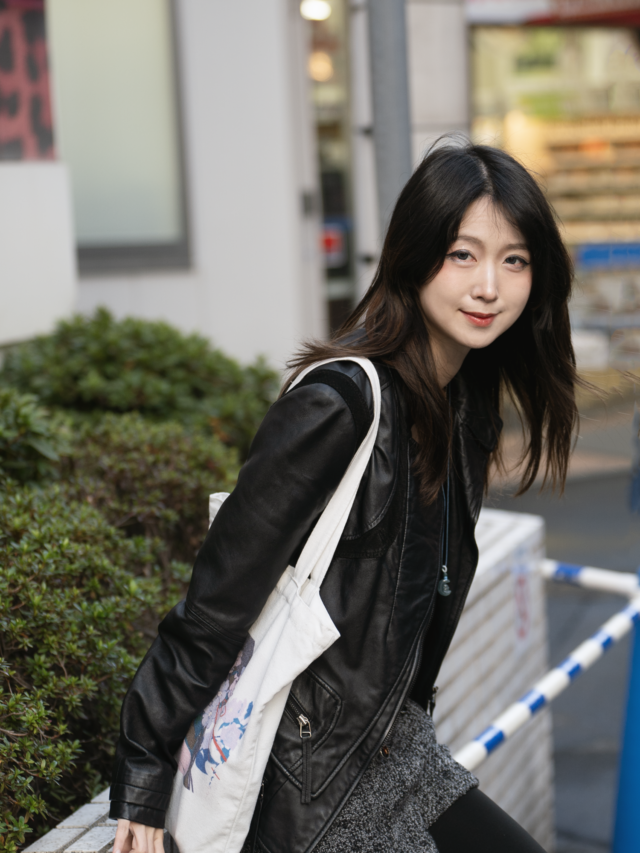 Sena Moon is a 2024-2026 Stegner Fellow and the recipient of the 2020 PEN/Dau Short Story Prize for Emerging Writers. Her work has appeared in The Kenyon Review, Guernica, The Southern Review, and Boulevard, among others. She hails from Seoul, South Korea.