
Writers pour so much energy into their craft that sometimes we forget that creative pursuits other than writing can fill us up in other important ways. Here, we’ll look at what writers do when they aren’t writing, and how those pursuits affect the return to the page. This month, we hear from two writers—Allison Snyder and Lindsey Kemp—who take either to the trails or the kitchen to reignite their writing.
What fills you up creatively when you’re not writing? If you’d like to contribute to the Writers on Not Writing series, email jen@mastersreview.com. We can’t wait to hear from you!
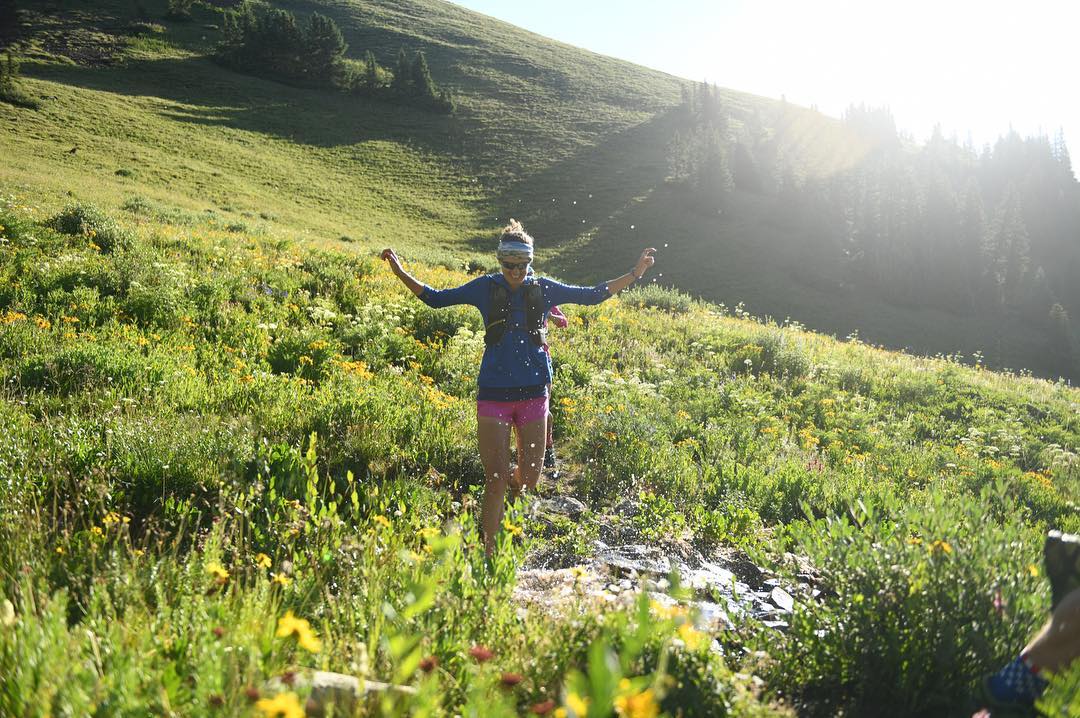
At nineteen, with numerous end-of-semester assignments looming, I headed out for a trail run. Against the soft patter of footfalls and breathsong, the concept for one assignment—an essay—manifested, and over the miles, I drafted it. The run was meant to be a break from schoolwork and on that pine-shaded trail, I had no recording device. When I returned, still sweaty, I typed with fury. It’s a rhythm that’s been part of my life ever since. You can still find me at my desk, sticky from a run, typing. I’ve no idea what that essay was about, but I’ll never forget what it taught me: Much of the creative process happens away from the desk.
For me, knowing when to step away from the page is just as important as showing up to it, and running has long been the way I do that. When a friend asked why I didn’t write about running, I told him I wanted to keep it separate, protect the two things I love most. In truth, my history with running is complicated. At nineteen, I wasn’t just writing essays on runs, I was also desperately clinging to my love for the sport as a scholarship athlete in a toxic and abusive program. By graduation, my femur had cracked in three places, I’d been labeled a “bad investment” by the coach, and the trust in my abilities that running once fueled was all but gone.
 Years later, I didn’t write about running because I didn’t want to dig into those scabbed-over, but not-yet-healed wounds. And, I didn’t want to risk losing the love for the sport that had taken years to reclaim. But then, in 2019, my good friend and former teammate forwarded two articles by professional runners—Mary Cain and Lauren Fleshman. They’d had similar experiences and their stories sparked conversations with teammates. We talked about painful moments we’d never talked about in two decades of friendship, talked about their lasting aftermath, talked with a new sort of honesty, and soon, I couldn’t not write about running.
When I told my best friend I’d begun a novel about our college running experience she said, “That sounds awful.” Laughing, I told her I’d probably move to the beach and smoke a lot of weed to get through it. Underlying the joke was a truth that to write into those wounds, I’d have to do something other than run to get away from the page. But that’s not what I did. Instead, I ran harder than I had in years, training and racing again. And no surprise, running headfirst into my histories shut my body down. During the first year of writing the novel, not only did running stop feeding my creative process, but soon, I was injured.
Stepping away from the page was as important as ever, but I needed a different activity, a softer activity. Something less like running. Something less linear. I still turned to trees, to dirt, but I walked, lingered on a boulder. Also, I did more yoga, finding the meditative movement often sparked ideas much like running did. And I returned to dance—an activity I loved as a child, an activity that didn’t hold the same histories. For two years, while revising, I danced, I walked, I meditated and, I barely ran.
Since then, I’ve found my way back to the trail, but it’s no longer the only way.
Allison Snyder
When a writer sits down to write, they make a choice: Write or do anything else.
Instead of writing, I nap, organize my children’s bedrooms, or do self-care, like trimming my cuticles, dehairing my body, or bingeing Real Housewives until my eyes bleed.
Recently, my go-to “instead of” has been cooking. Nay, trying to cook. Most often, I’m burning, spilling, cursing my ancestors for not passing down the meal-making gene, or waving a cloth under the smoke detector and shouting apologies to my children while my husband orders a pizza.
I’ve always been a one-star cook.
In my childhood, I’d make myself an orange-banana smoothie by cutting up a banana and plopping it into a cup of orange juice. Whole. Unblended. A dish you could drink and chew. In high school, I’d make pasta by emptying penne into a pot full of who-knows-how-much-water, boiling it for however long I felt like, draining it almost completely, and plopping cold marinara sauce onto the hot, mushy pasta. Bon appétit!
For so long, real meals came from the adults in my life—I was just the eater. When I became the adult and lived on my own, I rarely cooked. Like most twenty-somethings, I socialized and navigated my way through the choppy waters of adulthood—finding a job, paying bills, nurturing relationships. The act of cooking seemed unimportant, and if there wasn’t room in the budget for takeout—well, that’s what microwaves were for.
My husband, Shaun, challenged me early in our relationship to cook for him. Laziness and a lack of know-how were why I didn’t cook for myself; the reason I didn’t cook for others was that I was scared. What if I gave him food poisoning? What if he took a bite so disgusting he did a TV spit-take?
“For the record,” he said, looking down at the turkey and cheese sandwich I had handed him, “this is not cooking.”
“Those ingredients didn’t just slap themselves together,” I said to a man who could fend for himself.
Years later, we had our first daughter, Avery, whom I instantly loved more than I loved anything ever, including myself. She deserved better. The moment she voiced boredom with microwaved nuggets and mac and cheese, I downloaded a cooking app with recipes I could save into folders labeled “Want to try” and, after a successful test of a recipe, “This didn’t kill anyone.”
Cooking, I discovered, wasn’t so difficult. If I picked interesting recipes, took my time, read through all the directions, and noted my mistakes, I became better than bad and even sometimes good.
Cooking’s also a lot like writing; the more you do it, the better you become. And, like writing, cooking has rules to follow and rules you can break if you know how to break them. Over time I learned not all recipes need to be followed with fidelity. For example, if instructed to mince your garlic, you can simply use the jarred stuff if you know that one teaspoon equals one clove. And if you’re making your own salad dressing, slowly whisking your olive oil in tastes no better than throwing everything together at once. But if you’re roasting chicken and forget about it while scrolling Instagram to catch up on the Summer House drama—well, some habits never die. No one wants to eat charcoal, and you can try again tomorrow.
My daughters now have some favorite mom-meals (meatballs, pumpkin cheesecake muffins, rice with black beans—non-chef’s kiss!) that satisfy their ravenous bellies and make me feel like a better mom. Still, cooking catastrophes happen, and when they do, I remind myself that all experiences, good and bad, are fodder for good storytelling.
My favorite “Tale of Cooking Woe” goes like this:
It was October 2013, early in my marriage. I decided to test out the slow cooker we received as a wedding present, picking an online chicken chili recipe that promised to be easy. All I had to do was throw a few ingredients into the crockpot, push a button, and six hours later, eat. But when I tried to de-fat the raw chicken with my bare hands, the fat slipped from my grasp and flew across the kitchen onto our fridge like yellow phlegm expelled from a demon. Panicked that my entire kitchen was now covered in salmonella, I sprayed everything, including my feet, with bleach; took a scorching shower; threw all my clothes in the laundry; and was standing in our kitchen, wearing nothing but underwear and a look of defeat, contemplating the meaning of domesticity, when Shaun found me.
One is an old love, one is new. I’ll keep working at both, happily. Hours from now, back in the kitchen I’ll try to make another edible meal or a disaster that will be a story to tell.
Lindsey Kemp
Allison Snyder is a writer who splits her time between northern New Mexico and northern Italy. In 2016, she traded a legal career in Manhattan for running shoes and a used car and set out to live a simpler, less material-driven life. Her work has appeared in The Masters Review, Ninth Letter, and New York Times (Modern Love), among other places. When she’s not writing, she’s most often trying to keep up with Pippi, a feisty border collie mix, on the trails. To learn more about her work, visit www.allisonmsnyder.com.
Lindsey Kemp writes from her lumpy couch in New Jersey. Her hobbies include watching trash TV, spending time with her two daughters and husband, and looking at pictures of corgis online. Her work has appeared in Chortle, Metropolis: Philly, 5×5, Parks and Recreation, Literally Literary, and Herstry. She holds an MFA in Creative Writing from the Stonecoast MFA program at the University of Southern Maine.