

Minori’s extraction is tomorrow, and so Sarah has listened to records all day. Even as Sarah moves about the apartment kitchen, leaning so close over the oven its heat should sting her face, the music still reaches her through the walls of the other room. She only steps back into the living room to turn off the sound when she sees the school bus out the window.
Through the glass, she watches Minori hop off the bus, wave to the driver with a small, gloved hand. Minori is barely fourteen, and looks twelve. The sight of her reminds Sarah of how early providers schedule extractions these days; students didn’t undergo extractions until their late teens back in her school years, though that was nearly a decade ago. Minori’s bright, open face looks younger than ever as she taps three polite knocks on Sarah’s door.
Sarah opens it; for a few moments, she and Minori look at each other. Minori wears her earnestness like a second coat. Sarah does too. They each know that the other is trying to seem brave.
The school bus slowly pulls away to resume its route, bearing the words “Rock Creek Preparatory Academy” in formal blue font on its side. Minori has now ridden it for the last time. After her extraction, she will not return to school, nor Sarah’s apartment. She will spend the whole of each day in her group home, learning to adjust, and when she turns eighteen she will live on her own. That means four years of waiting, four years of helping the home supervisor attend to the rest of the children.
Sarah wonders if today Minori said goodbye to her friends who live in other group homes, the friends she will no longer see now that she has left school for good. She wonders if Minori has any friends to say goodbye to at all. Sarah had none, on her last day. Her classmates who knew of her imminent extraction only avoided eye contact, half-disdainful and half-pitying, but then again they had always done that.
Sarah shuts the door, taking care to watch her hand grasp the knob so that she knows she has actually closed it, and asks Minori how her day was.
“Good,” is all Minori says as she places her backpack by the door. It likely carries toiletries, a change of clothes; Minori’s supervisor allowed her to stay overnight, just this once, per the girl’s request. “Thank you for having me, Miss June.”
“Sarah,” she corrects, as she always does. Minori stands blinking and unsure, as if waiting for instructions. Sarah gestures toward the dining table. “Are you ready?”
Closed-mouth, weight on her heels, Minori shakes her head.
Something wrenches within Sarah: deep, the only place she can sense the feeling. “For dinner, I mean. I made you your favorite.”
“Oh.” Minori stands a little straighter. It is too late: Sarah cannot unsee the way she darkened at the question, seemed to fold herself into a smaller shape. It will be a long night.
* * *
No one made Sarah’s favorite meal the night before she lost her sense of touch. No one else had undergone that particular extraction, at least no one affiliated with her preparatory school. She had been the first and only of Rock Creek’s students in that regard. Until Minori. Like Minori, Sarah lived in a group home with students awaiting taste-smell extraction. Unlike Minori, Sarah had no predecessor to advise her.
She remembers when the Rock Creek recruiter had sat at this very dining table and told her about Minori. She remembers what she had made, too: steamed mushrooms and asparagus over a bed of jasmine rice, laden with garlic and butter. The recruiter finished her plate by the time Sarah swallowed five bites. Sarah always takes a long time to chew; her teeth cannot detect if they have ground the food enough.
The recruiter wiped her mouth delicately, deftly, with a clean white napkin. “We have another student in our program who will contribute toward a touch restoration,” she explained. That was how Rock Creek staff phrased such things. “Her extraction date has just been scheduled three months from now.”
First the recruiter asked Sarah to teach a class at Rock Creek, and she said no. Then the recruiter asked her to be a supervisor, and she said no to that too.
“I don’t want to manage a group home,” Sarah told her. “I don’t want to step foot in that school again.”
“Research has shown that students feel better adjusted post-extraction when they take preparatory classes beforehand,” the recruiter pressed. “That is the point of Rock Creek, after all.”
Sarah studied the woman’s suit of navy blue: the same color as the students’ uniforms. She had heard that selling point countless times before, from teachers and supervisors and older students. She was tired of hearing it. Where was Sarah’s preparation, then? Other students learned sign language, braille, walked the halls with silencing headphones or practiced with white canes—and she had sat in the library with no specialized lessons to attend. Other students shared bedrooms in their group homes, spent evenings playing card games—and Sarah lay alone in her designated corner of the house, listening to the sounds of the taste-smell kids whispering in the other rooms and the branch of a honey locust tree knocking against her window.
“Think of how much someone like that would’ve helped you then,” the recruiter said, as if reading her thoughts. “You could be the mentor you wish you had.”
“I want nothing to do with the program. I’ve had my extraction. I’m done.”
“You’d be compensated.”
“I don’t want your money.”
Which wasn’t quite true, because Sarah still collects checks every month: her “pension,” Rock Creek calls it, her due for the product she had sold. Hearing and sight extraction pensions last for about seven years, taste-smell pensions for four. Touch extraction pays for twelve. Sarah didn’t need a salary, not then.
But she knew, and the recruiter knew, that the pension would run out one day. Sarah had begun to pick up occasional sign language interpreter jobs to prepare for that eventuality, but the money she earned from them would not be enough on its own. All her teachers and supervisors had once been students who, unprepared for any other kind of employment, returned to Rock Creek when the well ran dry. The system is sheltered, seamless, a snake eating its own tail.
But Sarah did not acknowledge this, and the recruiter did not point it out—only smiled, calmly, as if to say that she could be patient, that she could wait, that she would be back when circumstances inevitably changed.
Sarah stood up to take her plate.
* * *
Tonight Sarah has made yams with marshmallows. Minori likes sweet things. But she eats even slower than Sarah as they sit silently at the dining table. Sarah chews—methodically, carefully, mindful not to bite her tongue—while Minori pushes at her food with a fork.
Usually Minori devours these dinners, despite Sarah’s urging to practice taking small, hesitant bites. Those previous nights, as Minori hunched over the plate, teeth flashing, Sarah would think of Miriam’s same unrepentant eagerness, same hunger. Then she’d forget to tell Minori to slow down.
Minori normally loves Sarah’s cooking for the same reason Sarah loves to make it: in the group home, the taste-smell kids only ate bland, beige oatmeal and hard bread and watery smoothies. Nothing that would give them a flavor or aroma to miss. That was the cornerstone of Rock Creek’s philosophy: the less children used the sense they would someday live without, the easier the transition would be. The practice followed the children home from school, where the supervisors enforced it just as emphatically as their teachers.
The supervisor at Sarah’s home didn’t make separate meals for her, so she had spent eighteen years eating tofu and burning scentless candles. Minori had described something similar.
“I’m done,” Minori says softly, setting down her fork. It clinks against her plate; Sarah sees the gloved hand trembling. She takes Minori’s dishes to the kitchen without scolding her for not eating more.
She returns to the dining room to find Minori holding her head higher, hands squeezing each other in her lap, like she’s steeled herself for something. “I want to know what will happen tomorrow,” Minori says.
Sarah takes her time sitting down. Then: “A school van will be here to pick us up at nine. It’ll drive us to the extraction clinic, and afterward it’ll drop you off at the group home.”
“No,” says Minori, her voice the smallest thing about her now. “I want to know what will happen.”
“I’ll be there when you wake up,” Sarah says. It is the one thing she can promise.
“They’ll put me to sleep?”
“Yes, they’ll put you to sleep.”
They’ve been over this several times in the past few months, but Minori always asks the same questions. “And when I wake up, I won’t feel anything?”
“That’s right.”
“And I won’t feel anything ever again?”
The cold clinic room. The rough texture of the hospital bed linens. The lack of the rough texture of the hospital bed linens. Sarah closes her eyes before the memory slips under her skin and crawls deep, before she is back there again. “That’s right.”
“Okay.” Minori walks two purple-clad fingers through the air, hovering them just above the tablecloth. “Is there a chance I could die?”
“No.” Sarah has heard stories of extractions gone wrong: an error in the procedure rendering the sense too damaged to successfully reimplant in the restoration patient who paid to receive it. Then the student loses part of themselves for no reason, and is not entitled to compensation. But she does not tell this to Minori.
Minori’s fingers pause, and she lifts her wide, dark eyes toward Sarah. “Why can’t I go home with you?” she asks. “Why do I have to go back to the group home? I could stay here.”
Sarah folds her own gloved hands around each other, a habit she unconsciously developed back at school and sometimes still enacts despite the lack of comfort, one that Minori has picked up from her. “I’m not a supervisor,” she says gently, firmly. “I can’t care for you.”
“But you teach me anyway,” says Minori.
“We have weekly lessons. That’s different.”
Minori does not reply. This is how the conversation always ends. But this time, as Sarah stands to clear her own plate from the table, Minori asks, “Do they make you live alone?”
A plate tips in Sarah’s arms. She clutches it tighter, too tight, and a tiny fissure blooms at its porcelain edge. She cannot decide whether the question is genuine or Minori just wants to lash out; she tastes the bitter undertones of the girl’s words, a hint of cruelty that makes her think of Miriam again. It is not just the names that run together—it is Miriam’s latent edge, Miriam’s self-defensive bite that Sarah senses within Minori.
“There aren’t any rules about that,” Sarah says. “This is just how I’ve chosen to live.” She carries the plate into the kitchen.
“I’m going to live with my sister,” Minori says from behind her. “My older sister. I know I have one because I’ve dreamed of her. I’ll find her someday, and we’ll live together.”
Minori has never told Sarah of a sister or of her dreams. “Come help me dry the dishes,” Sarah tells her.
So Minori falls silent again, dutifully drying plates and pots with her still-shaking hands. Sarah removes her own gloves to do the washing. She does not allow Minori to use hot water here—even when the girl showers, it must be cold. Soon enough Minori will never be able to feel warmth like that again. It is better if she never feels it in the first place.
* * *
Miriam told Sarah about the rumors of extractions gone awry. She had found Sarah in the library while skipping lip reading lessons; she liked to ask her teachers to use the bathroom and then wander around the halls.
She said hello to Sarah, who shushed her. Miriam was not supposed to speak unless she absolutely had to, and she was not allowed to take off her silencing headphones outside of class.
Sarah tried pointing at the noise-cancellers hanging around her neck, but Miriam moved as if to bat away her hands, so she withdrew. “Cut that out,” Miriam said, laughing, and her voice was dark and gravelly from lack of use. Sarah always liked hearing Miriam’s voice, even though it meant she was breaking the rules.
After Miriam finished telling her all the extraction horror stories she knew, she paused and aimed a kick at the legs of Sarah’s chair. “Where do they tell you your sense of touch will end up?”
“A war veteran. Someone wounded in combat who got nerve damage somewhere.” Her supervisor had told her that, and she’d felt proud; that assurance, the knowledge of her usefulness, was a warm thing she kept in her uniform pocket, something to take out and hold whenever she lay sleepless with fear in her solitary bedroom.
But Miriam only threw her head back and laughed, harder this time. “That’s bullshit, Sarah. You know that’s not where it’s going.”
She felt her face flush—she could feel such things back then, at sixteen. “Where, then?”
“To some lady whose Botox got botched. Speaking of messed up procedures. That’s the only kind of person who can afford something like feeling restoration.”
“Really?”
Miriam nodded, her mouth twisted into a closed smile. The smile bore no cruelty, just mirth; Sarah believed her. She had met Miriam December in sign language class, which she had asked to take just to fill her schedule given that she had no other required courses beyond basic writing and math. Her seat was next to Miriam’s—Miriam with her short black curls, her wire frame glasses. Her chapped lips that made Sarah’s own mouth prickle. At first glance she struck Sarah as a girl who knew things, a girl whose supervisor often snapped at her for breaking objects just to hear what sound they’d make. The other students in their class—especially the ones from her group home—avoided Miriam for such reasons, just as they avoided Sarah for others.
You don’t know that for sure, Sarah signed, even though she knew Miriam was right. She signed so that Miriam would stop talking.
But Miriam answered aloud, “Don’t kid yourself. That’s how it works. It’s why our parents or mothers or whoever sent us here. That’s the deal.”
Sarah pretended to return to her math homework, the once-warm thing crumbling into cinders in her pocket. She had never liked the word “parents.” She had always thought of them as vague, faceless figures that had signed her away at the city hospital where she’d been born. The ones that did not want her. The ones that, presented with four different extraction options, had chosen the most extreme, the most rare.
Her supervisor had told her that parents did this with good intentions, that they chose to secure housing and education and income for a child they could not care for. But, Sarah knew, supervisors often lied.
Miriam stood watching Sarah ignore her until the librarian stalked over to tell her to get back to class. She slipped away, turning once to shoot a grin over her shoulder. Miriam’s right hand flicked two fingers outward from her eyes, pointed, and then extended the same two fingers with the thumb curving up: See you later.
* * *
Minori breaks her silence to tell Sarah her record is still spinning. She must have muted the volume but forgotten to stop the machine. Sarah cautiously lifts the needle and guides the LP back into its sleeve. Shelves of them line her living room, carefully arranged and free of dust.
Minori’s eyes rove across the titles as she stands among the couch and chairs. Her arms hang limply; her gaze is vague and far away, music from another room.
“Do you want to listen to some?” Sarah offers.
Minori stretches a hand toward one shelf, and then tucks it back in her pocket. “Can we watch a movie?”
“Of course we can.” Whatever she wants. Sarah sits in the armchair nearest the sofa while Minori points the remote at the television screen and clicks through channels. Huddled on the cushions with the bright folds of her coat unfurling around her, the girl resembles a flower mid-bloom.
The coat and the gloves were Minori’s first lesson. As soon as the Rock Creek recruiter introduced them and then left, Sarah took Minori to the city. She rarely ever visited, usually avoided the crowds of people and crush of buildings, but she led Minori straight out of the subway and into a clothing store.
“I’m going to get you a big coat, and a pair of nice gloves,” Sarah told her. “Don’t lose them, and don’t take them off. Not even to eat, or when it’s hot—only when you have to. Understand?”
Minori nodded.
“What’s your favorite color?”
Minori wanted purple. She told Sarah how that morning, on the ride from the group home to Sarah’s apartment, she’d seen a beautiful little house with a plum-painted door. She said she liked that the door was allowed to look so much brighter than the doors of all the other houses around it. “Once I leave my group home,” Minori said, “that’s the house I want to live in.”
So Sarah searched the store for purple, skirting wide arcs around other shoppers, with Minori drifting at her heels. Sometimes the girl would try to sidle up beside her, pressing close, and always Sarah took one quick step aside.
Once she found some items, she had Minori try them on alone in the changing room. Sarah waited outside, eyeing her reflection in the floor-length mirror. The woman she saw was pale and stiff-shouldered and not nearly up to the task of preparing this child for what lay ahead. She sat in the chair too gingerly, as if unsure it would hold her weight. Her gloves were maroon.
The clothes were a trick she had thought of after her own extraction. The idea was to layer and layer and layer, to put as many barriers as possible between her skin and whatever might come into contact with it. That way, when she touched something and didn’t feel it, her mind could attribute it to the intervening fabrics. They worked as a kind of excuse.
She had gotten the idea from the stories Miriam had told her of certain students recovering from sight extraction who continued to keep the surgical bandages over their eyes for months after the operation. “If they never remove the bandages,” Miriam explained, “they can blame the darkness on the blindfold, instead of the other thing.”
Minori emerged from the dressing room back in her blue uniform, the purple fabrics gathered in her arms. She said she was satisfied with her selections. “But the coat is a little itchy,” she added. Sarah did not point out that soon enough it would cease to be a problem.
“I’m glad you like them,” Sarah said. “These are my gifts to you. They’ll help get you ready, and they’ll help you adjust afterwards. I’ll explain it on the way back.”
Minori nodded slowly. She slipped her hands into her gloves—deep, royal purple, the color of the bruises that surfaced on Sarah’s skin in the months after her extraction, when she frequently knocked into things without noticing. “Thank you, Miss June,” she whispered solemnly.
Sarah flinched. She hated that surname, hated the lazy way Rock Creek designated each student by the month they had been born and then surrendered to the school. “Please call me Sarah,” she said.
Now Sarah watches Minori lower the remote, fixate on the film flickering across the screen, and tug at the coat sleeve that slipped over her hand. Someday she will grow into it. For now it seems to swallow her whole.
* * *
Once, while looking out the bus window, Miriam asked Sarah if she would still feel pain after her extraction.
Sarah had just boarded. The Rock Creek bus had picked up her and the taste-smell kids on its route to the school campus. It lingered outside her group home as the students found their seats. Sarah followed Miriam’s gaze toward the two-story house hunkered in the shade of the surrounding trees. One of them, the honey locust, thrust its branches against the window of her upstairs bedroom. Miriam was staring at its long, wicked spines.
“I don’t know,” Sarah answered honestly.
“Your supervisor never told you?”
“My supervisor doesn’t know either. There’s no one here that knows what it’s like.” Later Sarah will learn that the answer is yes—but like any other sensation, she will experience it only in a vague sense. It will seem hidden and abstract, never on the surface of her skin; she will dimly register the thing somewhere in her brain more than she will truly feel it. As if her body is a cave and the feeling exists somewhere deep, deep inside.
“No one that will tell you, you mean,” said Miriam.
“It’s not like that,” Sarah said, a little more forcefully than she meant to. “Not everything is some grand conspiracy, Miriam.”
The bus pulled away and her group home slid out of sight.
“But think about it. Even if you’re the first from Rock Creek… I mean, there’s other schools. And the city’s so big. Why isn’t anyone like you at least teaching here? Why won’t any of them be your super—”
“Because they don’t have to be,” Sarah snapped. “They can work. They find jobs.”
Miriam went quiet. She began to slide her thumb back and forth across the tender skin of her own wrist with such gentleness that, watching her, Sarah immediately regretted what she had said.
But what she had said was true. Sarah’s own supervisor had explained it to her and all the taste-smell kids in the group home: They could go out into the world, after everything was over—those were the words the supervisor used—and they stood a chance of getting hired. The sight kids and the hearing kids did not. Their loss was too debilitating, despite all of Rock Creek’s preparation. And it was too visible. At best they could become teachers or supervisors, but they would not escape the school. Sarah could—at least they assumed she could. When Sarah had first joined her sign language class, the hearing students’ resentful stares grated against her skin. They did not make room for her at their tables, did not move their backpacks from unoccupied chairs. Sarah found the sole empty seat beside the only other girl no one turned toward to practice their conversational signing. And Sarah found that girl to be the only person who did not look at her with envy and revulsion.
But now the girl did.
“I don’t like talking about it,” Sarah said quietly. “But you asked.” Her hands clung together in her lap. Preparatory academies produced so many taste-smell suppliers that at least a handful of such students returned to work for those same schools. But touch restoration was nearly unheard of then, and so Sarah was alone.
She risked a glance toward Miriam. Her glasses looked dirty. Sarah wanted to clean them. She brushed her fingertips along the lenses—not Miriam’s face, but the windows to her face. Miriam’s eyes shifted toward her and Sarah, remembering herself, drew her hand back into her lap.
Miriam adjusted her glasses. “If I were you,” she said, “I’d touch everything I could before my extraction. Just to know what every texture feels like before it’s too late. Satin and chalkboards and grass—even that thorny tree.”
A laugh—part relief and part derision—ripped from Sarah’s mouth. “I hope you’re joking.” Sarah avoided busy hallways out of fear of bumping into some other student, fitted her bed with the most threadbare sheets in the group home, had already begun to shower with cold water. No one had told her to do these things, and it didn’t stop the other kids in her group home from pinching her under tables or sliding their fingers against the back of her neck for the pleasure of watching her writhe away. But she couldn’t think of any other ways to prepare.
“I’m not,” Miriam said. A girl in the seat behind them leaned over, held a finger to her lips, then jabbed it toward Miriam’s headphones. But Miriam ignored her, steadily holding Sarah’s gaze through the smudged lens of her glasses. “I’m not.”
* * *
Not long after that conversation on the bus, Miriam found Sarah in the library again. Come with me, she signed. I want to show you something.
Sarah glanced around for the librarian: Miriam was being discreet, which worried her. Miriam waved a hand in front of her eyes to catch her attention, and then added, Not much time. Supposed to be in the bathroom.
She led Sarah through unfamiliar halls and down staff-only stairs; they stopped before an unlabeled door positioned between rooms usually reserved for teacher meetings. Miriam opened it and ushered her inside.
The lights barely worked; their dimness cast the room in an eerie, twilight glow when Miriam shut the door to the hallway. Still Sarah could discern the array of objects strewn across the desks: water-damaged textbooks, glasses with cracked tinted lenses, the pieces of a deconstructed camera.
Miriam hunched over a cardboard box in the corner. “This stays between us, okay?” She stood, unsheathing a black disk out of some kind of folder, and picked her way across the room until she reached a device Sarah vaguely recognized.
“What is that?”
“Watch.” Miriam placed the disk on the machine and touched a metal arm to its surface. She pressed a button, and the disk began to spin.
Then Sarah realized what the device was, although no sound came out of it yet. Her nerves crackled with alarm. “Miriam. No.”
“It’s being difficult. Hold on.” Miriam leaned over the record player. Her eyelashes swept against the upper frames of her glasses. She glanced Sarah’s way and smiled at her silence. “Don’t be so shocked. I come here all the time.”
Sarah knelt by the cardboard box. It contained stacks of records, their sleeves torn or faded or entirely missing, but sheltered from dust in their nook beneath the desk.
“I’ve got tapes, too, and a cassette player hidden under my bed,” she heard Miriam say. “An old handheld radio. Earbuds. But there’s no way I could hide an entire record player in my group home, so I took my LPs here. I found the player in this junk room once while I was wandering around.”
Sarah sifted through the sleeves that remained intact, scanning their titles. Beethoven. Charlie Parker. Billy Joel. She held the records like they could slice into her bare hands.
When she turned toward Miriam, her mouth slack with words she could not find, she saw laughter in Miriam’s eyes. “I sing, too,” Miriam added. “The walls here are thick.”
Sarah put the records away just as Miriam got the volume working. The needle dipped through the grooves of the disk; soft static padded out from the speakers. Miriam sat on the floor with the back of her head resting against the wall, facing the windows, and patted the spot beside her. Not knowing what else to do, Sarah lowered herself there. Warmth from Miriam’s body whispered against Sarah’s right side. She shifted away until a foot of empty space lay between them. Then wished she hadn’t.
“Listen,” Miriam murmured, and the music began to play.
It sounded like wailing. At first Sarah thought it was a voice, yet the keening had something distinctly inhuman about it. The noise chilled her. But then the piano lifted in—gently, tenderly, the sound of light and water—and the instruments wove together like strands of the softest fabric Sarah had never touched. She had never heard anything so haunting.
“What is it?” she breathed into the dusk of the room. “The first thing.”
Miriam closed her eyes. “It’s an instrument called the theremin. You use it by holding out your hands, like this.” She floated her right hand in front of her, shoulder height, and stretched her left one to the side. “You don’t press or pluck anything, you just move. The frequency changes depending on where your hand interferes with the vibrations. Kind of sounds like singing, right?”
Sarah studied Miriam’s reaching hands, her still-closed eyelids. She wanted, at that moment, to put her mouth to Miriam’s throat and taste the texture of her lovely, ragged voice. But she pushed the thought away. The theremin filled up all the space in the room, turned the air thin and fragile. The only instrument played by not being touched.
Then Sarah stared out the windows. It was already dark; it was December, the month Miriam was born. She had just turned seventeen. The two of them sat like that for a long time, conscious only of their breathing, of the music, of each other, and not of the classes expecting their return. The darkness seemed to swallow everything but this little room. They listened until the needle slipped into the center of the disk and the otherworldly song slipped, in turn, into silence.
Miriam opened her eyes. Sarah saw tears there, just bordering her lower lash line, the second before Miriam blinked them away and smiled again. She held up the record sleeve. “See this?”
The cover showed a woman poised over a bizarre box that had an antenna jutting out of it, her hands positioned just as Miriam had demonstrated. “That’s Clara Rockmore,” Miriam told her. “She was the world’s best theremin player. I only have this one record of hers, but it’s my favorite one I’ve got.”
Something sad and sweet had settled beneath Sarah’s skin, and it had reached the deep place she did not like such things to go. “Miriam,” she said. “You know you shouldn’t be doing this.”
“It’s beautiful,” Miriam said quietly. Her voice turned brittle. “You’ll get to listen to whatever you want, all your life. How come I can’t listen now?”
Sarah stood. She had lost track of the number of times a fellow student had said that to her, muttered it to their friend, thought it when she passed by: You’ll never lose what I’ll lose. The other children in her group home would not let her forget it, shunned and envied her for this supposed privilege. None of them understood that she thought the same toward them. They did not comprehend, or chose not to comprehend, what she would lose instead, the infinite loneliness of it.
“You’re setting yourself up to suffer in the future,” she said to Miriam, while her hands, moving of their own accord, formed an unspoken plea: I’m scared for you.
“I’d rather lose it and miss it than never know it at all.” And Miriam stood too, to flip the record to its next side.
* * *
A month before Minori’s first visit, Sarah interpreted for a city council candidate’s public forum. Few events provide such accommodations, but sometimes Sarah appears in the corner of a television screen anyway, echoing politicians’ speeches whenever campaign rallies pass through the city. She knows she has a hiring advantage as someone both hearing and fluent in sign language—and she knows she must save up for the inevitable day her last pension check arrives in the mail.
Sarah stood at the base of the stage of a small auditorium, scanning the rows of seats. Local attendees took turns asking the candidate about his policies. No one in the crowd seemed to be following her, so she slipped into half-mindlessness, allowing her hands to respond without thinking. Then an audience member asked the candidate to describe his stance on government-funded restoration programs.
Sarah began to sign the question before she realized what it asked. Until then, she had never heard the mention of extractions while working an event. She suspects that debate moderators never raise the issue for the same reason that Rock Creek Academy lies miles along a barely visited walking trail in preserved public parkland, the same reason that all the group homes likewise skulk deep within the recesses of the surrounding wood. Everything safely tucked away beyond the scope of the city, linked by a bus route that never breaks the treeline. Sarah reads the quarterly reports Rock Creek makes public on account of its state funding. But the program is rarely spoken of—except, she imagines, in elite circles where wealthy families whisper referrals to each other when a child is born deaf or blind or some other way deemed wrong.
So Sarah’s hands stumbled into stillness halfway through the question.
But the candidate strode smoothly into his answer. “The way I see it,” he said, “the restoration academies function like any other government welfare program. They serve the people. They provide jobs—teachers, bus drivers, surgeons. They restore the disabled. When a family cannot support a child, they have an option other than that of sinking deeper into poverty, or resorting to an illegal abortion.”
Sarah once told Miriam that she liked that Rock Creek was a girls’ school. “They’re all girls’ schools,” Miriam said. She explained that the success rate of extractions was much higher for girls than for boys, so restoration programs stopped admitting male newborns. Removing senses from young women proved more cost effective, the reports indicated; it was just easier to take from their bodies.
“Restoration works just like anything else,” the candidate explained. His voice rang clear and resonant; his suit fit him perfectly. “An exchange of assets. Everyone involved gives something and receives something in turn. And society benefits.”
Sarah watched her gloved hands work, watched them give shape to his words and send them out into air. There was nothing else she could have done.
* * *
A hitch in Minori’s breath—and Sarah realizes she has lingered too long in her memories. She wrenches out of them like a needle jumping a scratch.
Minori’s lips are slightly parted, her eyes riveted on the television. On its screen, two people press their faces against each other. Their arms encircle each other’s bodies, grasp each other’s clothes, cling with a delicate ferocity.
Sarah snatches the remote and turns off the television.
Minori sits frozen on the couch. The black screen reflects her glassy expression, as if the scene of the two figures still swims behind her eyes. That is something Sarah has never had, will never have. Perhaps she could have, perhaps she almost did—but it’s too late now. She can tell Minori knows she will never have it either.
Minori moves one palm toward the place the remote had been, pauses when she realizes it’s in Sarah’s grasp. “Oh,” she says. “I didn’t know…” Her eyes are still unfocused. “You don’t have to turn it—”
“Let’s do something else,” Sarah says. Minori brings her hands back into her lap, twisting them around one another. Without knowing it, Sarah does the same. All she had wanted was to keep Minori’s mind off her extraction, to do anything but remind her of what the surgeon would take from her tomorrow. To give her a good memory to hold onto. This visit was meant to be different from all her prior visits, in that way.
For Minori’s last lesson, just a week ago, Sarah took her back into the city. She led her not to a store but to the tallest hotel building for blocks. Sarah knew it well.
She showed Minori inside the great glass elevator that slid all the way up and down the building’s central axis. Sarah pressed the button for the top floor. Minori stood beside her, straight-kneed and bewildered, as they watched the figures below grow smaller and smaller through the clear walls.
When they reached the top, Sarah pushed the button for the bottom floor, and again the many levels of elevator machinery and shuffling people slipped past them.
They went up again.
They repeated this for nearly an hour. Minori said nothing, just tilted her head to appraise the assortment of people that entered or exited the elevator on the stops between. She swayed a little, absorbed in quiet contemplation. Finally she turned her face toward Sarah in a question that did not need to be spoken to be understood.
Again Sarah touched her finger to the first-floor button and watched it light up without sensing the pressure. “This is what it feels like,” she said.
“What do you mean?”
The constant weightlessness. The uncanny emptiness. The awareness of being, of moving, but never anchoring to any one thing: perpetually liminal, forever untethered.
Instead of answering, Sarah stepped off at the ground floor. When Minori made to follow her, she held out a hand—didn’t make contact, just blocked the girl’s way. “It’s your turn,” she said.
Minori gazed up at her. For a moment, Sarah saw something in her expression—an incredulous tensing of her mouth which seemed so familiar—that made her wonder whether Minori would stride past her and out the hotel. But then it disappeared. Maybe she had only imagined it.
Instead, Minori edged back into the elevator. The image burned in Sarah’s mind all week: Minori’s thin shoulders trembling even as she lifted her chin in a show of determination, all by herself in that huge, sleek box. Minori pressed the button. And the machine lifted her up, farther and farther from where Sarah stood watching in the middle of the lobby, until all she could see of Minori was the shiny black strip of her hair.
She descended and, with one hesitant glance at Sarah, rose yet again. Minori glided past other people, could see them and nothing more, separated as she was by the thin glass that rendered them both visible and impossible to reach. Sometimes she looked down at Sarah, locked in place on the other side of a window.
Sarah was still not sure why she had spent so much time riding that elevator after her own extraction. But she could think of no better way to explain what would happen to Minori.
After another hour, she waved the girl over to her. She saw Minori step off the elevator, unsteady, as if doubting the solidity of the floor, weariness slouching her spine, and knew that she understood.
She sees the same dread now, the same tiredness, as Minori sits in her living room and stares at nothing. “What else do you want to do?” Sarah urges her. Minori does not answer.
Sarah will be with her in the extraction clinic tomorrow, will continue to receive her once a week afterward. But really it is something Minori will go through alone.
* * *
Silence came for Miriam in January. The class was in the middle of a vocabulary lesson, headphones on—Sarah included—signing words back at the teacher. Then the door opened and a woman on administrative staff showed Miss April a sheet of paper. Miss April signed, Miriam. Go.
Sarah first thought of the record player, of the cassettes under Miriam’s bed. But Miriam rose coolly from her seat and followed the administrator out the classroom without a single glance back.
She did not return to class. She did not stop by the library, either. Sarah waited for her for the full hour, ignoring her homework and the steadily strengthening thrum of her heart. When it came time for her math class, she left the library and headed for Miriam’s secret room instead.
Miriam had taken her there a couple more times since the first; Sarah found it after a few wrong turns. No music played behind the door. She wrapped her hand around the doorknob as she peered over her shoulder into the empty hall. Unease pulsed in her fingertips. She opened the door.
Miriam was inside, not sitting on the floor or rooting through boxes but leaning against the window, staring out into the campus. She turned and looked at Sarah blankly, as though she had never seen her before. Sarah shut the door behind her.
“Miriam.” It was all she ever seemed able to say.
Something sharp replaced the blankness in Miriam’s eyes; she lifted one shoulder and one corner of her mouth. “It was going to happen eventually.”
Through the window, the sun sunk below the trees of the wood. Sarah listened to the sound of her own breathing.
“You know”—Miriam removed her glasses, held them up to the dim lights—“when I was born my parents chose for me to have my sight extracted. But then I developed astigmatism as a kid. So the program switched me to different classes, switched me to a different home. I think that maybe that’s why I’ve never been able to get used to it. For years I thought they were going to take my eyesight, not my—”
She stopped. Miriam turned her face away and put her glasses back on. “I’ll still get to see, though. Isn’t that nice? I can look out as many windows as I want.”
She fell silent after that. The two of them stood in a room of broken and unwanted things.
“When?” Sarah asked.
“One week.” Miriam tried to grin, but the line of her mouth trembled, and then broke. The tears came. They spilled out this time, rapidly and yet noiselessly, as if sound was already lost to them. Her shoulders flinched. Her eyes roved around the room, searching for someone to help her, but there was only Sarah standing stiffly in the center, watching Miriam cry.
Miriam’s hands twitched at her sides. The palms turned upward and then over again, flinging away from her body: I don’t want to. I don’t want to. It’s not fair.
She had always seemed so brave to Sarah, so unconcerned. In the midst of her horror Sarah understood, now, the too-bright laughter, the collected stories about past students, the extensive, memorized extraction facts. She lifted her hands so Miriam could see them, signing, I know. I know.
Miriam paused. Her throat rattled. Her wet eyes met Sarah’s, stretched with terror, a prey animal’s, and Sarah did not understand what was happening until Miriam’s hands were nearly upon her own. One moved forward and the other extended to the side, not to play an instrument but to enact something unspeakable—greedy and ready to grasp, to clutch close, to hold on.
Sarah stepped back just in time.
Miriam’s arms froze. She slowly drew them back into herself. And of all the things Sarah wishes she could forget—the school, the group home, the sight of the surgeon leaning over the darkening borders of her vision—she wishes she could forget Miriam’s expression the most. Her brows just barely lifted in surprise, the tears still smeared on the tip of her nose. The recognition of betrayal already cooling her wide eyes.
Sarah opened her mouth, but Miriam moved past her and out the door before she could speak. She had no idea what she would have said, anyways. Maybe: I’m sorry. Maybe: I know you weren’t trying to hurt me. Maybe: You have already ruined yourself. I cannot let you ruin me too.
That was the last time she saw Miriam. She did not return to school for the rest of the week; she never had an official last day. Sarah sat in sign language class with an empty seat beside her. She often wondered how Miriam passed the time not spent in school. Maybe she had faked an illness, and lay in bed listening to all the songs she could while she still had the chance. Or maybe she had burned every last cassette in preparation for the silence ahead.
Sometimes Sarah left the library just to return to the room and play a record alone. One day she found the door locked, and it stayed that way. She sat by herself on the bus. She kept practicing sign language and lying awake at night, waiting for the day an administrator would summon her to the school office and give her a sheet of paper with a date written on it. She did not have to wait very long.
* * *
“Minori,” Sarah says. “Let me show you something.”
Minori is still someplace far away. She lifts her head, though, as Sarah crosses the room and crouches by the record sleeves the girl had examined earlier. Sarah selects a disk and places it beneath the needle. “I think you’ll like this. Listen.”
The record waltzes, and a strand of sound wobbles out. It is so thin, so tenuous; the thread of it traces sweeping patterns in the air between them. Then the pitch becomes sonorous, full-throated. Sarah imagines it reverberating inside the hollowness of her body. It is so light and so heavy all at once: the most mournful melody in the world.
Minori tips one ear toward the sound. She scoots closer to the armchair where Sarah returns to sit. “What is it?”
“Theremin.”
“It sounds sad.” The vibration dips and swivels. “This is what all your records are?”
“Some of them,” says Sarah. “I just like to collect the albums of this particular artist.” She tries to recall what it felt like to sit next to Miriam in that little dark room. She cannot tell whether she truly remembers the warmth or only remembers the fact of there having been warmth.
Minori lays her head on the couch’s arm. “Can I sleep here?”
Sarah nods, and Minori bundles the tattered throw blanket around her. The top of her face peeks out from the covers, framed by the collar of her coat. “Don’t let me oversleep.”
She is worried about missing her appointment. For whose sake? Surely Minori would not mind passing tomorrow morning under the safety of her blanket, waking in the evening as if her scheduled extraction had been nothing but a nightmare.
Then Sarah understands: She is the one Minori does not want to disappoint. The thought sends a blurry sense of horror echoing through her until she takes a deep breath to muffle the sound of it. Her throat tightens; she is aware of the way her breath struggles through. “I won’t.”
“Good.” Minori’s eyelids are half-closed. “Promise you’ll be there when I wake up? After tomorrow, I mean.”
“I promise.”
No one waited beside Sarah’s bed when she woke up. That was, more than anything, why she finally agreed to host a touch extraction student once a week. That, and the last thing the Rock Creek recruiter had told her before she left.
“All I ask is that you consider it,” the woman said when Sarah returned from the kitchen. “The girl is living in a group home for taste-smell students right now. She’s fourteen.”
“Too early,” Sarah snapped. The thought of another child slated for touch extraction disgusted her.
“Her name is Minori May,” the woman added.
And Sarah was back at the library, waiting for Miriam to cut class and find her and tell her a story in that wonderful, scraping voice. Minori. Miriam. The names blended together in her head. She could never save either of them.
Minori’s soft breathing mingles with the lilting theremin until the first side plays out. Sarah rises to flip the disk. Her gloves are usually a bit dirty by the end of the day; not wanting to tarnish the record, she slides them off and leaves them neatly folded over the arm of her chair. As she repositions the needle, Minori’s voice startles her.
“I don’t want to go back to my group home tomorrow.”
“I know,” Sarah murmurs. “I know.”
The girl’s body forms a barely perceptible mound on the couch, and still she can see the trembling beneath the blanket. “Sarah,” Minori whispers, “I’m so scared.”
Sarah presses play. The song unwinds like a memory. She sits in her chair and lets the numbness inside her create a feeling of its own, something yawning and unutterably deep.
She thinks of the branch of the honey locust tree that always tapped on the other side of her window. What would have happened if she had reached out and grabbed it, wrapped her fingers around the thorns until they punctured flesh, hooked into veins, rent ribbons of red that turned her nerves to fire? It would have hurt so much. It may have been worth it.
* * *
Tomorrow, Sarah will sit beside Minori in the school van on the way to the extraction clinic. Sarah will still be sitting beside her when she wakes from the procedure. First Minori will vomit into a plastic bag, a reaction to the anesthesia. She will drop the plastic bag because she will not know how to hold it. Vomit will leak across the floor. There will come the realization, and the horror of realization. There will be a long, terrible silence.
But tonight, Minori sleeps quietly on the couch. Sarah sits beside her even now, watching her rest. She sees Minori’s eyelids barely lift, thin white crescents peering beneath, and the little, ungloved hand reach out from under the blanket. She does not feel the little hand wrap around her own, but she sees it happen. And she lets it stay there.
Minori’s eyes finally close. Clara Rockmore plays on.
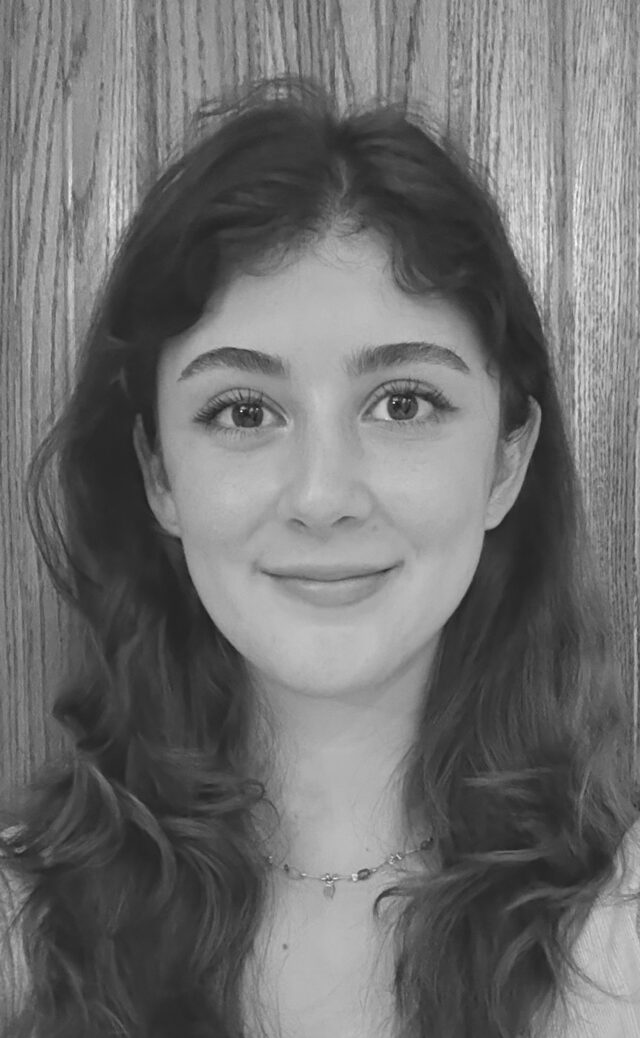 Danielle Sherman is a first-year MFA student at the University of British Columbia in Vancouver. Her work has appeared in or been recognized by the North American Review, the Los Angeles Review, and After Happy Hour, among other publications. She is the recent recipient of the Sudler Prize for undergraduate artists, the Artistine Mann Award in creative nonfiction, and the Grace Abernethy Scholarship in cross-genre writing. She serves as the Associate Producer of the 2026 Brave New Play Rites Festival and as a prose reader for The Adroit Journal.