
My grandmother would tell me stories on the nights that my mother worked late, or was studying, or was with Butchie. She would chop jackass rope finely, stuff her pipe, even though my mother hated the smell of tobacco, and tell me a wild tale of Bredda Anansi or Bredda Tacuma or King Tiger. My favorite stories were the duppy stories that she wasn’t supposed to tell me. I would beg her as she prepared her pipe, and she would laugh and say, “You love frighten youself, don’t?” and I would smile and curl up next to her ready to be told about Old Higue and Whooping Boy and Three Foot Horse and River Mumma.
But the one that frightened me most was the Rolling Calf. I would close my eyes and see the red glowing eyes, the flames from its nostrils. I could feel the hot, sulfurous breath across the back of my neck, on my cheek. And the sound of the chains being dragged across the floor as the Rolling Calf came for me. Of course, I’d wake screaming and the next time my mother had to leave me with my grandmother she would say, “Stop fill the boy head with duppy story. Him growing up too fraidy-fraidy.”
And my grandmother would laugh and smile and wait until my mother was gone before saying to me, “You know how to make sure Rolling Calf don’t catch you? You know them like molasses and you can drop money for them to count? And that salt will keep them away? And if you have a knife you must stick it in the ground because then them won’t able to follow you.”
I would feel better then and help my grandmother shell pigeon peas or peel bananas for dinner while she told me about why the johncrow has a bald head and why Anansi’s bottom is so big.
“You must know the story them, pickney,” she would say to me. “The story them guide and protect.”
I liked it when my mother went to work or to her classes, because she would return early enough to see me before I fell asleep. She would sing me a song or just come and give me a kiss on my head. But when she went out with Butchie, she always came back when I was already in bed, eyes long closed. Once, I woke up and heard my mother and grandmother speaking.
“That man science you?”
“No Mummy. Of course not. Why you say that?”
“Because from you start see him you forget you have one pickney. Forget that you have plans. So it must be obeah.”
“I don’t forget nothing. Nothing don’t change.”
“What him promise you? House and land and car and pretty frock? Like him promise every woman that come before you? And what them woman doing now? You know any of them with house? Land? Anything? You think you know Butchie, but you don’t know nothing.”
“What about Linval? Him sleeping?”
“Leave the boy alone. Make him rest. But make me tell you something. Nothing good going come of you and Butchie, you understand?”
Butchie was a big man with voice that was deep and loud. I would hear him holding court in his bar every afternoon as I walked from school. Usually about his plans to develop the area. Everyone knew Butchie was always buying up chunks of land here and there. Sometimes by offering a good price, sometimes by other means. I would hurry past the bar, often failing to look as I crossed the busy intersection by the ice cream shop. My grandmother always warned me about this, saying, “Those minibus driver down that road like the devil on them tail. Mind how you cross the street there.”
But no minibus driver frightened me as much as Butchie’s laugh did. Butchie’s laugh made the countertop in his bar rattle. It was the kind of laughter that announced itself to everyone. And at the same time it had an otherness to it, like the creaking of bamboo at nighttime, or the howling of wind during a hurricane. It was a laugh that suggested a problem to be faced once silence fell. A portentous and thick laugh. Because everyone had heard the story about what happened when Butchie stopped laughing.
Everyone knew that Butchie, whose real name was Edward, had always kept rottweilers. Hulking beasts allowed to roam well beyond the boundaries of his land. One night, Butchie’s dogs killed three goats belonging to his neighbor. When the neighbor complained to Butchie, Butchie had laughed and said, “Your fault for not looking after you goat them.” The neighbor went home and poisoned the goat meat. The next night the dogs returned to the neighbor’s property, ate the flesh of the goats they had killed, fell ill, and died. Butchie arrived shortly after losing his dogs and banged on the neighbor’s door. The neighbor told Butchie he should have been looking after his rottweilers.
Butchie wasn’t laughing when he struck the neighbor in the face or when he went to his car and brought back a sharp ratchet knife. He didn’t laugh as he butchered the man’s remaining goats, hanging them in a tree at the front of the property. The screams of the goats, who had to watch as each of them was killed, rang through the neighborhood. Blood pooled on the ground, a thick metallic stench filled the air.
“Next time you provoke me,” Butchie said, “I going string you up just like I string up you goat them.”
The man eventually sold his land to Butchie and moved away. Everybody stopped saying Edward and started calling him the Butcher or Butchie. He loved the name, loved the fear it inspired.
This was the story I was thinking about when I saw Butchie pick my mother up for their first date. I thought of screaming goats and pools of blood. I looked at Butchie, smoking a cigarette, its red tip glowing in the early evening’s dark and thought of the glowing eyes of a Rolling Calf, the glint of Butchie’s necklace like the chains it was said you could hearing clanking along the ground when the Rolling Calf came for you. I burst into tears.
“Donna, you pickney don’t want you to go out tonight,” Butchie said, laughing.
“Don’t worry, Linval, you will see me later. Is not like I leaving forever,” my mother said to me.
She didn’t return until I was tucked into bed having terrible dreams. After that, things seemed to move quickly. From one night, to two nights, to three nights a week my mother was out. I saw her less and less, and during the little time we got to spend with each other, she was tired and irritable.
“That man replacing you one pickney,” my grandmother said.
“Is not like that, Mummy,” my mother said. “Him helping me.”
“Helping you to form fool. I trust him about as much as I would trust a mongoose with one of me fowl them.”
Still, my grandmother agreed to have Butchie come over one night for a meal. So that, in my mother’s words, she could see the good that lived in him. It didn’t go as well as my mother hoped.
Butchie came in smelling of rum and cigarettes, laughing and spreading himself across the little sofa that my grandmother had in her small front room. He continued drinking rum and speaking loudly, barely stopping to listen to what anyone else was saying. Somewhere between my mother clearing the plates from the main meal of boiled banana and steamed snapper, and her bringing in the sweet potato pudding, my grandmother turned to Butchie and said, “Butchie, I don’t care what me daughter say, me spirit nuh take you. I can’t stop her from seeing you. But you not coming back to my house after tonight.”
Butchie, his face dark in the evening’s shadows, standing on the veranda and smoking a cigarette, looked in at my grandmother, sat at her table, small, but fierce, and said, “You come in like Old Higue. Just old and dry up and miserable. No wonder you husband drop down dead. You suck out him life with you tongue, with the complaining. Better him dead than live with a miserable old witch like you. But you can’t live forever. See if I don’t walk through this house the day after them bury you.”
And he pulled hard on the glowing cigarette, before throwing it to the ground crushing it under his foot.
“Babes,” he called to my mother. “Me come check you tomorrow. Me have little business to deal with.”
Before my mother could return from the kitchen we heard his car rattling to life and screaming off into the night.
“What you say to him?” my mother asked, wringing a tea towel in her hands. “What you say to upset him?”
Hot tears ran down my mother’s face as she turned and went back into the kitchen.
But Butchie came back the next night, though my grandmother wouldn’t allow him into the house, and the next night, and the next. Before long we found ourselves living at Butchie’s place, halfway up the big hill I used to pass on my way to school. Butchie’s bar sat at the bottom of this hill and each afternoon I would pass it with my head down, trying not to look in at the toothless old men drinking rum and playing the poker box. Once I heard someone call out, “Butchie, no you new boy pickney that.”
“No son of mine could so soft. But is all right I going toughen him up,” I heard Butchie say and then that rasping, deep, awful laugh filled my ears as I hurried up the hill.
Every day I had to get back straight after school because Butchie expected a long list of things to be done before he came home for dinner. I had to sweep the yard and wash the car. The fridge needed to have two full bottles of ice water. If they were half full, I had to fill them up early so they would cool down before Butchie returned, and if meat needed defrosting I had to defrost it. I had to feed the dogs, tidy the house, make sure the floor was swept.
Once, early on in the new regime of living with Butchie, my friends asked me to play marbles at the end of the school day. And I did. Then I went with them to pick guavas from Mr. McFarlane’s trees, the ones that were in the opposite direction to Butchie’s house. Then we went to skim stones down by the river. I forgot what time was, what the things I needed to do were.
When I reached home, Butchie was waiting. Seeing me, he pulled deeply on his cigarette, walked up to me and grabbed my arm.
“Boy. Where you been?” he asked. And not waiting for a response he said, “If you don’t do the things that you supposed to do before I reach this yard I going bust you rass. You understand?”
Butchie’s words were hot and felt as if they might burn me up on the spot. He sucked on the cigarette again and took it from between his lips. He held the burning tip just above my skin where I could feel its white heat.
“I promise you mother not to do anything this time. You lucky she inside the house,” he said. “But next time I taking a whole pack of these and putting them out on you, one by one, until you learn some manners.”
He threw me to the ground and walked back into the house shouting, “You spoil that boy, Donna. Him growing up soft.”
I saw my mother look through the bedroom window. Her heavy, tired face. And then her eyes shifted from me and she was gone.
I was never late to do my after-school chores again.
I became convinced that Butchie was a malignant, supernatural force. A duppy. A demon. A Rolling Calf. And I was certain that only through some extreme action could I save myself and my mother from this man. So the next time my mother made stew peas with pig tail, Butchie’s favorite, I emptied half a jar of salt into his bowl and stirred it furiously. I remembered my grandmother’s stories, how a duppy could not abide salt, how it would cast them back to wherever they had come from. I watched as Butchie took a big spoonful of food. I watched his spluttering and coughing hoping that, finally, we would be free of him.
“You trying to poison me, Donna?” Butchie said pouring water into his mouth.
“Nothing wrong with my food, Butchie. Taste it,” my mother said.
Butchie didn’t taste her offered spoon, instead he turned his gaze towards me and, baring his teeth and flaring his nostrils, he said, “Boy, you think you funny? You think you can run joke with me?” And reaching into his pocket he pulled out his ratchet knife and flicked it open. Screaming, my mother grabbed Butchie’s wrist and the knife flew to the floor. I jumped up from the table, picked the knife up and fled through the open door, not looking behind me, running all the way to my grandmother’s house.
Later that evening, my mother turned up, arguing for my return, but my grandmother refused. I hid behind the door to our old bedroom and listened to them talking.
“You not taking Linval back to that place. I can’t stop you from doing what you want because you is a big person. But if I let you take the boy that man going kill him.”
“You exaggerating Mummy. Butchie was upset, but him wouldn’t really hurt Linval.”
“That you think. You think is only goat that man butcher? You can go take risk with your life, but you not taking me one grandpickney. You forget that him bury two wife already?”
My mother’s face clouded and I could see that she was only just holding back thick tears.
“How you can keep my own child from me?”
“Because me partly raise him. Because you thinking only about youself and not about what is best for him. Because you promise to go sort out visa and look into getting work in foreign but everything fly out of you head since you pick up with that man. Because I will not allow that man to kill my one and only grandpickney.”
They continued arguing in the doorway, my grandmother’s small but powerful body blocking my mother from entering the house. I looked past them both into the dark outside and saw the glow of Butchie’s cigarette, bright and threatening at the side of the road. I had escaped, but my mother was still trapped with this wicked man. Or this duppy wrapped in a man’s skin.
Eventually my mother left, hunched and defeated. We heard Butchie’s car splutter and cough its way up the road and once the sound died out my grandmother turned to me and said, “You want a chocolate tea?”
So for some time I stayed with my grandmother and my mother would stop by once or twice a week to plead for me to return. My grandmother had stopped blocking her; I had begun to refuse my mother’s entreaties. I was feeling better and better about life, and I could see my mother getting thinner and greyer and more miserable, as if Butchie was sucking the life from her. Each time she came to the house she was a more diminished, frailer version of the person I knew.
One day, on my walk home from school, I passed Butchie’s bar unthinkingly. Usually I ensured that I was on the other side of the road, only crossing back over after I had passed the intersection by the ice cream shop. But on this day, when the sun was hot and distracting, I daydreamed as I walked home, kicking rocks thoughtlessly and fingering Butchie’s ratchet knife I had taken to carrying around with me. It was true that I was happier since living with my grandmother, but I still wanted my mother to join us. I missed her and wanted her to leave Butchie’s possession and come back to living with us. The familiar booming, guttural laugh pulled me from my idle thoughts and when I looked inside, Butchie was there leaning against the countertop with a woman draping herself across his lap.
“When you going start look after me?” the woman asked.
“Cho. You know things complicated right now, baby.”
“But you promise me.”
“I need to deal with Donna and her mother first. Never think it would be so hard to get rid of that old witch. She just sitting in that house and not doing anything with it. But if she want me to force her out, is that going happen.”
Then Butchie lifted his eyes, like two coals burning at the bottom of a fire, and realized I had heard everything he had said. I knew enough to run. I took off down the road kicking dust up behind me even as I heard Butchie growling and bellowing after me. My legs were young and swift and they took me quickly past the ice cream shop and into the intersection. I thought of the stories my grandmother had told me and pulled out the knife pushed into the cracked marl road.
I felt Butchie’s thick, rough hand grab me before I could make it all the way up to standing. I thrashed and pulled and did my best to escape, but it was useless.
“Little foolish boy. You think you could escape me?” he said, squeezing his grip tighter. “At least you bring me back me knife. You want to see how it work? It sharp you know. I use it skin goat before. You want to see it skin something?”
A cold wash fell over my body. I knew Butchie would probably flay me there in the middle of the road, because Butchie feared no one. Because he was a Rolling Calf and no earthly laws could govern his behavior. Mustering what little bravery and strength I had, I swung my leg and kicked Butchie in his groin. He doubled over in the middle of the intersection and I ran to the other side of the road, turning only when I heard the horn and the screeching of tires.
My grandmother always warned me about the minibuses that tore through the town with no respect for other users of the roads.
“Them drivers fly about the place like leggo beast. Like say road code and law don’t apply to them,” she had said to me every time we crossed the road. “You must look for them, because them won’t look for you.”
And now one had finished Butchie’s story. His great hulking body lay still in the middle of the road and a small group had gathered, gawping and bobbing their heads to see like johncrows around fresh carrion, to see if this terrible man were really dead. I saw the minibus driver hanging out of the window shouting obscenities at everyone, but I didn’t stop to check on Butchie. I gathered myself together and ran home.
Later, in tears and carrying her clothes in cardboard boxes, my mother came home. My grandmother, asking no questions, folded her into her arms, and gave her space to mourn. I hid my joy, feigned sadness for her. I even allowed her to dress me up later and take me to Butchie’s funeral. There, amidst weeping and wailing, I listened as speakers regaled Butchie as a pillar of the community who successfully ran a business and cultivated land. They described him as a developer, saying how he was well known and well regarded. I did not stand up and argue against these fictions, I just fingered the bag of salt in my pocket. Once at the graveside, where others would throw dirt, I would put salt. I knew how to make sure a duppy didn’t come back to haunt anyone.
And after the digging of soft soil and songs of loss, when people were drifting off to grab plates of curry goat, and rice and peas, I bent down to empty my packet of salt around Butchie’s grave. Looking up I saw my grandmother watching me. Her face broke into a broad smile as she reached into her handbag and pulled out her own container of salt. I helped her sprinkle it at every corner of the grave and we walked back to the house feeling easier in our steps.
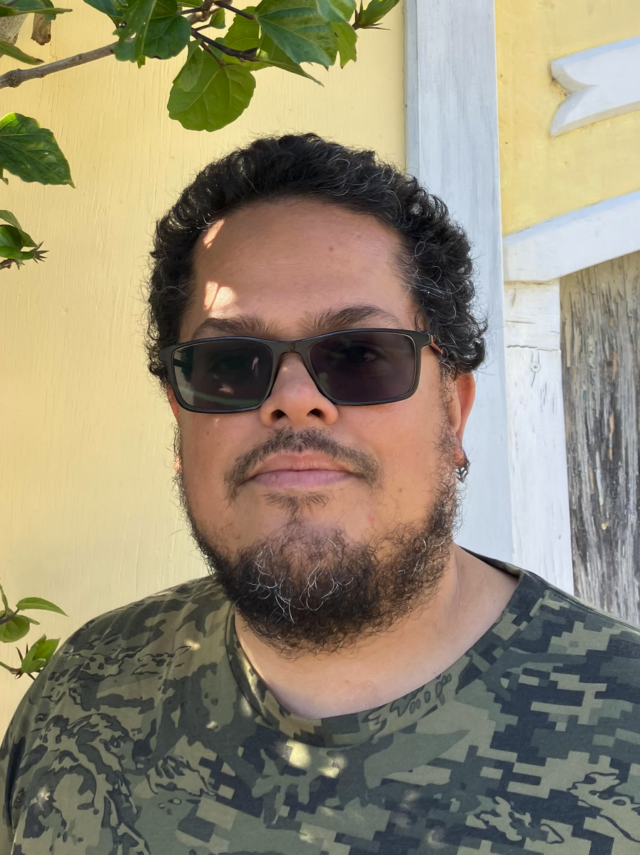 Stephenjohn Holgate was born in Jamaica and now lives in Aotearoa New Zealand. He holds an MA in creative writing from the International Institute of Modern Letters, Wellington. His work has appeared in West Trade Review, After Dinner Conversations, Decolonial Passage, Turbine, and takahē. He is a 2023 PEN/Dau prize winner.