
The year my mother died, I was working two jobs: a nine-to-five in state government—hourly pay, no paid leave, no healthcare—and a local TV crew gig on the side. The day the call came, a production trip loomed. I can’t remember a damn thing about it, except for the smell of the lilies.
I have an image of myself sitting in my small, windowless office that Thursday afternoon, working with the fluorescent light off and one desk lamp on, when my dad phoned to tell me she was in an ambulance. I remember alerting my boss through choked words, rushing home to throw a bag of clothes together, and driving two hours to my hometown. I remember making phone calls: one of my brothers in case he hadn’t heard, a friend to cancel that night’s plans. I don’t know if I listened to music, if there was sun or rain or both, or when my dad called again to tell me she was gone—I must have been driving, but I don’t recall pulling over or anything he said.
“I’ve lost a parent—both, actually—and get it if you need to back out,” the crew leader said on a phone call the next day. He needed to know if he should find a stand-in, switch the ticket, make it work. I thought back to the last time we’d had a death in our family. For the first few days, my childhood home would be filled with an ever-moving assembly line of condolence-bearers with casseroles. The day after the service, a hollow silence would settle over the house like a cold blanket. I couldn’t bear the thought of leaving my dad alone inside it. If I didn’t get paid for the weekend, I’d be too broke to take off work and stay with him a while.
“I’ll be there,” I said, and repacked my bag.
In my hotel room, a vase of stargazer lilies greeted me with sympathies from the crew. I carried it onto the plane home that Sunday and sobbed into it for the whole flight, looking out the window at the sky, inhaling the flowers’ heady, ambrosial scent, trying to grasp just where, exactly, my mother’s soul had gone.
She wore gardenia perfume most days; it reminded her of the shrub my brothers gave her one Mother’s Day, the blooms of which she’d place in bowls of water around our small cinder block house each spring. When I think of her sitting still, she’s usually in that house, grading spelling tests, watching Magnum, P.I., giving me the kind of advice that would gently point me in the right direction and let me figure out the rest myself. Sometimes she’s on the porch swing, singing. When I think of her in motion, it’s more abstract, synesthetic. I think of her perfume’s almost operatic resonance, of her little bowls of creamy white flowers, of that booming choral alto voice unfurling from her lungs. When I think of her like this, she’s not in that house; she’s everywhere.
Stargazers, something of a next-door neighbor to gardenias from a perfumer’s perspective, have their own similarly narcotic, if slightly less robust, fragrance. Both have a constellation of noted enthusiasts: Sigmund Freud, Billie Holiday, and Hattie McDaniel were all partial to gardenias in their day, while Kurt Cobain’s favorite flower was the stargazer, which, at his request, surrounded him by the thousands when Nirvana played Unplugged. He wanted the set to look like a funeral, he told the production designer, who added black candles to drive home the theme.
At my mother’s service, I placed the vase alongside the other bouquets on the altar where I’d ambivalently prayed every Sunday when I was young and where, eventually, my dad would quietly get married again, to a woman he’d meet at his community center’s morning coffee klatch for seniors who called themselves “The Energizers.” Years later, he would die, too, and a minister would stand behind that altar and read words I’d written but couldn’t say out loud.
Two weeks after my father’s service, the moon passed through the midday sky in perfect alignment between earth and sun, lingering for just a minute or two for those of us looking up at it from central Texas. For the occasion, I’d dabbed on a sample of a perfume called “Neroli Ad Astra 19.1,” meant to smell like neroli and agave flowers somehow grown in a celestial garden. A few yards away on the crowded bridge where I stood, someone quietly played a few Pink Floyd selections: “Brain Damage,” “Eclipse.” My dad loved that band. When I was little, sometimes he’d play Dark Side of the Moon front to back when my mother and I would leave the house for a few hours. Ever a fan of excellent stereo equipment, even on a blue-collar budget, he’d amassed a setup to his liking and would, on occasion, arrange the living room speakers just so, remove their covers, and sit between them at what he considered to be the perfect distance, like the Maxell man letting the sound blow his hair back. I looked up at the sun’s corona encircling the moon, wished he were there, and wondered if maybe he was.
The night of the eclipse, I went to an audiophile bar with a custom Klipsch sound system and a drink special inspired in part by Ry Cooder, another of my dad’s favorite musicians, though none ranked as high for him as Leonard Cohen did. I raised a glass to him, sitting between the speakers on my own dark side of the moon, drunk more on grief than whiskey or sotol.
A year after that Pink Floyd record came out, a plant breeder in California developed stargazers, adding them to a specific subgroup of lilies known for their pungency. She did this by modifying the typically downcast rubrum lily so it would gaze up at the sun and other stars, evoking a sense of optimism. Sometime later, a cultivar of scentless stargazers briefly hit the market, but nobody wanted those. After my mom’s service, years passed and I moved a time zone away to Austin to try on a new kind of life. I met a friend for dinner one night in a home he was house-sitting for the week and took my seat at the table as he pushed a huge stargazer centerpiece out from between us. When the scent hit me, I wasn’t there anymore; I was back on that plane, in my window seat from Miami to Tallahassee, trying to locate my mother’s soul like a child trying to understand the alphabet. I couldn’t eat the meal, and although he kindly moved the vase when I explained myself, I walked around fractured for days. Was her soul just the energy hovering between her actions and emotions back when she was alive? Was it more than that? Was it gone? Had she left seeds of it in her kids, her students, the people who loved her? Where was she? Was she anywhere?
Since that night at the dinner table, I’ve been aware of scent’s point-blank ability to knock the wind out of me, or you, or anyone, and it’s changed the way I move through the world. Odor molecules—these volatile organic compounds, named such for how ephemeral and utterly natural they are—go where they please, amorphous, similar to sound but lingering without invitation, their echoes filling our lungs, clinging to the insides of our faces. I think about who else is tormented by their own olfactory ghosts, hiding around corners and poking at their vulnerabilities. The widow whose partner made coffee every morning and imbued its scent with their memory. The assault survivor who can’t tolerate whiskey on a lover’s breath. The veteran who doesn’t dare go near diesel fumes. It’s why I won’t wear fragrance to a funeral—to save those left behind from being haunted in the years ahead.
Lori Aldaheff wears the same fragrance every day. It’s the perfume her fourteen-year-old daughter, Alyssa, often wore before she was killed along with 16 fellow students on Valentine’s Day 2018 in Parkland, Florida. Alyssa, a student at Marjory Stoneman Douglas High School, was shot ten times through a window as she hid underneath a table in English class. An excerpt from an Associated Press (AP) article the following year reads:
Every morning, Lori Alhadeff makes breakfast for her two boys, gets dressed and sprays on her daughter’s Victoria’s Secret perfume.
The scent is part of her armor, propelling her through her whirlwind of a day as she fields hundreds of emails and juggles two phones, a constant reminder of why she ran for and won a seat on the local school board, and started a foundation to make schools safer. Why she called out President Trump in a televised, gut-wrenching tirade.
“I smell Alyssa,” Lori Alhadeff says, “so I feel like she’s more a part of me.”
The Institute for the Study and Treatment of Loss calls traumatic bereavement “the state of having suffered the loss of a loved one when grief or mourning over the death is complicated or overpowered by the traumatic stress brought about by its circumstances.” In cases like these, but also throughout any course of mourning, the bereaved may spend the first year or more beset by “sudden temporary upsurges of grief.” One moment, we’re fine. The next, we’re knocked over by a force greater than ourselves, the enormity of loss washing over us again in a wave we didn’t see coming.
Sensory cues can trigger a surge and shove us through our window of tolerance to a place where nothing feels safe or correct. Over time, we might choose to repurpose those cues into survival tools that help instead of hurt, serving as a form of exposure therapy: when it works, a fragrance, flavor, or sound we associate with the loved one we’ve lost can take on new meaning, giving us comfort or urging us onward.
Scientists think scent’s pivotal role in the stories we tell about ourselves and one another has to do with the way it tangles itself up in the process of memory formation, traveling via our shortest cranial nerve and bypassing the thalamus, the part of the brain other sensory information has to groan through, delaying the connection. As says science, so say the arts. Andy Warhol was so aware of fragrance’s ability to timestamp itself in one’s memory that he took to curating something he called a “permanent smell collection,” wearing a perfume or cologne for just a few months at a time, then archiving it and only going back for a huff when he wanted to reminisce about a person or place in time. He did this throughout his life with just a few fragrances per year, building a time machine and neatly separating his past into scented chapters. It’s likely why, as I’ve read, someone close to him slipped a bottle of Estée Lauder’s “Beautiful” into his coffin to take with him into the ground. Don’t forget me, they must have been saying. Keep me with you.
The New Yorker journalist Rachel Syme writes of spritzing herself, her pillow, and whatever book she’s reading with a perfume containing an oud note each night; she does this because oud, in its natural form, is made from the protective secretions of the agarwood tree, and she thinks of it as a kind of armor against the anxious thoughts that taunt her as she tries to fall asleep. Playwright (and friend of Goethe) Friedrich Schiller swore he couldn’t write without taking a whiff of the rotting apples he kept in his desk drawer; whether it worked by superstition or, as cultural critic Maria Popova theorizes, getting him high off the ammonia, we may never know, but Beethoven’s revolutionary “Ode to Joy,” inspired by Schiller’s poem, wouldn’t exist were it not for that fetid ritual.
In Braiding Sweetgrass, scientist Robin Wall Kimmerer recounts how every time she brings a new ethnobotany class to Cranberry Lake Biological Station to dig up spruce roots, history repeats itself as at least one of the students always, always, begins to sing. She attributes this to the oxytocin spike the human brain experiences when we spend a few minutes breathing in the scent of humus, the organic matter that forms within topsoil as flora and fauna decay inside it. Just as the earth sustained those who came before us, their bodies now sustain it in return, helping it nourish those of us living today even as we actively destroy it. And aboveground, as author Bill Bryson writes in The Body: A Guide for Occupants, “Every time you breathe, you exhale some 25 sextillion… molecules of oxygen—so many that within a day’s breathing, you will in all likelihood inhale at least one molecule from the breaths of every person who has ever lived. And every person who lives from now until the sun burns out will from time to time breathe in a bit of you. At the atomic level, we are all in a sense eternal.”
Trees, to whatever extent trees can understand things, understand this. Some species use chemical senses to detect when neighbors need nutrients, offering up their own supply through interconnected roots, like a sylvan mutual aid network: give what you can, take what you need, look out for one another. Worlds within worlds take part in this exchange, breathing one another in and out even after we’ve gone.
When my dad was in the hospital in his final months, he’d introduce me to guests by telling them about my involvement in a local free fridge program—a series of community refrigerators and pantries available 24/7 for free food and basic necessities, no questions asked. I often go on Sundays and leave meals, snacks, water, and self-care kits, sometimes with scented toiletries and vials of fragrance, another small form of nourishment. On his first birthday after his death, I brought a trunkful of foods he loved—fried chicken, pizza, fresh oranges, instant coffee, sweet iced tea, full-sized Snickers bars. Next to those, I left a blank composition book and pack of blue Bic pens, his favorite. Ry Cooder, his guy, once covered the old Blind Willie Johnson song, “Everybody Ought to Treat a Stranger Right,” written not long before my dad was born. He tried to live by that. Both my parents did.
“All of us down here are strangers,” go the lyrics. “None of us have no home.” When I go home for good, whatever that means for my soul, I want my sendoff to involve natural organic reduction or burial, returning to the earth and giving back what I’ve been given once I’m too dead to stock up a fridge. Keep a toe dipped into the conversation, I suppose, even if the toe has fallen off.
Until then, I’m learning to keep green things alive from up here, looking down, as opposed to the eventual inverse. I’m starting small: herbs, air plants, three-inch pots of ivy. I lean in and inhale their scent each morning as we tend to one another. Mom was far better at helping her elementary school students bloom than she was at any kind of gardening, but I always laughed at the way Dad could walk past a plant, smile in its direction, and coax an explosion of growth. With him there, our humble backyard, which thinly veiled the site of an old city dump filled with washer/dryers, car parts, and trash, somehow stayed lush with dewberries, kumquats, figs, honeysuckle, and scuppernong grapes on the vine. It was a fragrant sanctuary in a place known for the reek of its paper mill, where the chorus of hometown redneck band Lynyrd Skynyrd’s song “That Smell” was a punchline all by itself. When my dad’s mother died a year after mine, he moved back into the house he’d grown up in, just a few miles away. The day he died in the ICU, I went there and sobbed when I caught a glimpse of his orange tree out front, hanging heavy with bittersweet fruit.
For years, my mother’s ashes sat in a cemetery up the street from the school where she taught without my paying them a visit. For all my indelible ties to her, my bottomless love for her, and my daily moments of connection with her, I’d never felt compelled to stop by; I’d just drive past the entrance on my way into or out of town, kiss my fingertips, and touch the car window. I think of her soul—or, at least, the afterimage of it—as a sprawling and ever-present thing too broad to confine, and the idea that we could or should “place grief here”—as if a memorial service or cemetery could contain the sum of any loss, feels incomplete. But it was May 2021, and I was in my hometown on Mother’s Day after a sustained period of difficulty and loss the world over. It felt wrong not to go.
On our way back to his house from picking up sandwiches earlier that day, my dad had wound me through the cemetery to show me where she was. He’d stepped out of the car with me still behind the wheel and walked over to her exact resting place to point it out.
“What bad poetry,” I’d thought, watching him, already in his eighties, recede toward the place where his ashes would rest one day, too. But this was still some time before his feeding tube, his oxygen line, the endless, endless beeps. This was when he was still walking, still eating, still breathing on his own.
Later that afternoon, visiting her by myself, I didn’t bring stargazers or gardenias. I didn’t bring anything. I tucked my facemask into my back pocket and sat beneath a canopy of Spanish moss, babbling to the concept of her as I stared at her name embossed on the columbarium. I held out my phone and played her Willie Nelson’s easy, ambling cover of “Stardust,” recorded when I was a toddler—an off-the-cuff choice that felt right for reasons I couldn’t articulate in the moment. I told her about the book I was writing, the person I’d married, the way I’d moved west, what lockdown had been like. I caught her up on family matters, described the dog I’d adopted, told her we were okay. It felt stilted, talking to the air, to someone I’d been having conversations with in my head for years, but I kept on anyway. I told her how grateful I was for what she’d been and done, and how I hoped she’d known and felt these things when she was still alive. I told her I was sorry. That I missed her. That we were taking care of one another in our own broken ways, best we could.
“I think you know already,” I said through tears. “Or knew. But, just in case.”
I climbed back into the car with an awkward sense of open-endedness and drove to the airport to board my flight back home. Putting on the mask, I caught a deep whiff of earth from the fabric. It came to mind that while I associate gardenias with her life and stargazers with her death, the scent of soil in which both are rooted would now, for me, forever call to mind her memory, and now my father’s, too, and maybe someday mine for someone else looking down at the ground or up at the sky with all their little questions. The scent of humus, of connection, of the potential for growth and regrowth. The scent of us, of our exchange, until the sun burns out.
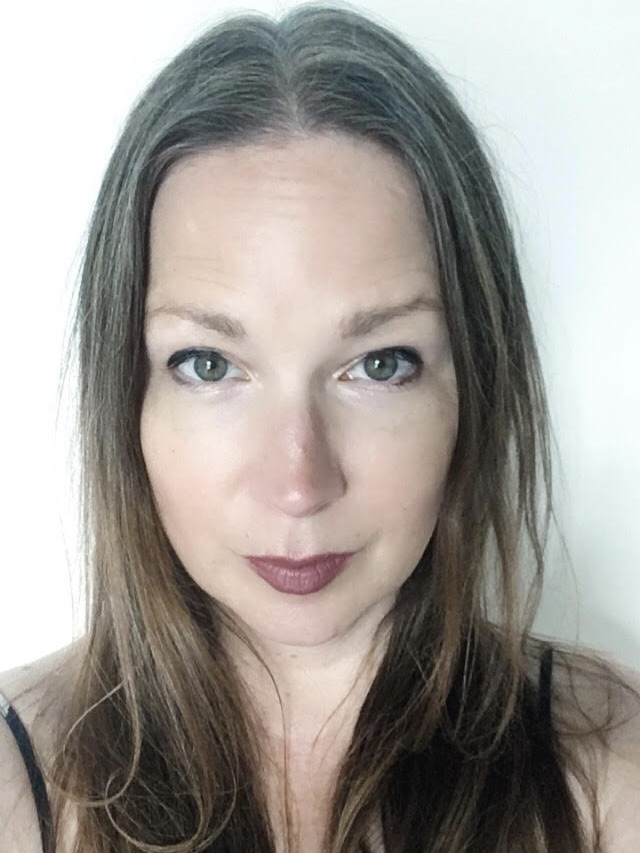
Amy Wilde is a Florida-born, Texas-based writer living in London as she pursues a Writing MA at the Royal College of Art. Her poetry and essays have appeared in Humana Obscura, Amethyst Review, Poets for Science, The Hairpin, and elsewhere, and her creative nonfiction work was shortlisted by Ploughshares for its 2024 Emerging Writer’s Contest. She’s currently working on a book about intersections of scent, memory, loss, and legacy. Her newsletter, Brown Paper Packages, offers shareable pleasures and connective ideas for deeply chaotic times.