
In Pirette McKamey’s “Could Be,” old flames reunite after thirty years to reminisce. In this Boston bar, McKamey demonstrates the effectiveness of gesture and suggestion in flash fiction. Maybe Marcus really robbed a bank—maybe he didn’t. In “Could Be,” all that matters is the possibility.

Man, did Marcus get ugly. Thirty years after he turned out to be one of those boyfriends, I met up with him at a bar in Boston.
He said, “You know you’ve aged, too,” in the same way he used to say, “You’re like a racehorse—a real thoroughbred.” And I got loose-limbed and didn’t care that his Afro was sparse. That his hands were ashy.
Back when we were dating, he was tall and buff, with a stacked Afro, and when he walked by my cubicle, I was like, Yeah, I want some of that, and felt pretty sure I could get it.
Twirling on the barstool, my gray hair finally natural, the juices flowed like they hadn’t for anyone or any reason in a long time. Guilt—because my husband had given me the go ahead to meet up with Marcus—mixed with desire and I was aflame, remembering the days when I thought I could do exactly as I wanted. Maybe it was that abandon I was looking for when I reached out to Marcus, suggesting we have coffee, knowing it would be drinks.
While I talked about my husband (adoring), my career (rewarding), and my upcoming trip to Barcelona, he diagrammed the perfect bank robbery on a damp cocktail napkin—no guns.
Eyes flickering, he held up the thin paper.
I wrapped my hand around his bulging thumb knuckle like I used to and let go when he winced. “Stupid for a bank teller,” I said.
He traced the decades-old scar on my cheek. “Don’t worry, I’m not going to do it.”
I wasn’t. I spent enough nights watching his schemes unfold on the ceiling above my bed to know, like disappearing ink, the words were gone as soon as they were said.
“I already did it.”
I uncurled my spine, and raised my eyebrows. “You robbed a bank?”
He said, “Got out a few years ago,” and even though I wasn’t a hundred percent sure I could trust what he was saying, images of what was done to him in prison ran through my head.
I took a sip of my whiskey and sucked on what was left of the ice. “So you want to get it right this time?”
“Naw. I got a relationship with my kids now,” he said.
He turned over his phone that had buzzed a few times and showed me pictures of Marcus, Jr., who I met when he was a toddler, and Shante, who was light-skinned with gold-tipped hair.
I pulled out my phone and scrolled to a photo of me and Khalid dancing Rueda at Brooklyn Basin back home in Oakland. He had me in a classic leader’s hold, one hand supporting mine, the other firmly above the small of my back.
“You got you a nerd,” he said. “Good for you.”
I decided to say nothing to that, but he and I both knew that Khalid looked athletic and confident in the picture.
We had another drink, talked about the past, got silent at the same time and slid off of our stools.
“You could do it,” Marcus said, then shoved the crumpled napkin into my coat pocket and leaned in to kiss me.
I grabbed his chin before his lips touched mine. “Hell no. Want and do are not the same.”
When I got home, I told my husband all about seeing Marcus, except for the parts where he tried to kiss me and put the napkin in my pocket.
“If he robbed a bank, how could he get a job as a bank teller? he asked.
“I didn’t think of that until I was on the plane,” I said.
Khalid followed me to the bathroom and stood outside when I half closed the door.
“Is he a robber or a bank teller?”
“I don’t know,” I said, “but I’m embarrassed for believing that he robbed a bank.”
My husband pushed the door open and leaned against the jam, “Maybe he did.”
“You would never do something like that,” I said.
“Maybe he’s not a real bank teller. Maybe he works for a bookie,” Khalid said and put his hands out, palms up like he did when he thought he had come up with the answer.
When I said, “Do they even still have those? Anyway, I forgot what a good liar he was,” Khalid pulled me in and hugged me like we were the right fit.
Before I went to bed, I straightened out the napkin and saw that Marcus had written something in tiny block letters in the corner. I put on my reading glasses and held it under the light of my bedside lamp: You were my best. I called him an asshole out loud, while a warm river of pleasure spread from my gut to my chest and flooded my face. He still wanted me.
I put the napkin in my jewelry box under the red Bakelite bracelets I stopped wearing years ago. Some nights I am tempted to bring the diagram into bed with us and hold it out straight-armed so we can look at it at the same time.
“Doable?” I would ask Khalid.
He would look at it carefully, turning the small square ninety degrees to the right then to the left and say, “Could be.” Then, “Wait, what does it say in the corner?”
And then I would convince him that he is who I want.
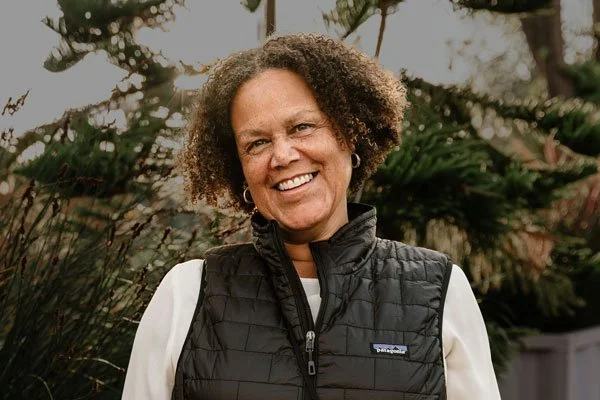 Pirette McKamey lives in Oakland, California. She is currently at work on a novel, supported by the Lighthouse Writers Workshop in Denver. Her work has appeared in The Atlantic online, midnight & indigo, and Vox Viola.