
Jaime Gill’s “Obedience” brings the reader inside Lenny’s Hideaway, a gay bar in postwar New York City, at a time when homosexuality was a crime. When the bar is inevitably raided by the police, our protagonist Jack, in a move antithetical to his personality, refuses to comply. This story, sadly resonant still today, reminds the reader that there’s more than one way to resist.
The windows of Lenny’s Hideaway are boarded up so it’s impossible to see from inside whether it’s day or night, but it must be getting late because the bar is filling up. Jack’s heard some of the Hideaway regulars call these latecomers the Twilight People because they only dare sneak to the bars once the streets are dark and shadowy. Too afraid to be seen by some passing coworker, they scurry down the side alleys like rats, then wait outside the locked door with bowed heads to be granted entry by Philly Phil, the doorman.
Surveying the crowd from his usual stool at the far end of the bar, Jack spots two young men through the smoke haze who might be undercover cops. They’ve taken a table and one of them looks radioactive with discomfort. He’s fidgeting, shoulders hunched, glancing around. His companion is relaxed enough to pass as a scene regular, and handsome enough to draw attention. Jack thinks he may have seen him before. Maybe at Julius’s? But was he a customer or a cop? So many nights, so many drinks, so many raids—everything gets blurry.
Shelley, a regular, sways to The Supremes blasting from the jukebox and bumps into the possibly-cops’ table. It’s unlikely to be an accident. She towers over them, her beehive wig taking her to seven feet. She stoops to say something presumably lascivious and the handsome one laughs while the other grimaces. When Shelley totters away, the tense one hisses something at the handsome one, who holds a hand up. That gesture could mean Patience, we’ll move on them soon or it could mean Come on, relax, this is part of the fun. The young guy could be a rookie cop, or a nervy first-timer to the bars. Jack wishes he could be sure.
If Luke was behind the bar, Jack would ask his opinion—he’s one of the best cop-spotters in New York. But Luke’s been replaced by someone very young and green called Allie, an androgynous young woman with a buzzcut that can’t quite soften the impact of her eyes, two ponds of shimmering blue.
Luke got badly bashed two weeks ago after some reckless midnight cruising down the piers. Jack overheard Shelley and Allie talking about it earlier, swapping rumors—the attacker was a cop who lost his cool, or a guttersnipe hustler who thought Luke had money, or a couple of straight guys getting their Friday night kicks by beating the shit out of a queer. Shelley made a joke about Luke being no stranger to internal bleeding but Allie didn’t laugh. Jack didn’t either, not that anyone would have noticed. He’s perfected the art of invisibility. Well, as much as anyone can with a shrapnel scar running jagged down their right cheek. There’s a reason Jack always sits at the end of the bar, where only the wall gets the full view of his right side.
An outburst of raucous laughter from the nothing-to-lose gang—those street kids, artists, hustlers, and assorted outcasts who no longer have jobs or families to worry about. They’ve taken over the two tables nearest the door and have persuaded some rich museum queen to buy a bottle of gin that’s being sloshed around from glass to glass. All the drinks here are overpriced and watered down—like most gay bars, the Hideaway is mafia-run, the only people who can bribe the cops to keep these places open at all—but the gang are guzzling enough to be getting drunker and louder by the minute.
Jack’s fond of one of them: Danny, a sweet Black kid who fled Alabama for New York just over six months ago, a few days after he turned eighteen. Jack envies his courage and his comfort in his own skin—Jack didn’t have either at eighteen, probably still doesn’t. Danny throws his head back now, matching Diana Ross coo for coo.
The possibly-cops are watching the gang’s antics. Maybe they’ve accurately assessed them as the likeliest to take things too far, to create the pretext for a raid. Or it could just be that they’re the most interesting people in the room. Damn it, if only Jack could remember where he’d seen the handsome possibly-cop before.
Diana Ross’s feathery voice fades out and for a moment all is hubbub: friends joking in low voices, murmured flirting, the fake giggle of a young hustler pretending the john he’s with is funny.
There’s a slight disturbance in the atmosphere, a few heads turning towards the door and then looking sharply away again. Jack notices these things. The Hideaway is its own ecosystem, like the coral reefs Jack saw when he was serving in the Pacific, and he’s attuned to changes in currents or the approach of predators or prey.
This disturbance is Dick L. who has just walked in with one of his Mattachine Society buddies, both looking out of place in stuffy suits. Handsome possibly-cop definitely recognizes Dick, but that proves nothing. The Mattachine Society is the most prominent gay rights group in New York, and Dick, its President, is known by seasoned scene-queens and cops alike.
Dick sidles up beside Jack to order and then acts as though he’s surprised to see him, though Jack is pretty sure that Dick clocked him the moment he walked in.
“Hello, Jack, hope you’re doing well,” Dick says in that creamy voice of his, holding his hand out. Jack finds this formal gesture oddly endearing in these settings, and shakes Dick’s hand. “I presume you haven’t changed your mind about doing an interview?”
“You presume right. Sorry, I just don’t need that kind of trouble.”
Dick nods amiably—he’s used to being turned down. There aren’t many queers eager to poke their head out for the police and public to throw a bucket of shit over. Lots of people avoid Dick for just that reason, or because they think he’s a fool—nothing’s ever going to change this country’s hatred of queers. Even the civil rights mob keeps their distance, considering the fags either beyond saving or not worth the effort. As he collects his drinks, Dick lobs one more question at Jack. “Do you still have my card, if you change your mind?”
“Sure do,” Jack says, though he honestly has no idea if it’s still stuck in the back of his wallet or lost somewhere in his cluttered little apartment.
“Okay then. I’m going to say it one more time. A man who is openly homosexual and served his country… that’s the kind of thing that can open closed minds.”
“Maybe,” Jack says, though he’s skeptical. “But once my name’s out there, there’s no putting it back.”
Dick smiles regretfully, nods a farewell, and returns to his friend. They sit near the possibly-cops but don’t greet them. Does that mean anything? Probably not. When Dick does his lobbying with the police he surely hobnobs with bigwigs boasting higher ranks than those two.
A slow song starts on the jukebox, ushered in by male harmonies so treacly they almost drip from the speakers. A few of the nothing-to-lose crowd groan in disappointment but are silenced when Danny starts singing the verse louder than whoever’s on the jukebox. When Danny sings—really sings— he can still the world. Danny once told Jack he used to sing gospel, but preferred rock ’n’ roll. “Forget Jesus, Little Richard is my savior.”
Danny sings directly at Alex, his current squeeze, a pleasant-faced former teacher and current god-knows-what. Take a good look at my face, he croons. Alex grins wonkily and leans in for the briefest of kisses.
Jack only has a second to feel a flicker of jealousy before he notices handsome possibly-cop rise and move towards the door. Jack’s suspicions were right. The party’s over now. There’ll be one last dance, one nobody can skip.
He could shout a warning but who’d listen? And what would it change? Everything from this point on is inevitable and choreographed. The raids have calmed since their feverish frequency before last year’s World’s Fair and the mayor’s frantic efforts to cleanse the city of undesirables ahead of it, but they’re still frequent enough that Jack gets caught in one nearly every month—and he doesn’t even go out that much.
The uniforms march in, five or six of them, all bellowing. Everyone in the bar freezes, and couples move away from each other. They know this routine. One burly, uniformed cop—Jack’s definitely seen him before, on another night in another raid in another bar—yanks the power out of the jukebox. Someone switches on all the lights, transforming the Hideaway’s dingy glamour into stark shabbiness: stains on the carpet, stains on the walls. “Line up! IDs out!” Same old words, same old tune.
Cue the herding, the scraping of chairs, the muttering complaints. The cops arrest a drag queen Jack’s seen around, Mamba May or Peach Melba, something like that. She fights to keep her dignity and poise even as two cops frog-march her out to the waiting paddy wagon. She obviously fell short of the three-articles-of-clothing rule, too vain to be caught in that much men’s attire. Shelley is nowhere to be seen—she must have spotted the cops too and made her exit earlier. She’s been doing this dance longer than anyone and has her own secret moves.
Dick and his friend politely remonstrate with the cops and Jack can make out a few words of legal jargon, but when they’re told to line up against the wall they do as they’re told. Dick surreptitiously scribbles some notes, fodder for his precious newsletter.
The man on the barstool closest to Jack climbs down with a theatrical sigh and joins the line up. Most people will be insulted, have their name taken and then, eventually, be sent on their way. No great harm done except another night ruined and a brute reminder of their lowly place in the world.
Jack’s about to follow orders as he always does when he feels something unfamiliar stir inside him. Not in his head or his chest, somewhere deeper than that. His gut. It’s not anger. It’s not rebellion. It’s exhaustion, pinning him to his stool like gravity. What is this—his twentieth raid? His thirtieth? Fortieth? He’s barely even sipped his Jameson and Coke.
A wide-eyed Allie leans towards Jack, voice low and urgent. “Come on, man, move… You heard them.”
Jack looks into Allie’s eyes—even more absurdly large now she’s frightened—and realizes this might be her first raid. She looks about twenty-two, the same age Jack was when he was drummed out of the army. The poor kid’s got a whole lifetime of this ahead, of learning to live with fear as if it were the natural order of things, just some poor critter cringing at the bottom of the food chain. She’s already been trained to be a good little doggie who obeys commands.
“Line up now, fag.”
Jack turns to find the plainclothes rookie snarling in his face, likely compensating for his earlier nervousness. He’s got years of this ahead of him, too, years of being able to vent whatever frustrations he has in life on people like Jack, like Allie, like Danny. Where does your hate come from, child?
Jack looks at the rookie and then his glass. He takes a drink. Not a gulp or sip—a normal, measured drink.
From the corner of his eye, Jack sees Allie gesticulating at him as if he’s lost his mind.
“Sarge!” the rookie shouts, an appeal to authority. Jack hears heavy steps and looks up to see the burly, uniformed cop lumbering towards him. Yeah, this sergeant has definitely booked him before, though it doesn’t look like he remembers Jack. Perhaps all fags look the same to him.
“What do you think you’re doing?” the sergeant asks.
“Finishing my drink, officer.”
“The fuck you are,” the sergeant growls. “Line up now. Let’s get this over with.”
And Jack sees it in the sergeant’s eyes. He’s as bored with the dance as Jack, maybe more. He probably goes through this whole wearying routine more often.
“I’m finishing my drink, officer,” Jack repeats. “I’ll be done in ten minutes. You’re welcome to check my ID in the meantime.”
The sergeant looks at Jack with something like wonder, as if he were some strange new lifeform he’s just discovered, then barks a laugh.
“You do know where you are now, right?”
“A bar. A place where you pay for drinks and then get to drink them. And that’s all I’ve done all night and there’s no law against it.”
Jack braces for a punch to the jaw or gut, but instead the sergeant sits down on the stool next to Jack, facing him. Jack knows by the intensity of the silence around him that everyone, customers and cops alike, is watching. For the first time he can remember, Jack’s the center of attention. He doesn’t hate it as much as he thought, though doesn’t much like the idea of Dick watching and getting ideas.
“I have five laws I could bust you for right now,” the sergeant says slowly, as if explaining basic math to a six-year-old. “But then we’d have to take you to the station and that means paperwork and my boys don’t like paperwork. One might lose his patience, bust your ribs, and call it a night, old man.”
“I’m not scared of your boys,” Jack says mildly, trying to make it clear he’s not angry, drunk or crazy. For the first time he can remember he deliberately tilts his face to make his scar more visible. “I spent three months as a guest of the Japanese during the war, so I think I can handle them. All I want is to finish my drink and then head home. That’s all.”
The sergeant doesn’t laugh this time, he locks eyes with Jack. He just called Jack an old man, but he’s surely only slightly younger. Is that respect Jack sees in the sergeant’s eyes? Did he serve too?
The sergeant’s fist lashes and knocks Jack’s glass hard enough that it flies across the room and shatters against a table. Jack hears gasps, exclamations and a cop snapping Quiet.
Jack looks at the smashed glass, the pool of wasted alcohol dripping from table to filthy floor, then back to the sergeant. “Officer, you owe me a drink.”
That’s when arms seize him, two cops dragging him from his stool, practically lifting him off the floor as they drag him outside. Jack catches brief glimpses of the dumbstruck faces of the Hideaway clientele. It might be the last time he sees some of them—he’ll almost certainly be barred for troublemaking. Does someone cheer for him as he’s led outside? No, nobody would dare. Nervous laughter, probably.
Two hours later, Jack sits in a piss-stinking cell. He looks at his black-stained fingers and wonders how many copies of his fingerprints are now buried deep in filing cabinets in different government offices around this great nation. Despite the sergeant’s threats, he has no broken ribs, though his wrists are grazed from too-tight cuffs and his ear throbs from a blow to the head as he was shoved inside the paddy wagon. The cop who was pushing him said oopsiedaisy and the others laughed as if it were the height of wit.
Jack’s in the drunk tank now with three passed-out men and one wild-eyed kid fidgeting in the corner. Jack only needs to glance into the kid’s eyes once to know he’s on speed, but his clumsiness suggests he’s drunk plenty too. A dangerous combination.
Jack closes his eyes, hoping to doze for a little while. He wonders if they’ll let him go in the morning, as they have the few times he’s been booked before. But the sergeant really laid on the charges this time, so maybe not. Frequenting a Disorderly House, Resisting Arrest, Disorderly Conduct and one Jack’s never heard of: Obstruction of a Public Officer.
That last one is funny, because Jack’s never been the obstructing type. Obedience has always been his mistake. When the army told him to sign up after Pearl Harbor, he did. When he was caught in the “obscene” act of kissing a lieutenant from Louisiana a month after victory, the army gave him a blue discharge for being “unsuitable” and he accepted it without making a fuss. When his parents asked him what “unsuitable” meant, he told them, and when they said to leave the house and never come back, he did exactly that.
The irony of it all is that he hasn’t even kissed a guy in two years, let alone anything else, so all of this is punishment for a crime he no longer commits. He wasn’t a looker even before a shard of flying metal took a chunk out of his face, so most of his encounters have taken place in dark, shadowy spaces. Like the meat trucks left empty overnight down near the piers by some enterprising soul. He went down a few times to cruise, but the heat and meat stink inside reminded him of the POW camp and left him more depressed than any brief, sordid orgasm was worth. He stopped going and these days his sex life probably isn’t so different from a nun’s. Except for jacking off, but nuns probably entertain themselves too, behind closed doors.
“What are you laughing at?” wired kid asks, and Jack opens his eyes, surprised. He didn’t realize he’d laughed out loud. “What’s so fucking funny about being locked up?”
Jack almost says that he’s always felt locked up one way or another, but doesn’t want to get into what that means. Instead, he tries to remember if Dick L.’s card is in his confiscated wallet. He’s not certain exactly when he decided this, but he is going to plead not guilty tomorrow. He will not accept that there is anything disorderly about his existence, not anymore.
That likely means he won’t be going home in the morning, and there’s going to be a fight ahead and maybe courtrooms, and he’ll need someone like Dick on his side. If Jack does the interview, Dick will lend Jack his lawyer friends. Maybe the interview won’t be so bad anyway. Jack might not sit with them, but he is also a member of the nothing-to-lose gang.
“Hey man, I asked you a question. What’s the joke?” Wired kid’s eyes twitch in his skull, slipping in and out of focus.
Jack looks across at the heavyset drunk slumped on the floor snoring, then the cell’s bars, then back at the kid. He doesn’t look so dangerous now.
Jack could explain how he ended up here tonight. He could start right at the beginning, with that long-ago eighth grade math class he spent staring at Pablo Morgado’s perfect dark skin and muscular neck, how something clicked in his head, like revelation: I’m not meant to like boys—I’m not meant to, but I do. Or he could just tell the kid what happened tonight, which he’d probably grasp more easily. Instead, he asks a question: “You ever play sports?”
The kid’s eyes narrow, as if a trick’s being played on him, then he shrugs. “Baseball. I used to play a lot. I could really hit too, man. Led my team in home runs junior year.” The kid’s smile is surprisingly sweet and his eyes are almost focused now, but somewhere in the past.
“Why’d you stop?”
“I got tired of being told what to do, I guess. Coach on me, my old man on me, everybody acting like my swing belonged to them. It stopped being fun.”
Jack leans slightly toward the kid and lowers his voice. “Did you ever just refuse to play? Just drop the bat and walk away from the field in the middle of a game?”
The kid frowns and gives Jack a look like he’s crazy. Jack’s getting used to that look. He might even learn to like it.
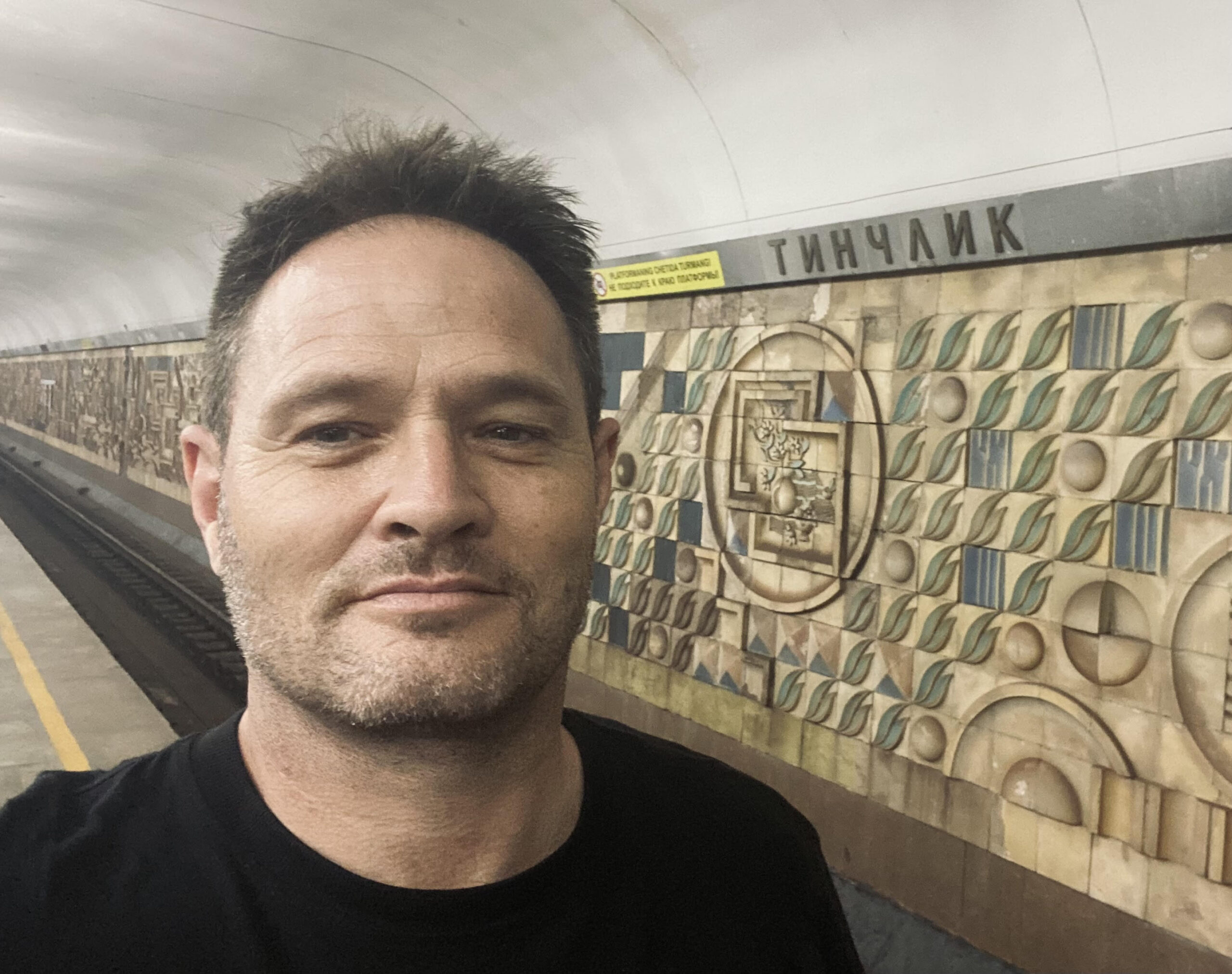 Jaime Gill is a British fiction writer working for nonprofits in Southeast Asia. He reads, runs, works, boxes, writes, and occasionally socializes. His stories have recently appeared in Missouri Review, Sun Magazine, The Forge, and Pithead Chapel and won awards including a Bridport Prize, Luminaire Prose Award, and New Millennium Writers Award. He’s been a finalist for the Tennessee Williams Prize, Bath Short Story Award, and Oxford Flash Fiction Awards. He’s a three-times Pushcart nominee. He’s currently writing a novel, script and yet more short stories.
Website: www.jaimegill.com.
Newsletter: https://jaimegill.substack.
Social Media: www.x.com/jaimegill, www.instagram.com/mrjaimegill, or https://bsky.app/profile/