At its heart, “Strawberries, Metal, and Blood” by Caoimhe McKeogh is a story about self-discovery. The protagonist, who is the middle sister in a family of three girls, defines herself largely by the actions of her siblings until she begins to understand what actually makes her happy. Layered with sensations and rich with emotions, this is a story that delivers on the tactile promise of the title.
She called her car “the Clit” because it was small, round-roofed and painted fleshy pink. One Tuesday, she pulled up at an intersection packed with squeegee bandits, panicked and gave a guy a $20 note for cleaning her tiny windscreen. A week later, he remembered her car. A bird had left a white dribble, now dry, in the Clit’s top left corner and he set to work removing it before she could say she was out of cash.
“That’s okay,” he said. “You already bought a ten-wash pass.”
Most days, she took the bus to and from work, but on Tuesdays the cake decorating shop received new chocolate-making supplies; she needed her car, so she could whizz over on her lunch break and stock up on syrups, luster dust, and edible gold leaf.
For two months, every Tuesday morning, he was there, wiping every drip and sud off the edges of the glass before she drove away. She always smiled at him, but didn’t know what to say, so kept the window wound up. He started squirting the foaming water out of his drink bottle in a heart shape, and she laughed, her cheeks as pink as her car’s paneling.
The bus took a slightly different route, parallel to the road where the squeegee bandits worked, and she chose the best seat to squint down at the busier intersection, so she could catch a glimpse of his skinny silhouette in slouchy jeans and check he wasn’t drawing hearts on any other windscreens.
On the eleventh week, he knocked on her window and she wound it down.
He rested his elbows where the glass had been. “I’m worried that now you’re out of credit, you’ll start waving me away, or ignore me and turn on your wipers.”
“I wouldn’t do that.” Her voice felt squeaky. She admired people who did that type of thing; all she ever did was smile and try to make everyone like her.
“Maybe I could see you… somewhere else?” he said.
* * *
It all felt incredibly romantic. He was smart and deep-thinking, with puppy-dog eyes that she was sure made everyone who saw him soften. She was impressed when he told her that he operated outside society’s rules, because he valued connection, not objects. Every now and again, he stopped talking about that and looked right at her and said, “Fuck, you’re beautiful.”
For months, she loved it when he lectured her at length about why she should leave her job and do what she actually loved—it left her inspired, glowing with hope. She loved making chocolates on her kitchen bench, concocting new filling combinations, internet-shopping for different shaped molds. But that was for gifts to friends and family—she’d tire of it if she did it all day, she’d get tired of standing up. She liked her job, too, sitting in a comfortable chair and emailing people friendly reminders, looking past her computer at mountains she couldn’t see from home. The people she emailed replied, “Thank you! I’d forgotten. You’re a star.”
She also liked to go with her boyfriend on Saturdays and stand with his friends at the traffic lights while they leapt between cars with their brushes and bottles. She thought they were brave, being waved away all day. She liked how he showed her off to the others. They talked about drugs they’d done, and how glad they were to be doing this and not some boring job where they answered to a boss. She liked the way their voices layered over each other, so friendly, even when someone new came along.
She didn’t know that her own friends called him Casper, after the ghost. Because he always walked a few steps behind her, like a haunting. Because his torso stayed rigidly upright while he moved, like he was floating, not walking. Because he sucked the life out of the room he walked into, digging his fists into his pockets full of coins to stop them jangling like a belly dancer’s belt.
Her younger sister had some of the same friends as her, so knew about the “Casper” name, but had never met him so didn’t take it seriously. Her older sister, who she didn’t have much to do with outside of monthly family dinners, had no idea. Her best friend, who always came running to her with every tiny drama that occurred in his own life, knew but didn’t tell her.
“Straight up, total loser,” her friends said to each other, and her best friend agreed and her little sister giggled. But they didn’t tell her until after he left her.
* * *
She was in the cake decorating shop when her mum phoned. Her mum was the type of person who learned your schedule and used it against you.
“Darling,” the voice trickled into her ear, sickly sweet. “I thought I’d talk to you while you look at chocolatey stuff, so I don’t interrupt your real work. Your big sister, she’s got herself in trouble. With the police.”
Her eyes lost their grip on the display of decorative dusts so the world was a blur of colors.
Her older sister, she heard her mum say, was a copycat criminal. Someone in Australia had been sticking needles into strawberries and that was on the news. Now her sister had done it, too. In their local supermarkets, so at first people thought the stabber was traveling the world, but it was just her big sister, wandering the fruit aisles. She felt something sharp embed itself in her soft palate; her mouth turned hot with pain.
“She’s admitted it to the police,” her mum said. “They’d seen her on CCTV anyway.”
She left the shop without buying anything. Her tongue tasted metallic and she couldn’t imagine wanting to eat chocolate again.
As she fell asleep that night, she could see people biting strawberries. Thick red juice dripped from their lips, pooled at the corners of their mouths, but when she reached out to touch it, it was hot. When she tasted it, it was salty.
* * *
Her younger sister never said anything to her about what their older sister had done, but she joined the Hare Krishnas. Her dad made comments about hippies and cults and her mum hated the special diet that wasn’t just vegan but also excluded the thing she would usually feed vegans—mushrooms—for coming from darkness. But the middle sister had never seen her younger sister so happy. Doing yoga each day, turning supple and strong; you could see her muscles under her skin. On Friday nights, on her way somewhere for dinner, she’d see her little sister in scarves and sparkles dancing down the street banging a drum and singing Hare Krishna, her face split right in half with the size of her smile.
* * *
Her best friend started dating a woman in the circus; a tightrope walker. He talked about this so much that she never got to tell him what her big sister had done. He said he loved the tightrope walker but found her exhausting. Her ups and downs like plane turbulence, the wet rasp of her voice when she’d been crying for hours and the phone felt damp against his ear. He’d decided his girlfriend was crazy.
The middle sister went with him to see her perform. She’d only been to the circus once before, as a child. It had been incredible.
Now, an adult, she could feel the grubbiness of the paddock that the circus had parked in. The performers were just people like her, who wore baggy clothes if they were meant to be funny, and tight clothes if they were meant to be impressive. Some of the women had astounding muscle in their shoulders, but all their tricks were just things they’d practiced for long enough to be good at them. There was a shabbiness to everything, which the giggling, gasping children around her didn’t seem to notice.
Then her best friend’s girlfriend arrived; she climbed onto a platform high above the audience, light catching the sequins on her blue minidress, and stood there just moving her arms above her head, knowing she was so beautiful that her body on its own would captivate the crowd. When the tightrope walker stepped out onto the wire, the middle sister reached across from her seat and grabbed her best friend’s hand. All she could think was that the person her best friend had been describing couldn’t balance so surely in space, couldn’t make every shift of her hips so sexy. He must be lying about the phone calls. His girlfriend did the splits on the rope and he groaned.
“I’m the luckiest guy in the world,” he whispered.
Then a week later he was unsure again, meeting for a best friends’ lunch to say, “I think she’s seriously unstable.”
* * *
She took her boyfriend to a party with her friends and he fought with them about money and the meaning of life. “Good-naturedly,” she thought, happily.
Her best friend grew a sheen of sweat on his forehead. “I don’t think you realize,” he told her boyfriend, “that everyone here is a socialist.”
“Don’t tell me what I realize,” her boyfriend said, and she felt sore for him, he seemed small. She wanted to whisk him away.
“You don’t need to be defensive,” her best friend said. “We’re on the same page here. Settle down.”
“What if I like seeing you rattled?” her boyfriend asked, without changing expression, so it was somehow still him she ached for.
“I’ll leave you two to it,” her best friend said, and went off to kiss the tightrope walker, pressing her up against the white fridge, so no one could get their drinks out.
After the party, her boyfriend said, “That made me sad.”
“It was meant to be fun,” she said.
“They all have Stockholm Syndrome for capitalism,” he said, “just like you.”
“They’re surviving in the system they were born into,” she reminded him gently, still broken-hearted on his behalf, wanting to nudge him to a safer place where people would like him as much as she liked him.
“Nah. They either gave up struggling, or never started,” he said.
It occurred to her that he might be impressed if he knew what her big sister had done. Disruption, destroying people’s faith in supermarkets. She didn’t tell him.
* * *
She’d imagined court cases where she would sit in a wooden seat and look down at her big sister in handcuffs. Where she would have to make a statement about her sister’s character and the jury would stare at her while a lawyer asked, “Did your sister ever pinch you when you were children? Did you fight? Did she bite?” and under oath she would have to say yes.
But everything seemed to happen behind closed doors; emails and phone calls with nothing in the newspapers. She relied on her mother for updates.
She’d thought her sister would go to prison, then her mum said her sister was being certified insane, so she imagined her in an institution. It was a shock when she was sentenced to stay in her house, keep her normal life, and just add weekly counseling to her schedule.
“But she hurt people!” she said.
“She’s sick,” her mum said. “She’s your sister.”
Every night, mouths filled with blood in her dreams.
The worst part was that she’d always thought of her big sister as a normal person. Everything she’d known as a teenager about being a teenager, she’d learned from her big sister. She’d tried to walk like her, talk like her, dress like her. She’d wanted her big sister’s friends to like her. She’d wanted her friends to like her big sister. She’d never stopped and thought, “What my sister just did was completely unhinged.” Even now, she couldn’t think of anything but the strawberries that had felt strange.
She phoned her little sister—the family’s wild-child, never malicious but a little off-the-rails—and said, “Was I oblivious, or am I crazy, too?”
“Crazy is a label,” her little sister said. “It’s not a way of being. Worry about who you are, not how people label you.”
“If I wanted a lecture on Hare Krishna values, I’d walk down a city street smiling at strangers,” she said, speaking from experience, as someone who always smiled at strangers and often ended up in lengthy conversations with charity collectors and Hare Krishna people. “I want to talk to my sister.”
“I think you’re wonderful,” her sister said, “and you’re learning, like everyone else.”
“Learning what?”
“Everything.”
* * *
She made peanut brittle that night, let it set into a perfect rectangle, and then smashed it into sparkling shards with the back of her heaviest spoon. She sent a photo of the sharp pieces to her little sister, like a threat of stabbing: “You can eat this, right?”
It took ages for the reply to arrive: “This reminds me of a workshop I went to where this guy explained that glass is most beautiful when it’s shattered, all sparkling, but that’s when it can hurt you the most. And glass is safest and most useful when it’s see-through and you barely know it’s there. Isn’t that clever?”
She remembered her little sister running into an overly clean sliding door as a toddler and needing a stitch in her tiny soft forehead. She was trying to be supportive of her sister’s spiritual journey, so she didn’t say anything. After five minutes, her sister messaged again: “Yes, I can eat that, if it’s dairy-free.”
She told herself that she—the middle sister—was the daughter her parents were proudest of. Just for being easy to explain. When people asked after her, her parents could say, “Yes, she’s still doing well. She’s still got that job. She’s still with that man.”
She tried out a new black doris plum fondant and poured the mixture into plump, shiny dark chocolates, packaged them in cellophane when they’d set, tied the bundle with a purple bow, and dropped them on her parents’ doorstep.
Hare Krishna people couldn’t eat chocolate, not even dark and vegan. She experimented with carob so she’d have something other than brittle to give her little sister. Its new, nutty flavor didn’t match her usual fillings, and it didn’t shine against her spoon when she melted it. She missed the tempering stage that chocolate required, the thrilling specificity of the thermometer, the fun of that word—temper—in what was always the calmest part of her day.
She phoned her boyfriend while her carob-coated hazelnut pralines set in her fridge. “I think you should admire that I don’t commodify my hobbies,” she said. “I do the thing I love, even though it costs me money.”
“Honey,” he said. “That’s the trap. You work a job that makes you miserable, so you can earn enough money for the thing that makes you happy, and you talk yourself into thinking that that means your life is okay.”
He spoke slowly, like he was trying to soothe her, like she was crying wildly into the phone, rather than talking like a normal person.
“My job’s fine,” she said, trying not to let his voice spark something angry inside her. “I get to sit down all day and a huge corporation pays my rent.”
“Okay babe. Keep that big wheel turning.”
The next day, she gave him a box of the carob pralines and told him they were chocolate; it felt like punishment.
* * *
Her little sister invited her to a yoga class and communal vegan meal at her Center.
“I’m not trying to convert you,” she said. “But I love you and want you to be happy, and this is the happiest I’ve ever been. I want to share that with you.”
In class, she kept forgetting to breathe, and the teacher had to keep reminding her. It was embarrassing—surely the stupidest mistake you could make was forgetting to breathe—but she kept doing it. Out the corner of her eye, she saw the smooth way her little sister moved. The way she could stand on one foot with her hands in prayer-position, eyes gently fixed on a point in front of her, chest expanding and contracting, never wobbling.
After class, they washed their hands, pulled on warm layers and moved to another room to eat. She felt jolts of jealousy like electric shocks when she saw the closeness her sister had with everyone there; a closeness she’d never shared with anyone but her sisters. They sat cross-legged on the floor, knees touching; they rubbed each other’s shoulders, fixed each other’s hair. Their bodies melted together in comfortable, non-sexual ways that made her want to snatch her sister away and say, “No! Mine!”
While they ate, everyone told her how glad they were that she’d come. They said it was fine she’d found yoga hard—so had they, when they started. They were all anxious that she would enjoy the meal, and she told them it was delicious. It was, but she’d never been very interested in savory food—just sweet—so she mostly liked the escape from having to choose or make a meal.
She said so to her little sister, as she drove her home in the Clit.
“Right?” her sister said. “That’s every day for me now. Food, routine, movement. I love singing with other people. I love working in the kitchen like we’re parts of a wonderful machine.”
“I get it,” she said. “Thanks for taking me.”
“I’d love it if you kept coming. I was like you before I started my practice—constantly counting to ten in my head. One, two, three… It was the best way to drown out all the much-worse thoughts. I was avoiding my anxiety instead of addressing it. So much of what I did was about blocking things out—drinking, parties, counting.”
“I don’t do any of those things,” she said sharply, then wished she’d said, “Wow, I didn’t know you were doing that. I’m sorry.”
“Everyone has their own way of blocking,” her sister said.
That night, she had an idea for white chocolates with a crumbly sherbet-like center made from freeze-dried raspberries. She could imagine teeth breaking through the shell with a gentle crack, and pink filling spilling across the tongue, dissolving in a way that felt close to fizzing. But she couldn’t face berries yet.
* * *
She finally brought her boyfriend to a family dinner, a year into knowing him. She’d never seen anyone listen to him so attentively; the way her little sister leaned towards him while he spoke, the way her eyes glowed. She’d never seen her boyfriend ask somebody questions: “Could you describe the way you feel after a mantra meditation? Can you explain why you don’t eat onion?”
Her strawberry-stabbing sister raised her eyebrows at her in a way she couldn’t read—it could mean “I hate them both equally,” it could mean, “He fits in well with the family,” it could mean, “I’m insane. Stop searching for sense in my facial expressions.”
She and her boyfriend got into the Clit at the end of the night and she said, “Sorry. Thank you for being so nice to everyone. Was it okay?”
He said, “Your little sister looks so much like you.”
The next morning, her Hare Krishna sister phoned her crying. “Last night… I really liked him… and at one point we… Sorry… It’s hard to describe… We were looking into each other’s eyes and… I felt more connected to him than I ever have to anyone.”
“Is that all?” she asked, with pictures behind her eyelids of two silhouettes kissing in her parents’ garden, bodies pressed together, glowing with shared enlightenment in a deep-blue night.
“All?”
“It’s fine. I’m glad you like him.” She wished it hurt more.
“Like him? I’m in love with him. I was awake all night imagining him. I’ve reflected on things he said and decided what to share with him and planned the way I’ll say things. I’m funneling myself through this idea of what he might want from me. I need it to stop.”
“Maybe sleep would help?” she suggested wearily. She’d never felt anything like what her sister was describing, and she wished she could. She wanted to fall helplessly, exhilaratingly into a void. She wanted to shatter and dazzle and scare people. She wanted to step onto a tightrope, completely untrained, and see whether she’d balance.
“You’re not angry?” her little sister asked.
She sighed, right into the phone microphone to magnify the sound, but she wasn’t sure what she wanted the sigh to mean. “I don’t think so,” she said, “but I’m not sure. Get some advice from your friends, maybe?”
She didn’t know what the Hare Krishna beliefs were about stealing your sister’s boyfriend, but she assumed they’d be reasonable.
“I love you,” her sister said. “I’m sorry.”
“Me too.”
She phoned her big sister. “How would you feel if I made you chocolate truffles and put pins in them?”
“Not great,” her sister said, flatly.
“What if I did it to Mum and Dad, and you watched them bite into them?”
“Also not great.” Her big sister’s voice never shifted. It never sounded like she was feeling anything.
“I think I’m starting to understand why you did it.”
“Okay.”
After they hung up, she started thinking about flavor combinations she could use to shock her big sister back into feeling again. But she knew her big sister wouldn’t trust her chocolates after this conversation, and she knew nothing she made could ever be as powerful as strawberries, metal, and blood.
* * *
She told her best friend she needed a best friends’ breakfast, urgently. It was the first time she’d ever been the one with the emergency.
She arrived late, to add drama. He was at an outdoor table, already drinking coffee. He was fostering a puppy—something rugby ball sized, the color of burnt butter—and he was wearing it wrapped in a sling against his body, with its head peeking out the top, under his chin, like other people wore babies.
“My little sister and my boyfriend might be in love with each other and I don’t care,” she announced, before she’d even sat down.
“You seem upset,” he said, without getting up.
“I’m only upset about how much I don’t care. I want to want to scream. I want to burn with anger.”
He smiled. “You don’t like him, then.”
“Why’s that funny?”
“It’s not. It’s good.”
They were both quiet for a moment. He sipped his coffee; she hadn’t ordered yet.
Eventually she said, “How does she do it, your girlfriend? How does she stay up there?”
“I dunno.”
“But when you’re talking about how your day went, does she ever say that she stepped out and thought that today she was just going to fall?”
“If she talks about work, it’s management grinding her down, or colleagues pissing her off.”
“Oh. That sort of ruins the magic.”
“Nah, it’s just life. Everything’s just life.”
The waiter arrived at their table and she told him what she wanted. He stacked their menus in his hand like giant playing cards and left again.
“I gave her those chocolates you made me,” her best friend said, grinning. She felt a twinge of resentment at this thoughtless passing-on.
“Oh.”
“She said they were incredible. She couldn’t believe a human being made them.” He laughed when he saw she was starting to smile. “I reckon most good things are made by human beings, but when I told her that, she said, ‘Not leaves, not flowers…’”
“Imagine trying to make a blackberry,” the middle sister said, “all those tiny tight sacs of juice, clustered together…”
“Anyway,” he said. “I’m not sure about her. I’m not sure if I can cope with her much longer.”
“You’re sure. You just like to have a reason to talk about her,” she said.
He didn’t seem fazed.
“Think of something else to say,” she said. “Tell me about her life.”
He swallowed; his Adam’s apple moved down and up.
Then his food came, and the puppy wouldn’t stop yapping at it; twisting in his sling, trying to reach the plate with his mouth. It made it hard to keep talking, but it also made them both laugh until it hurt.
* * *
“I’ve decided to move into a phase of Radical Asking,” her boyfriend announced that night. “I met a guy today who does it. He was hitchhiking from the corner where we were working. He said if you ask for what you want—put the want into the world, instead of keeping it secret—then what you’re doing is offering other people the opportunity to help you. Helping others makes people happier than anything else.”
She sighed, already exhausted by the idea of Radical Anything. “What are you going to ask for?”
“I’ve asked your little sister if I can move in with her,” he said, “and sleep on her couch for free. She’s said yes. It’ll be positive for me to spend time with someone who embraces routine and ritual, and good to be somewhere warm in the winter.”
She didn’t say anything.
“I’ve also asked her to take me along to her yoga classes and workshops—”
She cut in: “Is my little sister going to be the person you do all of your asking to?”
“No, I have something to ask you, too,” he said. “But it’s harder to put into words. It’s got a feeling to it—a softness. I suppose I want you to be more receptive to my thoughts, gentler with my ideas. Lately you’ve butted up against everything I’ve expressed, and there’s a hardness to you when I speak. I want openness.”
“I don’t even—”
He stopped her with a raised hand, like she was traffic he was directing. “That’s exactly what I was talking about—can you hear that edge to your voice? Take time to let my request settle onto you.”
There was no chocolate in the house. She hadn’t shopped for supplies for weeks. In the back of the cupboard, she found two tins of condensed milk, dust dulling their shine, but not expired.
She made a huge soft slab of Russian fudge and cut it into squares. In the morning, she piled it carefully in a Tupperware container, with waxed paper between the layers, and drove it to work in the Clit’s backseat, even though it wasn’t Tuesday. She put it prettily on plates and put the plates in places people would walk past. Her colleagues said, “You’re the best,” and “Dream workmate!”
She saw a woman pick up a piece of fudge, rushed over and said, “You should know that my big sister put needles into strawberries in supermarkets. She’s not the one from the news, the Australian; she copied that person. She was arrested.”
Her workmate said, “Wow, I’m sorry. That must have been awful for you.” Then she bit into the fudge, trusting its softness completely.
She looked down at the plate and the top of each piece of fudge was rounded in a way that reminded her of babies’ arms. At home, there were photos of her in her big sister’s toddler-arms when she was newly born. Every time her mum looked at the pictures she said, in the exact same voice, “She was so gentle with you.”
She walked away smiling and texted her big sister: “I love you.”
She texted her little sister: “I love you.”
She found an empty meeting room and phoned her boyfriend. He answered in a voice hard to hear over all the cars passing by in the background of his life. She blocked her other ear with the palm of her hand, like the noise was at her end, and said: “You’ve left me for my sister and I don’t particularly care, but you should have admitted it out loud before I did.”
He said, “I don’t think I can love someone who settles for the things that you think make you happy.”
“I’m happy,” she said.
“You’re boring,” he said, suddenly angry, needing to hurt her. “How could somebody so boring drive a car like that? The first word I thought when I saw you at the traffic lights was exuberant. Then you handed me twenty bucks and smiled at me. I thought you were mysterious, sitting there with the windows up week after week while I tried to impress you. This beautiful girl in a weird little car…”
She said, “I have something to ask you. Not particularly Radical, though. I’m going to drive through your intersection every Tuesday and I don’t want you or your friends to ever wash my windscreen again.”
She hung up and texted her best friend, asking for his girlfriend’s number. He replied, “Should I be worried?”
“No.”
And then she phoned the tightrope walker without texting to introduce herself first and said, “I want to walk across a tightrope and I don’t care how long it takes to learn. In return, I can make you beautiful chocolates whenever you want, or teach you to make them yourself.”
* * *
Three years later, she stepped out onto the rope, alone, in a leotard covered in pink sequins, three tall feathers on her head that waved as she walked, and a huge pair of almost-transparent wings on her back. She was bird, fish and butterfly. She was high above everything. The only people watching were her two sisters and her two closest friends; the dog-fosterer and the tightrope walker. She knew they were holding their breath on her behalf, barely wanting to move as her feather crest and shimmering wings shivered in the air. She kept breathing, calm and slow. Her eyes were fixed on a point at the other end of the line. She went towards it.
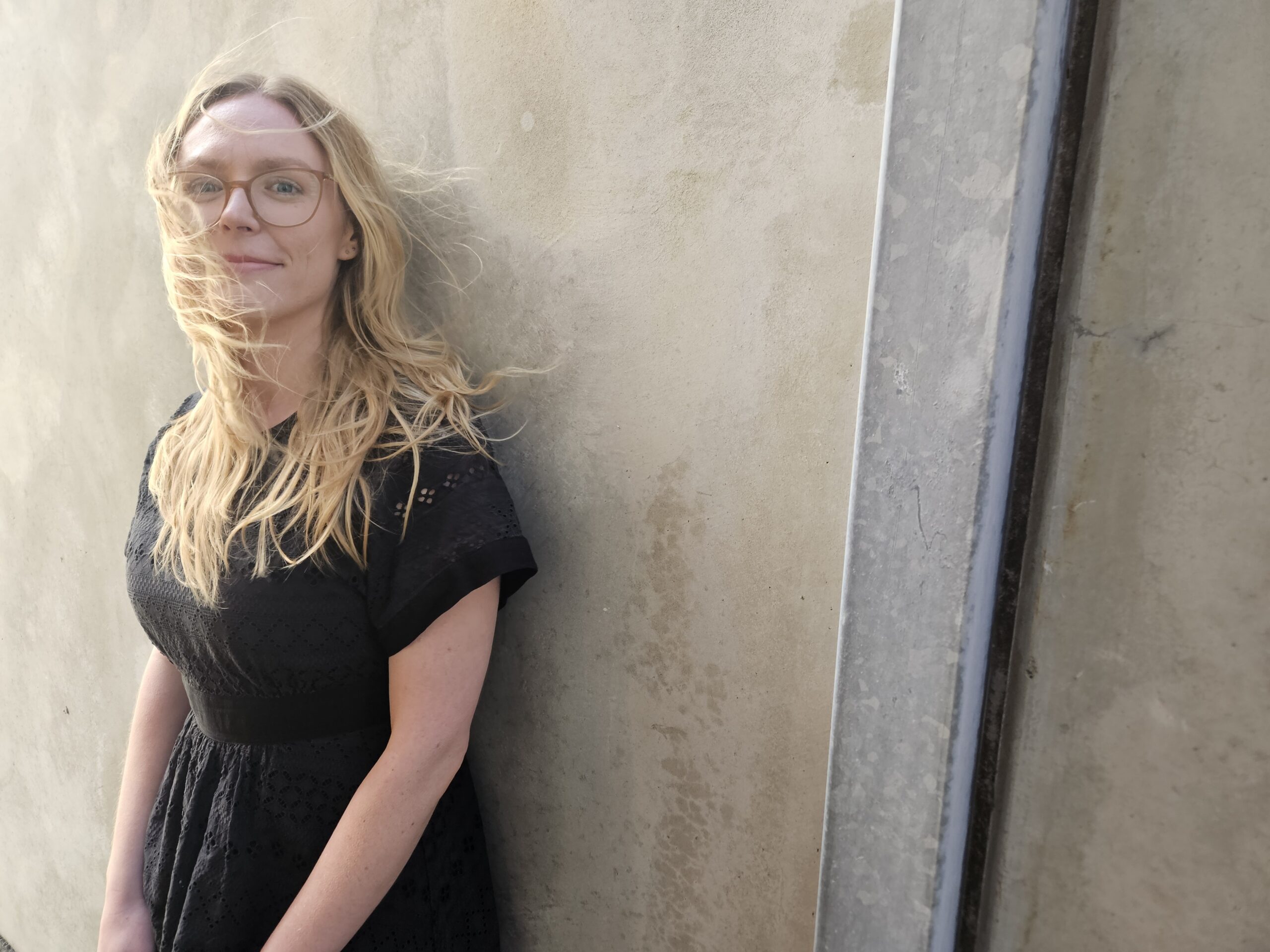 Caoimhe McKeogh has a PhD in Creative Writing from Te Herenga Waka — Victoria University in Aotearoa, New Zealand. She has published in journals in New Zealand, Australia, and Ireland, including Landfall, Overland, Cordite, Meniscus, and The Blue Nib. She works as a publicist at Te Herenga Waka University Press.